Introduction
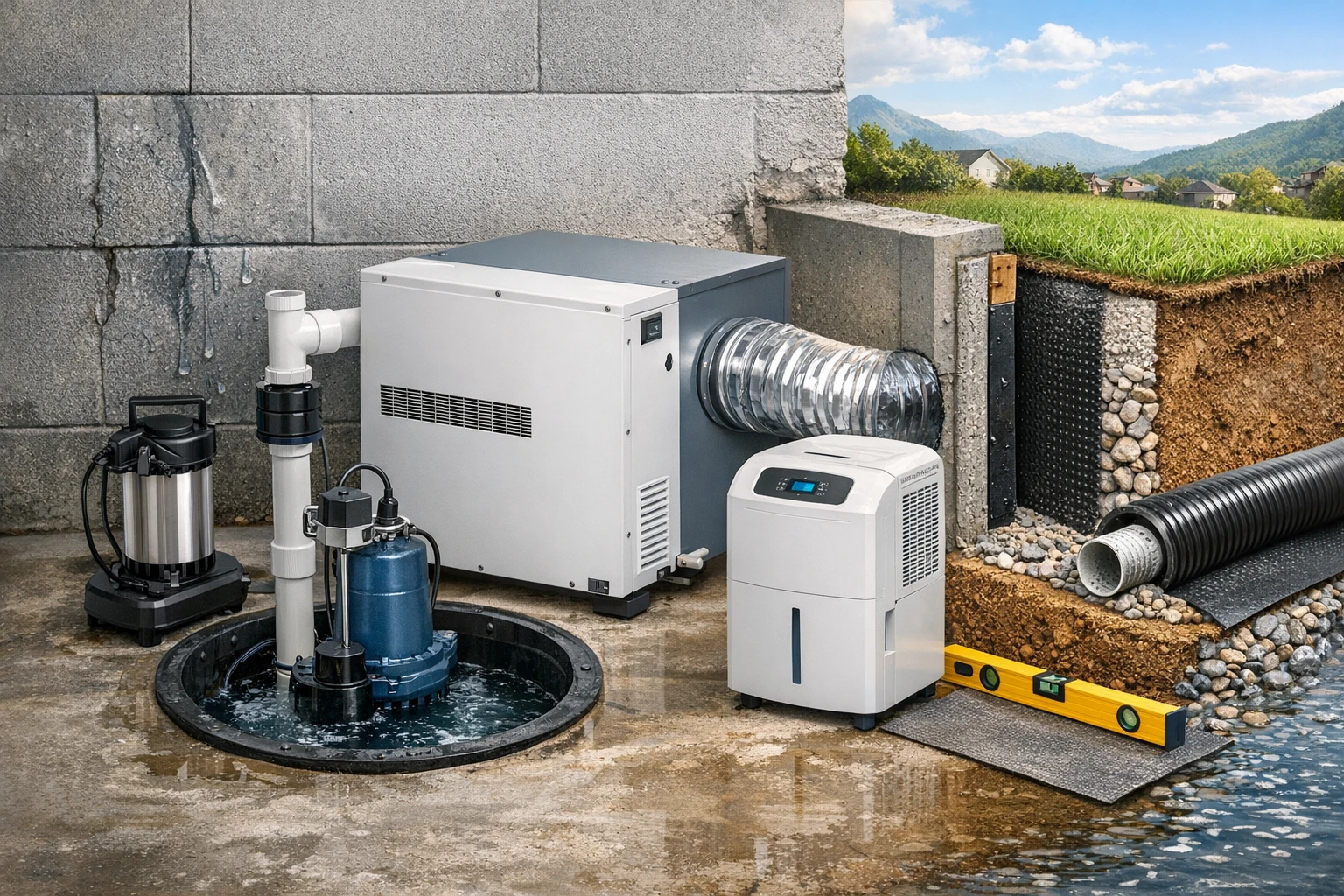
One often overlooks the importance of a well‑controlled basement environment until moisture begins to affect structural integrity, indoor air quality, and personal comfort. Excess humidity can foster mold growth, attract pests, and damage stored belongings, making proactive waterproofing and dehumidification essential for any homeowner.
In this article, fifteen practical tips are presented, each supported by real‑world product examples that have received positive feedback from verified purchasers. By following these recommendations, one can achieve a resilient, dry basement that contributes to the overall health of the home.
15 Essential Basement Waterproofing & Dehumidification Tips
- Assess the Square Footage Before Selecting a Dehumidifier – Accurate sizing prevents under‑performance and wasted energy. The Sijipt 70 Pint Crawl Space Dehumidifier is rated for up to 2,000 sq ft, making it suitable for large basements or crawl spaces. Priced at $399.98 with a perfect 5‑star rating from nine reviewers, it removes up to 70 pints of moisture per day under 95 °F, 90 % relative humidity conditions. A customer noted, “It runs reliably, does not freeze up, and restarts on its own,” confirming its suitability for extensive areas.
- Choose a Unit with Dual Drainage Options – Continuous drainage eliminates the need to empty a collection bucket. The Sijipt model includes an internal pump with a 16.4‑ft hose for vertical discharge and a 6.56‑ft gravity drain hose for low‑point drainage, offering flexibility for various installation scenarios.
- Prioritize Energy Efficiency – An ENERGY STAR‑certified dehumidifier reduces electricity consumption while maintaining performance. The Sijipt unit automatically activates a defrost cycle when coil frost is detected, ensuring consistent operation without unnecessary power draw.
- Install a Primary Pump with Sufficient Lift Capacity – Lift capacity determines how far water can be moved vertically. The Basement Watchdog Primary & Backup Sump Pump delivers 3,540 GPH at a 10‑ft lift for the primary pump and 1,850 GPH at the same lift for the battery backup, providing robust performance for deep pits. At $435.98 and a 4.4‑star rating from 284 reviewers, it balances power and reliability.
- Incorporate a Battery‑Backed Backup System – Power outages can render a primary pump ineffective. The Basement Watchdog system includes a Wi‑Fi‑capable battery backup that monitors pump status, power, and battery health, sounding an alarm and illuminating a warning light when attention is required.
- Leverage Wi‑Fi Monitoring for Early Warning – Real‑time alerts via text, email, or app enable one to respond before flooding occurs. Users of the Basement Watchdog system praise the seamless integration with the CONNECT module, noting that “the pump is extremely quiet compared to the old one” and that the alerts provide peace of mind.
- Select a Pump with Easy Installation Features – Adjustable footings, built‑in handles, and clear wiring diagrams simplify setup. Reviewers of the Sijipt dehumidifier highlight the portable handle and adjustable foot, stating that “installation was way simpler than I expected.”
- Consider a Portable Submersible Pump for Temporary Drainage – For occasional water removal, a manual pump offers flexibility. The FOTING 1HP Submersible Utility Pump provides 4,600 GPH at a 5‑ft lift and can handle small solids, making it ideal for pool, pond, or basement window‑well drainage. Priced at $69.99 with a 4.4‑star rating from 2,071 reviewers, it is a cost‑effective solution.
- Utilize a Long Power Cord for Flexible Placement – A 10‑ft cord on the FOTING pump allows the unit to be positioned away from outlets, reducing tripping hazards and facilitating reach into distant wet zones.
- Employ a Thermoplastic Housing for Corrosion Resistance – Moist environments accelerate metal degradation. The FOTING pump’s thermoplastic housing resists rust, extending service life in damp basements.
- Implement a French Drain System Complemented by a Pump – A perimeter French drain collects groundwater and directs it toward a sump pit. Pairing this with the Basement Watchdog pump ensures rapid removal, especially during heavy rain events.
- Seal Exterior Foundations Before Installing Interior Systems – Exterior waterproofing reduces the load on interior devices. Applying a high‑quality sealant to foundation cracks minimizes water ingress, allowing dehumidifiers and pumps to operate more efficiently.
- Adjust Humidity Setpoints According to Climate – In humid regions, a setpoint of 45 % relative humidity balances comfort and mold prevention. The Sijipt dehumidifier’s digital panel lets one program a precise setpoint and a 24‑hour timer for energy savings.
- Schedule Regular Maintenance Checks – Filters, pumps, and hoses require periodic inspection. The Sijipt unit’s removable bottom simplifies cleaning, while the Basement Watchdog system’s battery health monitor alerts one when replacement is needed.
- Document All Installations for Future Reference – Keeping a log of pump capacities, hose lengths, and drainage routes assists contractors and future homeowners. This practice also aids warranty claims and ensures that any upgrades are compatible with existing infrastructure.
Product Comparison Table
| Product | Capacity (GPH) | Coverage Area | Power Source | Price | Rating |
|---|---|---|---|---|---|
| Sijipt 70 Pint Crawl Space Dehumidifier | — (70 pints/day) | Up to 2,000 sq ft | Electric, 120 V | $399.98 | 5.0 (9 reviews) |
| Basement Watchdog Primary & Backup Sump Pump | Primary: 3,540 GPH (10 ft lift) Backup: 1,850 GPH (10 ft lift) |
Suitable for pits up to 10 ft deep | Electric primary, battery backup | $435.98 | 4.4 (284 reviews) |
| FOTING 1HP Submersible Utility Pump | 4,600 GPH (5 ft lift) | Portable; ideal for localized drainage | Electric, manual switch | $69.99 | 4.4 (2,071 reviews) |
Conclusion
One can achieve a dry, healthy basement by combining proper assessment, appropriate equipment, and diligent maintenance. Selecting a dehumidifier sized for the space, installing a reliable primary‑and‑backup pump system, and integrating drainage components such as French drains create a layered defense against water intrusion.
By following the fifteen tips outlined above, homeowners will reduce the risk of mold, protect structural components, and improve overall indoor air quality. The featured products exemplify the balance of performance, energy efficiency, and user‑friendly design that modern waterproofing solutions demand.
Frequently Asked Questions
How do I determine the correct size of a dehumidifier for my basement?
Measure the square footage and humidity level, then choose a unit rated for that area; a 70‑pint model typically covers up to 2,000 sq ft.
What are the signs that my basement needs waterproofing?
Visible water stains, musty odors, mold growth, and a consistently damp floor indicate inadequate waterproofing.
Can a dehumidifier prevent mold and pest infestations?
Yes, maintaining humidity below 60 % reduces mold spores and makes the environment less attractive to pests.
Is it better to use a sump pump or sealant for water intrusion?
A sump pump removes water that penetrates, while sealants block entry; using both provides the most comprehensive protection.
How often should I service my basement dehumidifier?
Clean the filter and check for proper operation at least once every three months, or more frequently in high‑humidity seasons.