Introduction
Homeowners often rely on a sump pump to protect basements from flooding, yet a malfunctioning float switch can render the system useless. This guide explains how to perform advanced diagnostics on a float switch, identify root causes, and apply lasting fixes. Readers will learn systematic testing procedures, replacement techniques, and preventive measures that reduce future failures. By following the steps, one can restore reliable automatic operation without unnecessary expense.
What You’ll Need
- Wayne CDU790 Sump Pump – 1/3 HP, cast‑iron housing, 4,600 GPH, $137.08, 4.7★ (2,325 reviews)
- PumpSpy Piggyback Float Switch – 10‑ft cord, gold‑plated contacts, $32.99, 4.6★ (835 reviews)
- Sump Alarm Float Switch – Honeywell microswitch, IP68 casing, $24.99, 4.5★ (617 reviews)
- Fluentpower Vertical Float Switch – 10‑ft cord, piggyback plug, $29.49, 4.4★ (160 reviews)
- Wassermann Vertical Float Switch – 16 A rating, waterproof housing, $29.59, 4.5★ (50 reviews)
- Phillips screwdriver, multimeter, waterproof tape, and a bucket for residual water.
Step 1 – Verify Power Supply and Basic Connections
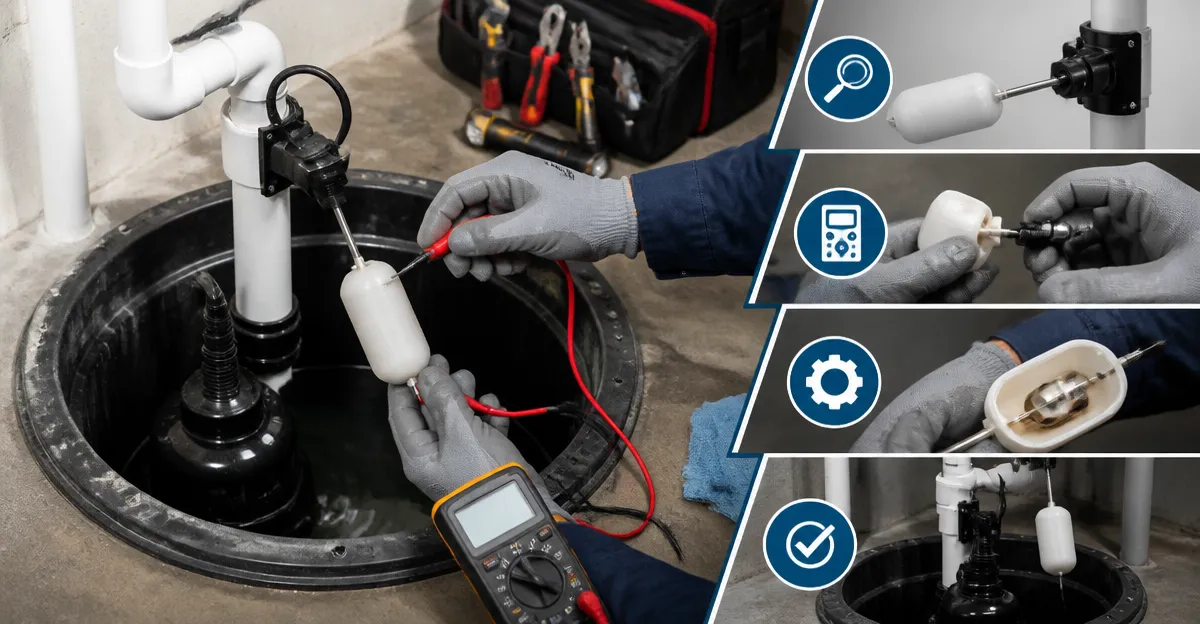
The first diagnostic action is to confirm that the pump receives stable 120 V power. Use a multimeter to measure voltage at the outlet; a reading below 115 V indicates a wiring issue that must be resolved before testing the float switch. Disconnect the pump, then inspect the cord for frayed insulation or loose plugs, which can cause intermittent operation. If the existing float switch uses a built‑in plug, consider swapping it with the PumpSpy Piggyback Float Switch, whose modular design simplifies plug‑in testing without rewiring.
Step 2 – Test Float Switch Activation Manually
With power verified, isolate the float switch by unplugging the pump and connecting the switch leads to a multimeter set to continuity mode. Gently lift the float; the meter should beep when the float reaches the upper trigger point, confirming the internal contacts close correctly. If continuity fails, the switch is likely defective and should be replaced. The Fluentpower Vertical Float Switch offers a vertical mechanical design that provides reliable contact closure and includes a piggyback plug for immediate installation.
Step 3 – Inspect the Sump Pump for Mechanical Obstructions
Even a functional float switch cannot operate a pump that is jammed or clogged. Remove the pump from the pit, empty any remaining water into a bucket, and examine the impeller for debris such as sand, leaves, or mineral buildup. The Wayne CDU790 Sump Pump features a cast‑iron volute and stainless‑steel impeller that resist corrosion and facilitate easy cleaning, making it an ideal replacement if the original pump shows excessive wear.
Step 4 – Replace a Faulty Float Switch with an Upgraded Model
When testing confirms switch failure, select a replacement that matches the pump’s voltage and amperage rating. The Sump Alarm Float Switch utilizes a Honeywell microswitch rated up to 13 A, providing high‑precision actuation and a non‑corrosive PP housing suitable for wet environments. Install the new switch by securing the hose clamp around the discharge pipe, threading the 10‑ft tether through the pit, and connecting the pump cord to the piggyback plug. Tighten all screws, then lower the pump back into the basin, ensuring the float moves freely without obstruction.
Step 5 – Calibrate Float Position and Verify Automatic Operation
After installation, adjust the tether length so the float rests just below the desired activation level, typically 2‑3 inches above the pit floor. Power the system on and pour a measured volume of water (e.g., 5 gallons) into the pit; observe the float rising and triggering the pump. The pump should run until the water level drops below the lower trigger point, then shut off automatically. If the pump cycles too frequently, consider using the Wassermann Vertical Float Switch, which offers a broader operating range (5.8"‑0.75") and can be paired with a short brass extension to fine‑tune float travel.
Tips & Pro Tips
- Always disconnect power before handling electrical components to avoid shock.
- Apply waterproof tape around the float switch housing to prevent moisture ingress in humid basements.
- Use a bucket to catch residual water when removing the pump; this prevents accidental spillage on electrical outlets.
- Consider installing a secondary backup float switch, such as the PumpSpy Piggyback Float Switch, to provide redundancy in critical flood‑prone areas.
- Schedule quarterly visual inspections; early detection of debris buildup extends pump life and reduces emergency repairs.
Troubleshooting Common Issues
Pump runs continuously. This symptom usually indicates a stuck float or a shorted switch. Verify that the float moves freely and that the switch contacts are not welded together. Replacing the switch with a new Fluentpower Vertical Float Switch resolves most cases.
Pump fails to start. Check the outlet voltage, inspect the pump cord for damage, and ensure the float has reached the upper trigger point. If the pump motor hums but does not turn, the impeller may be seized; cleaning or swapping the pump with the Wayne CDU790 Sump Pump is recommended.
Intermittent cycling. This can result from an improperly adjusted tether length or water level fluctuations near the trigger points. Adjust the tether so the float engages the switch at a stable water height, or install a float with a longer travel range, such as the Wassermann Vertical Float Switch, to create a wider hysteresis band.
Conclusion
Performing advanced diagnostics on a sump pump float switch involves systematic power verification, functional testing, mechanical inspection, and careful replacement. By using high‑quality tools like the Wayne CDU790 Sump Pump and reliable switches from PumpSpy, Sump Alarm, Fluentpower, or Wassermann, one can achieve dependable automatic operation. Regular maintenance and proper calibration further reduce the risk of unexpected flooding, safeguarding the home and its contents.
Products Mentioned in This Guide
Frequently Asked Questions
How can I test if my sump pump float switch is faulty?
Use a multimeter to check continuity while moving the float; no change indicates a bad switch.
What are common causes of float switch failure?
Corrosion, debris buildup, and worn contacts are the most frequent reasons a float switch stops working.
Can I replace a float switch without removing the pump?
Yes, most piggyback switches can be unplugged and swapped while the pump remains in place.
What preventive maintenance helps avoid float switch problems?
Regularly clean the pump pit, inspect the float for obstructions, and test the switch quarterly.
Is it safe to run the sump pump with a manual override if the float fails?
A manual override can temporarily run the pump, but it should only be used until the faulty float switch is repaired or replaced.