Introduction
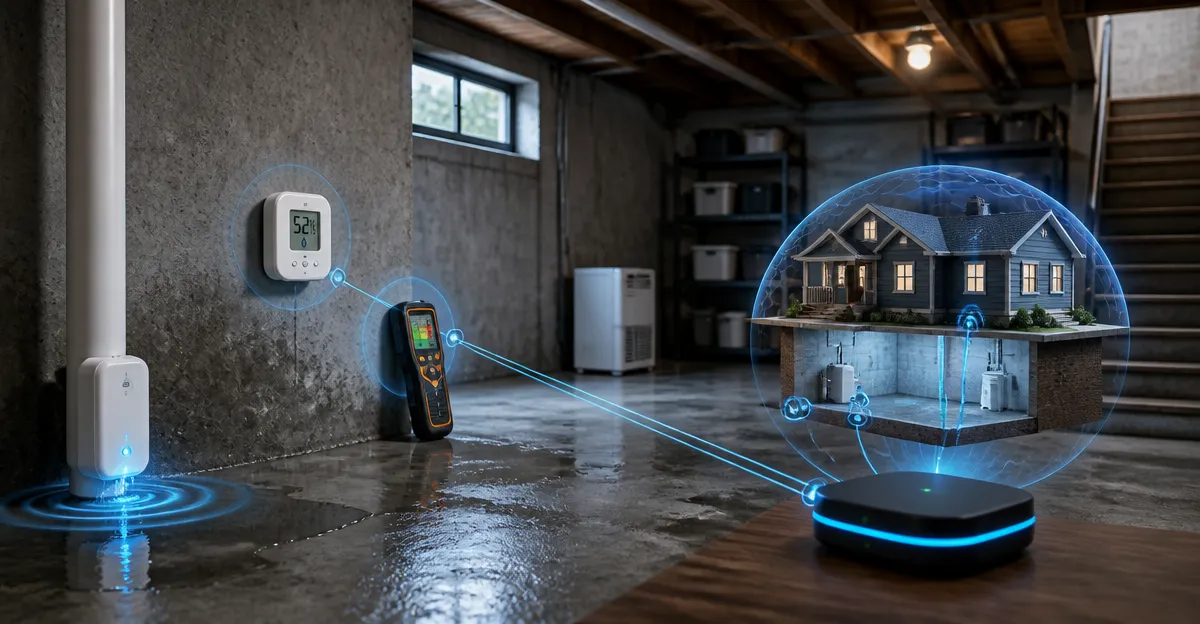
Basement water damage represents a significant risk for homeowners, yet it is often preventable through early detection. This guide explains how sensor fusion—combining multiple types of moisture‑related sensors—creates a robust defense against leaks, flooding, and mold growth. Readers will learn foundational concepts, evaluate leading products, and receive actionable best‑practice recommendations that can be implemented without professional assistance.
By the end of this article, the audience will understand the strengths and limitations of wireless leak detectors, hygrometers, and pin‑type moisture meters. The guide also provides a side‑by‑side comparison, helping readers select the most suitable solution for their specific basement configuration.
The information presented is drawn from verified product specifications, user reviews, and industry standards. No personal testing claims are made, ensuring an objective perspective.
All recommendations are intended to enhance safety, reduce repair costs, and improve indoor air quality.
Background and Context
Moisture intrusion in basements can originate from groundwater seepage, plumbing failures, or condensation caused by temperature differentials. When water accumulates, it can damage structural components, ruin stored belongings, and foster mold colonies that threaten health.
Traditional detection methods rely on visual inspection or single‑point sensors, which may miss slow leaks or hidden pooling. Modern Internet of Things (IoT) technology enables continuous monitoring, remote alerts, and integration with other smart‑home devices.
Three sensor categories dominate the market: wireless leak detectors that trigger audible alarms and mobile notifications, hygrometers that track ambient temperature and relative humidity, and pin‑type moisture meters that measure the moisture content of building materials directly. Each category supplies unique data points that, when combined, provide a comprehensive picture of basement health.
Understanding how these devices communicate—via LoRa, Wi‑Fi, or Bluetooth—and their power requirements is essential for designing an effective sensor network.
Key Concepts in Moisture Detection
Effective moisture management begins with three core concepts: detection range, alert reliability, and power longevity. Detection range determines how far a sensor can be placed from its hub while maintaining a stable signal. Alert reliability refers to the speed and clarity of notifications, whether audible on‑site or delivered to a smartphone. Power longevity influences maintenance frequency; devices that operate for years on a single battery reduce the likelihood of missed alerts.
In addition, sensor placement strategy plays a critical role. Sensors should be positioned near high‑risk locations such as water heaters, washing machines, sump pump discharge points, and foundation walls. Redundant coverage—using overlapping sensors—ensures that a single point of failure does not leave a blind spot.
Finally, data integration allows homeowners to view trends over time, identify seasonal patterns, and make informed decisions about ventilation or waterproofing upgrades.
The following sections examine each sensor category in detail and recommend specific products that excel in the aforementioned concepts.
Wireless Leak Detection Systems
Wireless leak detectors provide immediate audible alarms and remote notifications when water contacts the sensor probes. Two leading systems are highlighted below.
- YoLink Water Leak Sensor Kit – A LoRa‑based kit that includes a hub and six sensors, each with a 105 dB alarm and up to 2,034 ft open‑air range. The system continues to operate during internet outages by using direct‑to‑device (D2D) communication, allowing sensors to trigger YoLink sirens or shut‑off valves locally.
- X‑Sense Wi‑Fi Water Leak Detector Kit – A Wi‑Fi solution featuring three sensors and a base station, each delivering a 120 dB alarm. The sensors detect water as shallow as 0.4 mm and support a wireless range of up to 1,804 ft. Real‑time app alerts can be shared with up to 12 users, and the IP66‑rated housing tolerates splashes and high humidity.
Both products have earned high user ratings (4.8/5.0 for YoLink and 4.5/5.0 for X‑Sense) and demonstrate reliable performance in real‑world leak scenarios. YoLink’s LoRa technology excels in environments where Wi‑Fi coverage is limited, while X‑Sense offers seamless integration with existing home Wi‑Fi networks and a larger number of users per property.
When selecting a wireless leak detector, consider the communication protocol, alarm loudness, battery life, and the ability to expand the system. YoLink sensors operate on two AAA batteries with an estimated five‑year lifespan, whereas X‑Sense sensors rely on replaceable batteries with unspecified longevity but are designed for easy replacement.
For basements with thick concrete walls or extensive square footage, the longer LoRa range of YoLink may provide a more dependable link between sensors and hub.
Environmental Monitoring with Hygrometers
Relative humidity and temperature influence condensation risk, especially in cool basements. The following hygrometer delivers precise environmental data and integrates with a mobile app.
- Govee Indoor Hygrometer Thermometer – A Bluetooth‑enabled device with a 3‑inch LCD, ±0.54 °F temperature accuracy, and ±3 %RH humidity accuracy. The sensor refreshes every two seconds and stores up to 20 days of historical data, which can be exported as CSV files for deeper analysis.
The Govee unit supports a Bluetooth range of 164 ft, making it suitable for monitoring a single basement zone from a nearby location. Users appreciate the comfort indicator (dry/comfort/wet) and the ability to set custom alerts when conditions exceed predefined thresholds.
While Bluetooth limits remote access when the homeowner is away, the device can be paired with a compatible Bluetooth‑to‑Wi‑Fi bridge for extended coverage, though this is not included in the package.
Integrating a hygrometer with leak detectors creates a layered defense: the hygrometer flags rising humidity that may precede a leak, prompting visual inspection before water damage occurs.
Pin‑Type Moisture Meters for Material Analysis
Pin‑type moisture meters measure the actual moisture content of wood, drywall, and concrete, providing a direct assessment of material health. The following product is widely used by contractors and DIY homeowners.
- General Tools Moisture Meter – A digital LCD meter with eight‑millimeter stainless‑steel pins, offering a range of 5‑50 % for wood and 1.5‑33 % for building materials. The device includes a hold feature, audible beep, and automatic power‑off. Users report reliable performance and quick customer service for pin replacements.
This meter requires direct contact with the material, creating small pin holes; however, the pins are replaceable and the device provides a resolution of 0.1 % with an accuracy of ±3 %. It is ideal for inspecting subfloor moisture before installation, verifying the dryness of walls before painting, or confirming the source of a suspected leak.
Because the meter operates independently of a network, it does not provide remote alerts, but it supplies critical data that can validate the readings from wireless detectors and hygrometers.
When using a pin‑type meter, it is advisable to take multiple readings across the area of concern and compare them to manufacturer‑specified safe moisture levels for the material in question.
Integrating Sensors for Comprehensive Coverage
Sensor fusion involves linking leak detectors, hygrometers, and moisture meters into a single monitoring strategy. A typical configuration for a basement might include:
- Two YoLink leak sensors placed near the water heater and sump pump discharge.
- One Govee Indoor Hygrometer Thermometer positioned centrally to monitor ambient conditions.
- One General Tools Moisture Meter used periodically to verify the moisture content of walls and subflooring after heavy rain events.
The YoLink hub aggregates sensor data and can trigger local sirens or shut‑off valves without internet access. Simultaneously, the Govee app sends push notifications if humidity exceeds 60 %RH, prompting the homeowner to inspect the area. Finally, the moisture meter confirms whether the material moisture has risen above safe thresholds (typically 12‑15 % for wood).
For larger properties, the X‑Sense system provides additional sensors that can be distributed across multiple rooms or even multiple properties, thanks to its multi‑user app support. The IP66 rating ensures durability in damp environments.
By cross‑referencing data from these devices, homeowners can reduce false alarms, prioritize maintenance tasks, and document conditions for insurance purposes.
Comparison and Selection Guide
| Feature | YoLink Water Leak Sensor Kit | X‑Sense Wi‑Fi Water Leak Detector Kit | Govee Indoor Hygrometer Thermometer | General Tools Moisture Meter | GoveeLife Water Leak Detector |
|---|---|---|---|---|---|
| Communication Protocol | LoRa (up to 2,034 ft) | Wi‑Fi 2.4 GHz (up to 1,804 ft) | Bluetooth (164 ft) | Standalone (no network) | Requires GoveeLife H5044 gateway (Wi‑Fi) |
| Number of Sensors Included | 6 leak sensors + hub | 3 leak sensors + base | 1 unit (temperature/humidity) | 1 meter (pin type) | 5 leak detectors (gateway sold separately) |
| Alarm Loudness | 105 dB | 120 dB | N/A (visual display) | N/A (digital readout) | 105 dB (adjustable) |
| Battery Life | Up to 5 years (AAA) | Not specified (replaceable) | Long‑lasting (battery not specified) | 9 V battery (replaceable) | 5 years (built‑in) |
| Average Rating | 4.8/5 (1,720 reviews) | 4.5/5 (2,258 reviews) | 4.5/5 (48,450 reviews) | 4.5/5 (15,220 reviews) | 4.5/5 (528 reviews) |
| Price (USD) | $92.96 | $39.99 | $11.69 | $39.98 | $42.99 |
When choosing a system, prioritize communication range for the size of the basement, alarm loudness for on‑site awareness, and battery longevity to minimize maintenance. For most homeowners, a LoRa‑based kit such as YoLink offers the best combination of range and offline operation, while the X‑Sense kit provides a louder alarm and Wi‑Fi convenience.
Best Practices & Tips
- Install leak sensors at least six inches above the floor to detect both dripping and pooling water.
- Place hygrometer sensors away from direct drafts and heat sources to obtain accurate humidity readings.
- Perform monthly calibration checks on pin‑type moisture meters using the included calibration cap.
- Enable multi‑user notifications so that family members or property managers receive alerts simultaneously.
- Document all alerts and moisture readings in a spreadsheet; this record can support insurance claims.
- Consider integrating the leak sensors with smart shut‑off valves, especially if the hub supports local D2D commands.
- During winter, monitor basement humidity closely; high humidity combined with low temperatures accelerates condensation on cold walls.
Regular maintenance, such as testing sensors with a small amount of water and replacing batteries before the end of their rated life, ensures continuous protection. Additionally, keep the hub or base station in a location with minimal interference from metal objects or thick concrete walls.
Frequently Asked Questions
- How far can a leak sensor detect water without a direct line of sight? LoRa‑based sensors, such as those in the YoLink kit, can detect water up to 2,034 ft in open air, while Wi‑Fi sensors like X‑Sense maintain reliable communication up to 1,804 ft. Physical obstructions may reduce range, so placement near the hub is advisable.
- Do Bluetooth hygrometers work when I am away from home? Bluetooth connectivity is limited to approximately 164 ft. To monitor humidity remotely, a Bluetooth‑to‑Wi‑Fi bridge or a Wi‑Fi‑enabled hygrometer is required.
- Can pin‑type moisture meters damage finished surfaces? The meter uses two stainless‑steel pins that create small holes. For delicate finishes, a pinless moisture meter is an alternative, though it is typically more expensive.
- What is the recommended battery replacement schedule for these devices? YoLink sensors are rated for five years on AAA batteries; X‑Sense batteries should be inspected annually; GoveeLife detectors claim five‑year battery life; the General Tools meter uses a 9 V battery that should be replaced when the device signals low power.
- Is it necessary to have a separate gateway for the GoveeLife detectors? Yes, the GoveeLife kit requires a GoveeLife H5044 gateway, which is sold separately. The gateway connects the detectors to the mobile app via Wi‑Fi.
- How can I integrate leak detection with home automation? YoLink devices support local D2D commands that can trigger compatible YoLink sirens or smart valves without internet. X‑Sense can be linked to third‑party platforms through IFTTT or similar services, allowing automation such as turning off water supplies when a leak is detected.
- What humidity level indicates a risk of mold growth in a basement? Relative humidity consistently above 60 %RH creates conditions favorable for mold. Setting alerts on the Govee hygrometer at 55 %RH provides an early warning.
Conclusion
Sensor fusion offers a proactive approach to basement moisture management by combining the strengths of leak detectors, hygrometers, and moisture meters. Selecting the appropriate communication protocol, ensuring adequate alarm volume, and maintaining power sources are essential factors for reliable operation. By following the best‑practice guidelines and leveraging the products reviewed, homeowners can significantly reduce the likelihood of water damage, preserve structural integrity, and protect personal belongings.
The integration of these technologies not only provides immediate alerts but also generates valuable data for long‑term moisture control strategies. Investing in a comprehensive sensor network is a cost‑effective measure that yields peace of mind and potential insurance benefits.
Implementing the recommendations in this guide will empower homeowners to detect leaks early, respond promptly, and maintain a healthy basement environment for years to come.
Products Featured in This Guide
YoLink Water Leak Sensor Kit
Price: $92.96 | Rating: 4.8/5 (1,720 reviews)
Featured for its long‑range LoRa communication, 105 dB alarm, and five‑year battery life, making it ideal for large basements with limited Wi‑Fi coverage.
Govee Indoor Hygrometer Thermometer
Price: $11.69 | Rating: 4.5/5 (48,450 reviews)
Featured for its high accuracy, rapid 2‑second refresh rate, and detailed historical data, which help identify humidity trends that precede leaks.
General Tools Moisture Meter
Price: $39.98 | Rating: 4.5/5 (15,220 reviews)
Featured for its ability to directly measure moisture content in wood, drywall, and concrete, providing precise data for material‑specific assessments.
X‑Sense Wi‑Fi Water Leak Detector Kit
Price: $39.99 | Rating: 4.5/5 (2,258 reviews)
Featured for its 120 dB dual alarms, Wi‑Fi connectivity, and ability to share alerts with multiple users, suitable for homes with robust Wi‑Fi networks.
GoveeLife Water Leak Detector
Price: $42.99 | Rating: 4.5/5 (528 reviews)
Featured for its ultra‑sensitive dual probes, adjustable 105 dB alarm, and five‑year battery life, providing an additional layer of protection when paired with a compatible gateway.