Introduction
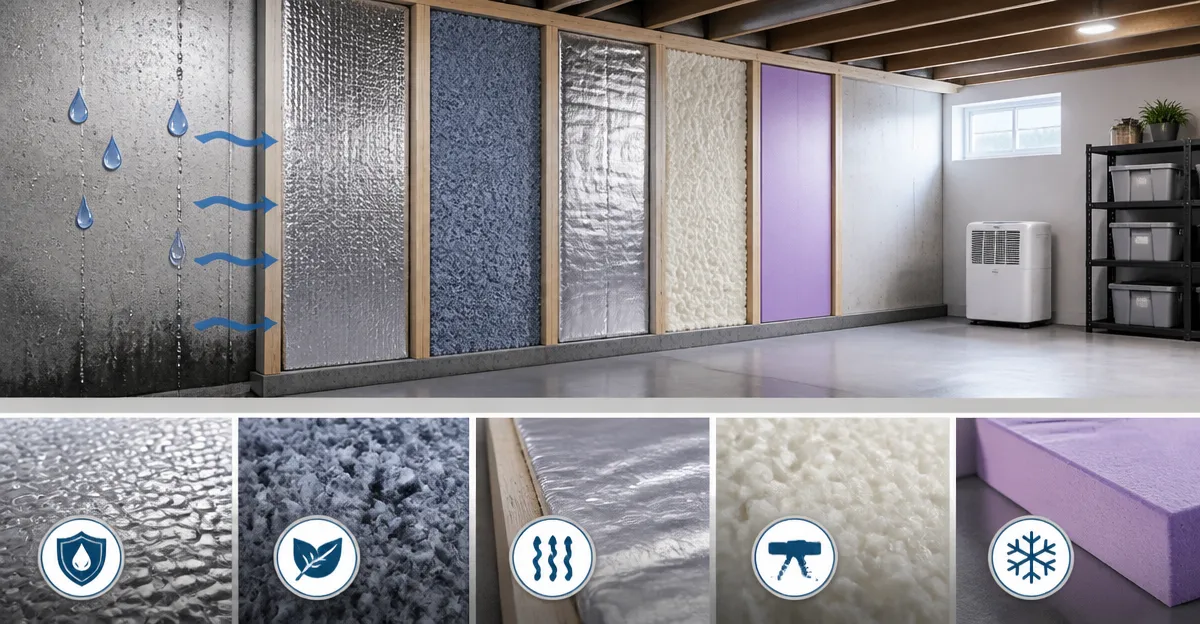
This guide explains how different insulation types influence condensation risk and moisture control in basements. Readers will learn the science behind moisture migration, the advantages of reflective, cotton, foil‑backed, spray‑foam, and polyurethane foams, and how to select the best solution for their climate and budget. Practical installation tips and product recommendations are included to help homeowners achieve a dry, energy‑efficient space. By the end of the article, one will be equipped to make informed decisions that protect both structure and comfort.
Background / Context
Basements are prone to moisture because they are below grade, often surrounded by soil that retains water. When warm indoor air contacts a cold surface, water vapor condenses, creating damp spots, mold growth, and reduced insulation performance. The key variables are surface temperature, indoor humidity, and the thermal resistance (R‑value) of the insulation material. Proper insulation creates a thermal barrier that keeps interior surfaces above the dew point, thereby limiting condensation.
Two fundamental concepts underpin moisture control: vapor diffusion and air leakage. Vapor diffusion occurs when moisture moves through porous materials, while air leakage allows warm, moist air to infiltrate through gaps and then condense on cold walls. An effective insulation strategy addresses both phenomena by providing a continuous thermal envelope and sealing unwanted air paths.
Understanding Condensation in Basements
Condensation forms when the temperature of a basement wall or floor falls below the dew point of the indoor air. The dew point is the temperature at which air becomes saturated and releases water. Insulation raises the temperature of the wall surface, moving it above the dew point, and thus prevents moisture from turning into liquid.
However, not all insulation behaves the same. Materials with high reflectivity can redirect radiant heat, while those with closed‑cell structures provide both thermal resistance and an air‑tight seal. Selecting the appropriate type depends on climate, existing wall construction, and the intended use of the space.
Types of Insulation and Their Impact on Moisture
Reflective Insulation – Reflectix Bubble Pack Insulation
Reflectix Bubble Pack Insulation is a 5/16‑inch thick, seven‑layer product that combines two outer aluminum foil layers with interior bubble layers and a polyethylene core. The foil reflects up to 97 % of radiant heat, reducing heat loss through basement walls and ceilings. Because the material is lightweight and fiber‑free, it does not absorb moisture, making it suitable for spaces where vapor control is essential.
- Seven‑layer construction with reflective foil
- Polyethylene core provides durability and moisture resistance
- Price: $29.98; Rating: 4.8 / 5 from 1,232 reviews
- Easy to cut with scissors; ideal for DIY retrofits
When installed with an air gap between the foil and the wall, Reflectix creates a thermal barrier that keeps the wall surface warmer than the interior dew point, thereby reducing condensation risk.
Natural Cotton Insulation – Frost King Cotton Insulation
Frost King Cotton Insulation is made from 100 % recycled denim, offering a non‑itch, non‑toxic alternative to fiberglass. Its 1‑inch thickness provides modest R‑value while also acting as a sound‑dampening buffer. Because cotton is breathable, it allows moisture to escape rather than become trapped, which can be advantageous in basements that already have a controlled vapor barrier.
- Eco‑friendly, 100 % recycled denim
- No gloves or masks required during installation
- Price: $9.85; Rating: 4.4 / 5 from 1,431 reviews
- Can be cut or torn to fit irregular spaces
For retrofit projects where wall cavities are open and a vapor barrier is already present, cotton insulation adds thermal mass without compromising the ability of the assembly to dry out.
Foil‑Backed Cotton Duct Wrap – Frost King Foil Cotton Duct Wrap
This product combines natural cotton with a foil backing, delivering both insulation and a radiant barrier. The foil reflects heat, while the cotton core provides cushioning and reduces vibration on HVAC ducts. The foil layer also acts as a moisture‑resistant skin, limiting vapor diffusion through the duct insulation.
- Foil backing adds reflective properties
- Class A fire rating for safety
- Price: $19.09; Rating: 4.5 / 5 from 2,133 reviews
- Easy to cut; ideal for sealing pipe and duct runs
When used around basement ductwork, this wrap helps maintain duct surface temperature, preventing condensation inside the ducts that could otherwise drip onto insulation or flooring.
Spray Foam Insulation – BEEST Spray Foam Insulation Kit
BEEST FullStop Spray Foam Kit provides a hybrid closed‑cell and open‑cell formulation. Closed‑cell outer skin offers high R‑value (R‑8.24 at 2 inches) and moisture resistance, while the open‑cell core expands to fill gaps, creating an airtight seal. The kit includes a professional‑grade spray gun, 12 cans, and safety gear, enabling homeowners to treat walls, floors, and crawl‑space perimeters.
- Class A fire‑rated, meets ASTM E84
- R‑value 8.24 at 2 inches, excellent for high‑performance envelopes
- Price: $219.95; Rating: 4.3 / 5 from 591 reviews
- All‑in‑one kit simplifies DIY installation
Spray foam creates a continuous air barrier, eliminating drafts that carry humid indoor air onto cold surfaces. This dramatically reduces the likelihood of condensation forming on basement walls and floors.
Polyurethane Expanding Foam – Loctite Tite Foam Big Gaps
Loctite Tite Foam Big Gaps is a high‑density polyurethane sealant designed to fill gaps up to 3 inches wide. Its expanding nature creates a tight seal that blocks air and moisture infiltration around pipe penetrations, rim joists, and foundation cracks. The foam is paintable and UV‑resistant, making it suitable for both interior and exterior applications.
- Expands to fill gaps up to 3 inches
- High density for durability and flexibility
- Price: $8.28; Rating: 4.4 / 5 from 11,757 reviews
- Strong adhesion to wood, concrete, metal, and PVC
By sealing hard‑to‑reach cracks, this product prevents humid air from entering the basement envelope, thereby lowering the moisture load that the primary insulation must manage.
Comparison / Selection Guide
| Insulation Type | Primary Benefit | Moisture Control | Typical Use in Basement | Cost per Unit | Rating |
|---|---|---|---|---|---|
| Reflectix Bubble Pack | Reflects radiant heat, lightweight | Foil barrier reduces vapor diffusion; does not absorb water | Wall sheathing, crawl‑space walls | $29.98 | 4.8/5 |
| Frost King Cotton | Eco‑friendly, sound dampening | Breathable; allows drying | Interior wall cavities, retrofit gaps | $9.85 | 4.4/5 |
| Frost King Foil Cotton Duct Wrap | Reflective + cushioning | Foil layer limits vapor migration through ducts | Duct and pipe insulation | $19.09 | 4.5/5 |
| BEEST Spray Foam Kit | High R‑value, airtight seal | Closed‑cell skin blocks moisture; air‑tight envelope | Walls, floors, crawl‑space perimeter | $219.95 | 4.3/5 |
| Loctite Tite Foam Big Gaps | Expands to fill large gaps | Seals cracks that would let humid air in | Foundation cracks, rim joist gaps | $8.28 | 4.4/5 |
When choosing a product, consider the following criteria:
- Moisture profile of the space: If the basement already has a vapor barrier, breathable insulation such as cotton may be preferable.
- Air‑tightness requirement: For high‑performance envelopes, spray foam or expanding polyurethane sealants are essential.
- Budget and DIY skill level: Reflectix and cotton batts are inexpensive and easy to cut, whereas spray foam requires protective gear and careful handling.
- Thermal performance needed: Closed‑cell spray foam offers the highest R‑value per inch, useful in limited‑depth wall cavities.
Best Practices & Tips
1. Seal before you insulate. Use expanding foams such as Loctite Tite Foam to close cracks around foundation walls, rim joists, and pipe penetrations. This prevents warm, moist indoor air from reaching cold concrete surfaces.
2. Create an air gap for reflective products. Install Reflectix with a ¼‑inch spacer or furring strips to allow the foil to reflect heat without direct contact, which maximizes its condensation‑preventing effect.
3. Maintain a continuous vapor barrier. When using breathable insulation like cotton, ensure that a separate vapor retarder (e.g., 6 mil polyethylene) is placed on the warm side of the wall to control diffusion.
4. Ventilate wisely. Install a dehumidifier or a balanced ventilation system to keep relative humidity below 60 % during summer months, reducing the overall condensation load.
5. Protect against mold. After installation, monitor wall temperatures with an infrared thermometer. If surface temperature approaches the dew point, add an additional layer of insulation or improve air sealing.
Frequently Asked Questions
- Can I combine reflective and spray‑foam insulation? Yes. Install a thin layer of Reflectix on the interior side of a wall, then apply spray foam to fill gaps and create an airtight seal. The combination maximizes thermal resistance and moisture control.
- Is cotton insulation suitable for basements with high humidity? Cotton is breathable and will not trap moisture, but it does not provide a vapor barrier. Pair it with a dedicated vapor retarder and a dehumidifier for best results.
- How thick should spray foam be applied in a basement wall? A 2‑inch thickness of closed‑cell spray foam yields an R‑value of approximately 8.2, which is sufficient for most climate zones when combined with exterior insulation.
- Do I need protective equipment when using spray foam? Absolutely. Wear gloves, goggles, a respirator, and coveralls. The BEEST kit includes safety gear to keep you protected.
- What is the best way to seal rim joist gaps? Apply Loctite Tite Foam Big Gaps directly into the gap, then cover with a thin layer of rigid foam or Reflectix for added thermal performance.
- Will reflective insulation work on concrete walls? Yes, but it should be installed over a furring strip system to prevent direct contact with the concrete, which can become a cold bridge.
- How often should I inspect basement insulation? Conduct an inspection annually, looking for signs of moisture, mold, or compression. Replace any damaged sections promptly to maintain performance.
Conclusion
Effective basement insulation hinges on understanding how heat, air, and moisture interact. Reflective products such as Reflectix keep surfaces warm, breathable cotton batts allow drying, foil‑backed wraps protect ductwork, while spray foam and expanding polyurethane seal air leaks and block moisture ingress. By selecting the appropriate material for each part of the basement envelope and following best‑practice installation techniques, homeowners can dramatically reduce condensation risk, improve energy efficiency, and safeguard their homes against mold and structural decay.
Products Featured in This Guide
Reflectix Bubble Pack Insulation
Price: $29.98 | Rating: 4.8/5 (1,232 reviews)
Featured for its high‑reflectivity foil layers, lightweight installation, and ability to keep basement walls above the dew point.
Frost King Cotton Insulation
Price: $9.85 | Rating: 4.4/5 (1,431 reviews)
Featured for its eco‑friendly recycled denim composition, non‑itch comfort, and suitability for retrofit applications where breathability is desired.
Frost King Foil Cotton Duct Wrap
Price: $19.09 | Rating: 4.5/5 (2,133 reviews)
Featured for its combination of reflective foil and cotton core, providing both thermal resistance and vibration dampening for basement ductwork.
BEEST Spray Foam Insulation Kit
Price: $219.95 | Rating: 4.3/5 (591 reviews)
Featured for its high R‑value, Class A fire rating, and all‑in‑one DIY package that creates an airtight, moisture‑resistant barrier.
Loctite Tite Foam Big Gaps
Price: $8.28 | Rating: 4.4/5 (11,757 reviews)
Featured for its ability to expand and seal large gaps, preventing humid air infiltration that could otherwise cause condensation.