Pressure Differential Sensors: Complete Guide to Detecting and Preventing Basement Water Intrusion
Introduction
The threat of water entering a basement can cause structural damage, mold growth, and costly repairs. This guide explains how pressure differential sensors operate, why they are essential for early detection, and how homeowners can implement reliable monitoring systems. Readers will learn foundational concepts, evaluate several market‑available sensors, and receive actionable best‑practice recommendations. By the end of the article, one will be equipped to select, install, and maintain a sensor solution that safeguards a basement against water intrusion.
Background and Context
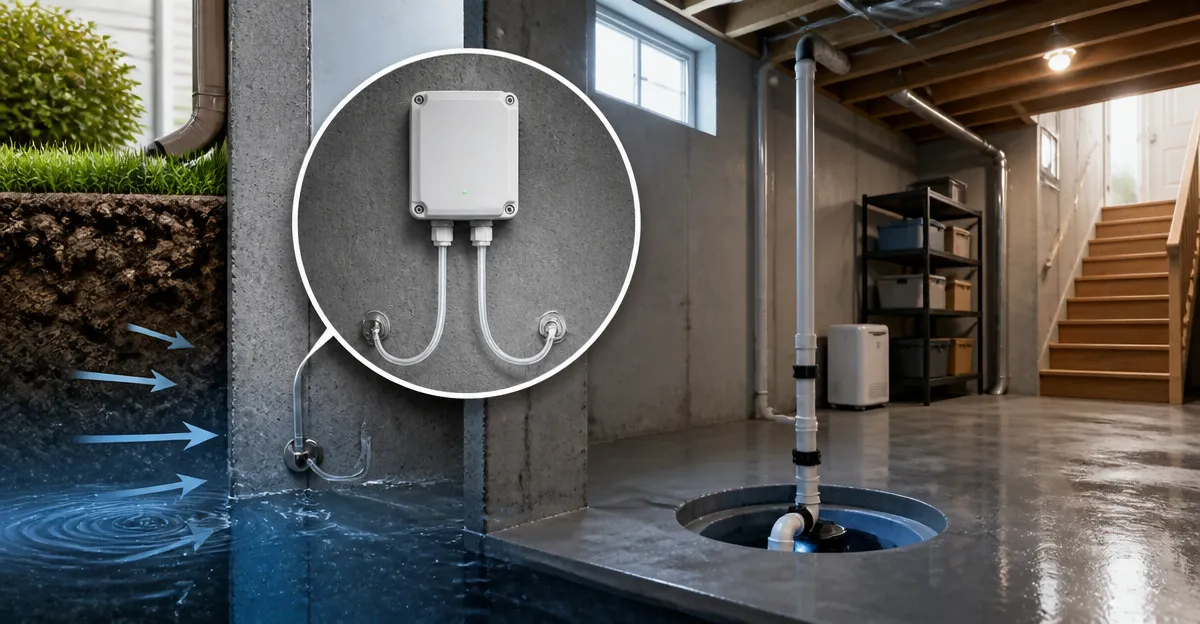
Water intrusion typically occurs when hydrostatic pressure outside a foundation exceeds the internal air pressure of the basement. The pressure differential forces water through cracks, joints, or porous walls. Detecting this pressure shift before water reaches the floor allows for automated pump activation or alert notifications. Pressure differential sensors convert a mechanical pressure change into an electrical signal that can be read by microcontrollers such as Arduino, ESP32, or commercial monitoring units.
Two principal sensor families dominate the market: thin‑film force‑sensitive resistors (FSRs) that change resistance with applied force, and piezoresistive transducers that produce a proportional voltage output. Both families can be integrated into a Wheatstone bridge or voltage divider circuit to generate a measurable voltage. The choice between them depends on required pressure range, environmental exposure, and integration complexity.
In residential basement applications, the relevant pressure range usually spans from a few kilopascals (kPa) up to 100 psi (approximately 690 kPa). Sensors must operate reliably at temperatures from –40 °C to +85 °C and resist moisture, corrosion, and occasional mechanical shock.
Key Concepts for Effective Water Intrusion Detection
Understanding the following concepts enables a robust detection system:
- Pressure Differential Threshold: The minimum pressure difference that indicates a leak. Typical thresholds range from 10 kPa to 30 kPa, depending on soil conditions.
- Signal Conditioning: Amplification, filtering, and linearization of the raw sensor output to produce a stable voltage or digital reading.
- Calibration: Mapping sensor output to known pressure values using a reference gauge ensures accuracy across the full range.
- Integration with Alerts: Connecting the sensor to a microcontroller that can trigger a sump pump, send a mobile notification, or log data for trend analysis.
Each of these elements is illustrated with real‑world product examples throughout the guide.
Sensor Categories and Product Recommendations
Below are the primary sensor categories relevant to basement water intrusion, accompanied by recommended Amazon products that exemplify each category.
Thin‑Film Force Sensitive Resistors (FSRs)
Thin‑film FSRs provide a compact, low‑cost solution for detecting small pressure changes on a surface. They change resistance proportionally to applied force, making them suitable for threshold‑switch applications such as detecting water pressure against a sealed plate.
The Usdrwam Thin Film Pressure Sensors package includes four 0.4 mm sensors with a range of 20 g to 2 kg. Key specifications include a response time under 10 ms, activation force of approximately 20 g, and a tolerance of ±3 % on resistance. The sensors operate from –40 °C to +85 °C and can be wired in a voltage divider with a fixed resistor chosen as one‑third to one‑half of the expected sensor resistance for near‑linear output.
These sensors excel in prototype projects where space is limited and rapid response is required. They are ideal for a threshold‑switch that triggers a relay when water pressure exceeds a calibrated value.
Piezoresistive Transducers (0‑100 psi)
Piezoresistive transducers generate a linear voltage proportional to pressure, typically 0.5 V at 0 psi and 4.5 V at 100 psi. This characteristic simplifies integration with analog‑to‑digital converters and eliminates the need for complex signal conditioning.
Two affordable transducers are highlighted:
- FUSCH 100 PSI Pressure Transducer – stainless‑steel body, 0.5‑4.5 V output, ±1 % full‑scale error, and a 1/8" NPT thread for easy plumbing connection.
- Flylin 100 PSI Pressure Sensor – similar voltage range, ±2 % full‑scale error, and built‑in surge protection for reliable operation in harsh environments.
Both devices are compatible with Arduino or ESP32 boards via a simple voltage divider and can provide continuous pressure monitoring for a sump pump control loop.
Digital Barometric Modules (0‑40 kPa)
Digital modules incorporate an on‑board analog‑to‑digital converter and often communicate via I2C or a direct analog voltage. They are useful when a microcontroller requires a clean digital signal without external filtering.
The AEDIKO Air Pressure Sensor Module operates from 3.3 V to 5 V and measures 0‑40 kPa (approximately 0‑6 psi). Although its range is lower than the typical basement pressure, it can be employed as a secondary sensor to detect rapid changes in atmospheric pressure that may precede groundwater rise.
Because the module outputs a digital signal, developers can apply software filtering to mitigate the reported noise. The module includes a 5 kΩ bridge sensor and a high‑precision AD sampling chip, providing reasonable accuracy for indoor monitoring.
Automotive‑Grade Pressure Sensors (Fuel/Oil/Coolant)
Automotive sensors are engineered for high reliability under vibration, temperature extremes, and exposure to fluids. They often include robust connectors and stainless‑steel bodies.
The Lowdoller 100 PSI Pressure Sensor features a 1/8" NPT thread, GT150 Packard connector, and compatibility with EFI data‑logging systems. While marketed for fuel, oil, or coolant, the sensor can be repurposed for basement water monitoring by installing it in a sealed port that contacts the water‑bearing wall.
Its high‑quality construction makes it suitable for permanent installations where long‑term durability is essential.
Comparison and Selection Guide
| Feature | Usdrwam Thin Film (FSR) | FUSCH 100 psi Transducer | Flylin 100 psi Sensor | AEDIKO Digital Module | Lowdoller Automotive Sensor |
|---|---|---|---|---|---|
| Pressure Range | 20 g‑2 kg (≈0‑2 psi) | 0‑100 psi | 0‑100 psi | 0‑6 psi (0‑40 kPa) | 0‑100 psi |
| Output Type | Variable resistance | 0.5‑4.5 V linear | 0.5‑4.5 V linear | Digital (I2C/analog) | 0.5‑4.5 V linear |
| Temperature Range | –40 °C to +85 °C | –40 °C to +85 °C | –40 °C to +85 °C | 3.3‑5 V operation, unspecified temp. | Automotive grade, wide range |
| Typical Price (USD) | 9.99 | 16.99 | 17.99 | 8.99 | 59.99 |
| Average Rating | 4.3/5 (13 reviews) | 3.7/5 (193 reviews) | 4.2/5 (88 reviews) | 4.2/5 (12 reviews) | 4.7/5 (209 reviews) |
| Best Use Case | Prototype threshold switches | Continuous water‑pressure monitoring | Robust long‑term installation | Supplementary atmospheric monitoring | High‑durability permanent mount |
When selecting a sensor, consider the required pressure range, installation environment, and desired output format. For a simple alarm that triggers when water pressure exceeds a preset limit, the Usdrwam FSR provides an inexpensive and fast‑responding solution. For continuous monitoring with precise calibration, the FUSCH or Flylin transducers are preferable. If the installation will be exposed to harsh chemicals or vibrations, the Lowdoller automotive sensor offers superior durability, albeit at a higher cost.
Best Practices & Tips
- Mount sensors on a flat, rigid surface to avoid false readings caused by flexing.
- Use waterproof sealing (e.g., epoxy or silicone) around the sensor housing when exposure to moisture is expected.
- Implement a low‑pass filter (e.g., 10 Hz cutoff) in software to reduce noise, especially for digital modules.
- Calibrate the sensor after installation by comparing its output to a certified pressure gauge.
- Integrate a fail‑safe relay that powers the sump pump even if the microcontroller loses power.
- Log pressure data over time to identify seasonal trends and anticipate potential infiltration events.
- Periodically inspect connectors for corrosion; replace grommets or use dielectric grease to maintain electrical integrity.
Frequently Asked Questions
1. How does a pressure sensor detect water before it reaches the floor?
The sensor is installed in a sealed port that contacts the foundation wall. As groundwater rises, hydrostatic pressure increases against the sensor, altering its output. The system can trigger an alarm or pump while the water level is still below the floor surface.
2. Can I use a sensor designed for fuel pressure to monitor water?
Yes, provided the sensor’s material is compatible with water and the mounting hardware is sealed against corrosion. Automotive‑grade sensors such as the Lowdoller model are built for fluid contact and can be repurposed for water monitoring.
3. What voltage supply is required for these sensors?
Most of the highlighted sensors operate from 3.3 V to 5 V. The thin‑film FSRs and piezoresistive transducers can be powered directly from an Arduino 5 V rail, while the AEDIKO module accepts either 3.3 V or 5 V.
4. How often should I recalibrate my pressure sensor?
Recalibration is recommended after any major installation change, after exposure to extreme temperatures, or at least once per year to maintain accuracy.
5. Is a digital sensor always better than an analog one?
Digital sensors provide cleaner output and built‑in filtering, but they may have limited pressure ranges and higher cost. Analog sensors offer broader ranges and simpler circuitry, making them suitable for custom threshold circuits.
6. Can I connect multiple sensors to a single microcontroller?
Yes. Analog sensors can share an analog input using multiplexers, while digital sensors can use separate I2C addresses or separate analog channels. Ensure the microcontroller has sufficient ADC resolution for the expected pressure range.
7. What safety considerations apply when installing sensors near electrical components?
Maintain a minimum clearance of 2 inches between sensor wiring and high‑current conductors. Use waterproof connectors and consider a fused power supply to protect against short circuits.
Conclusion
Detecting basement water intrusion through pressure differential sensors offers a proactive approach that can prevent costly damage. By understanding pressure fundamentals, selecting an appropriate sensor type, and following best‑practice installation guidelines, homeowners can create a reliable early‑warning system. Whether one chooses a low‑cost thin‑film FSR for a simple threshold alarm or a robust automotive‑grade transducer for continuous monitoring, the technology is accessible and effective. Ongoing calibration, data logging, and proper sealing will ensure long‑term performance and peace of mind.
Products Featured in This Guide
Usdrwam Thin Film Pressure Sensors
Price: $9.99 – Rating: 4.3/5 (13 reviews)
Featured for its ultra‑thin form factor, fast response time, and suitability for prototype threshold‑switch circuits that detect low‑pressure water buildup.
Lowdoller 100 PSI Pressure Sensor
Price: $59.99 – Rating: 4.7/5 (209 reviews)
Featured for its automotive‑grade construction, stainless‑steel body, and reliable performance in harsh environments, making it ideal for permanent basement installations.
AEDIKO Air Pressure Sensor Module
Price: $8.99 – Rating: 4.2/5 (12 reviews)
Featured for its digital output, compact size, and ability to monitor atmospheric pressure changes that may precede groundwater rise.
FUSCH 100 PSI Pressure Transducer
Price: $16.99 – Rating: 3.7/5 (193 reviews)
Featured for its linear voltage output, high precision, and affordability, suitable for continuous water‑pressure monitoring with Arduino or ESP32.
Flylin 100 PSI Pressure Sensor
Price: $17.99 – Rating: 4.2/5 (88 reviews)
Featured for its surge‑voltage protection, robust stainless‑steel construction, and consistent linear output, making it a reliable choice for long‑term basement monitoring.