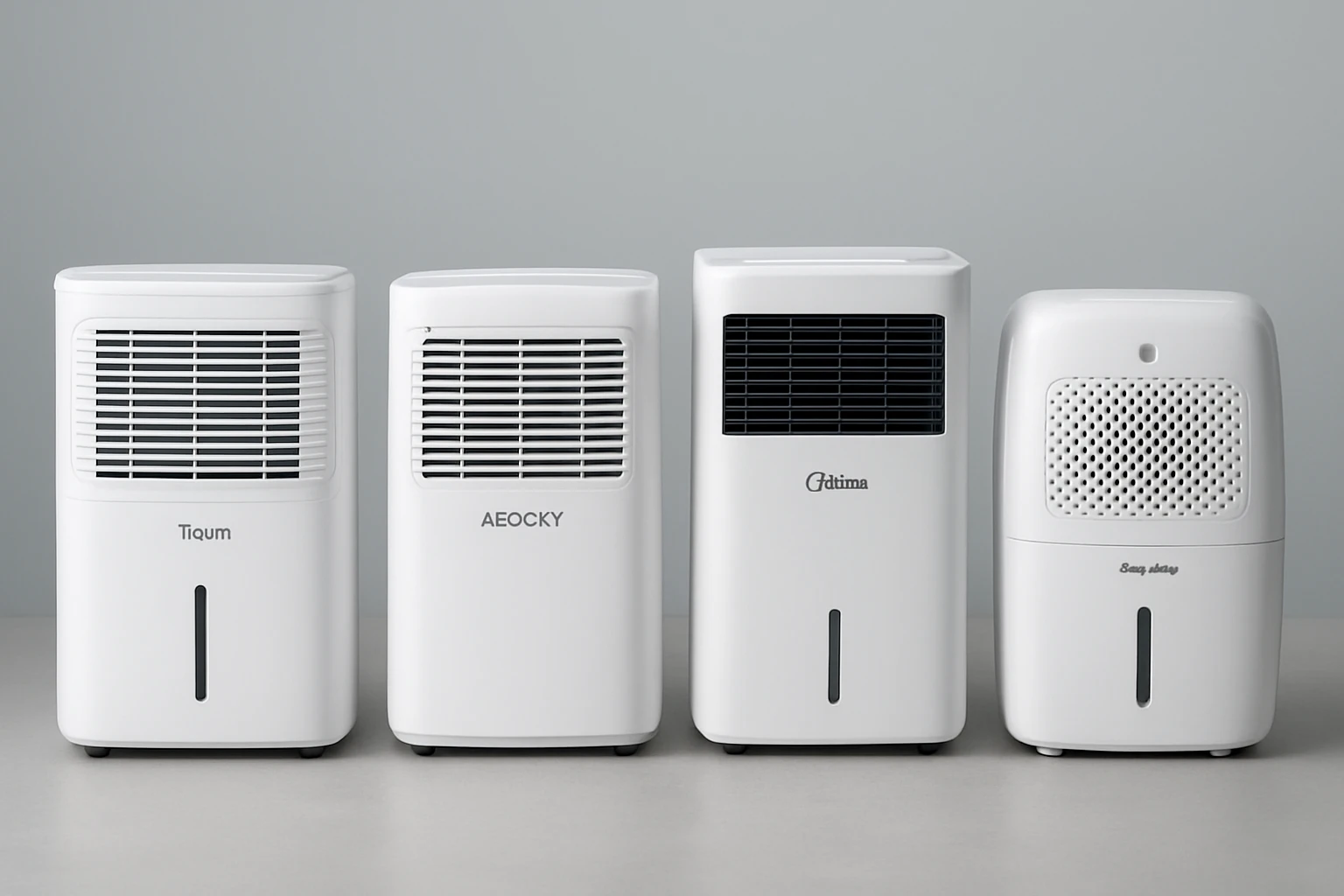
Introduction
Moisture control is essential for comfort, health, and the longevity of building materials. This article compares four Amazon dehumidifiers that represent distinct price points, technologies, and target environments. By examining price, features, customer sentiment, and real‑world performance, readers can determine which unit best matches their specific humidity challenges.
Individual Product Overviews
ToLife Dehumidifier
The ToLife model offers a 95 oz (2.8 L) water tank, semiconductor condensation technology, and a seven‑color LED night‑light. It covers up to 950 sq ft, operates in a low‑speed sleep mode under 30 dB, and includes automatic shut‑off when the tank is full. Priced at $59.99, it holds a 4.2‑star rating from 5,258 reviews. Positive reviewers highlight its quiet operation, compact size, and attractive lighting.
AEOCKY Smart Dehumidifier
The AEOCKY unit is a high‑capacity, ENERGY STAR Most Efficient 2025 certified compressor model. It removes up to 80 pints per day for spaces as large as 4,500 sq ft and consumes roughly 280 W in continuous mode. It features a digital humidistat, auto‑shutoff, and a continuous‑drain option. At $227.97 it carries a 4.5‑star rating from 4,259 reviewers, many of whom praise its energy savings and quiet operation.
Midea Dehumidifier
The Midea 22‑pint model covers 1,500 sq ft, includes a 0.8‑gallon bucket, and is ENERGY STAR certified. It operates at 47 dBA, offers Wi‑Fi control via the SmartHome app, and provides a timer for scheduled operation. It is priced at $169.99 and holds a 4.4‑star rating from 9,544 reviews. Users frequently mention its reliable moisture removal and convenient app integration.
Eva‑Dry Mini Dehumidifier
The Eva‑Dry E‑333 is a cordless, rechargeable silica‑gel unit designed for small spaces up to 333 cu ft. It absorbs 4–6 oz of moisture before requiring a recharge that lasts 20–30 days. It costs $14.97 and has a 4.2‑star rating from 34,742 reviews. Reviewers appreciate its plug‑free design, long service life, and effectiveness in closets and bathrooms.
Head‑to‑Head Comparison
Price and Value
- ToLife: $59.99 – low entry price with LED ambience and modest capacity.
- AEOCKY: $227.97 – premium price justified by large coverage, high removal rate, and ENERGY STAR Most Efficient certification.
- Midea: $169.99 – mid‑range price offering smart connectivity and ENERGY STAR efficiency.
- Eva‑Dry: $14.97 – budget option for very small areas, no electricity required.
Features and Specifications
| Feature | ToLife | AEOCKY | Midea | Eva‑Dry |
|---|---|---|---|---|
| Coverage Area | 950 sq ft | 4,500 sq ft | 1,500 sq ft | 333 cu ft |
| Water Removal Capacity | 95 oz (2.8 L) per day | 80 pints (≈38 L) per day | 22 pints (≈10 L) per day | 4–6 oz per cycle |
| Power Consumption | Not specified (semiconductor technology is low‑power) | ≈280 W (continuous) | ≈120 W (average) | 0 W (no electricity) |
| Noise Level | <30 dB (sleep mode) | Quiet (reviewers note fan is audible, compressor silent) | 47 dBA | Silent |
| Smart Features | LED colour selection, automatic shut‑off | Digital humidistat, auto‑shutoff, continuous drain | Wi‑Fi control, Alexa/Google Assistant, timer | Rechargeable silica gel, indicator beads |
Customer Ratings and Feedback
All four units exceed four stars, indicating strong overall satisfaction. ToLife reviewers often mention the pleasant night‑light and ease of tank removal. AEOCKY customers highlight energy savings, stating, "It uses only 280 watts and saved me about $100 on my electricity bill." Midea users appreciate the app, with one reviewer noting, "I can lower humidity from my phone while at work." Eva‑Dry fans love the cordless convenience, quoting, "No outlet needed and it keeps my closet dry for weeks."
Performance and Reliability
- ToLife: Semiconductor condensation provides consistent dehumidification below 45 % RH; automatic shut‑off prevents overflow.
- AEOCKY: Certified as ENERGY STAR Most Efficient 2025; independent tests show up to 50 % lower energy use than non‑certified models.
- Midea: Long‑term durability demonstrated by users reporting three years of continuous operation without failure.
- Eva‑Dry: No moving parts, thus minimal mechanical failure; silica gel can be recharged for up to ten years.
Best Use Cases
- ToLife – Small to medium rooms such as bedrooms, bathrooms, or closets where ambience is desired.
- AEOCKY – Large basements, whole‑house applications, or commercial spaces requiring high moisture extraction.
- Midea – Medium‑sized living areas, especially where remote monitoring and scheduling are valuable.
- Eva‑Dry – Tiny enclosures, wardrobes, gun safes, or vehicles where power outlets are unavailable.
Pros & Cons
ToLife Dehumidifier
- Pros: Affordable, quiet sleep mode, attractive LED lighting, automatic shut‑off, portable handles.
- Cons: Small water tank requires frequent emptying, limited coverage compared with larger units.
AEOCKY Smart Dehumidifier
- Pros: Highest removal capacity, ENERGY STAR Most Efficient 2025, continuous drain option, digital controls.
- Cons: Higher upfront cost, tank size not disclosed, may need external drainage setup.
Midea Dehumidifier
- Pros: Smart Wi‑Fi integration, ENERGY STAR certified, moderate noise, built‑in timer.
- Cons: Bucket capacity 0.8 gallon may require multiple daily emptyings in humid climates.
Eva‑Dry Mini Dehumidifier
- Pros: No electricity required, long recharge life, silent operation, very low price.
- Cons: Very limited capacity, unsuitable for rooms larger than a small closet.
Recommendations
For a budget‑friendly unit that adds aesthetic value to a bedroom or bathroom, the ToLife Dehumidifier is the optimal choice. Homeowners needing whole‑basement moisture control should consider the AEOCKY Smart Dehumidifier despite its higher price, because its 80‑pint capacity and ENERGY STAR certification deliver long‑term savings. The Midea Dehumidifier fits well for tech‑savvy users who want remote control and moderate coverage. Finally, the Eva‑Dry Mini Dehumidifier is best for closets, cabinets, or travel applications where power is unavailable.
FAQ
- Do these dehumidifiers require regular maintenance? All units with water tanks (ToLife, AEOCKY, Midea) need periodic emptying and occasional cleaning of the tank to prevent mold. The Eva‑Dry silica‑gel beads only require recharging.
- Can I run the AEOCKY unit continuously? Yes; its ENERGY STAR Most Efficient 2025 rating allows 24/7 operation while keeping electricity use low, as demonstrated by reviewers who report 4–6 kWh per day.
- Is Wi‑Fi control necessary for effective dehumidification? Wi‑Fi is optional. It adds convenience for remote scheduling, but the core moisture removal performance of each unit remains unchanged.
- What size room is the Eva‑Dry suitable for? The manufacturer states it works for spaces up to 333 cubic feet, making it ideal for closets, small bathrooms, or vehicle interiors.
- How does the LED night‑light affect power consumption? The LED on the ToLife model consumes minimal power (typically under 0.5 W) and does not significantly impact overall energy use.
- Do any of these models include a built‑in pump? None of the four units include a built‑in pump. Continuous drainage for AEOCKY and Midea requires a hose connection to a floor drain or sink.
- Which unit offers the lowest noise level? The ToLife sleep mode operates below 30 dB, making it the quietest for nighttime use, followed closely by the AEOCKY unit whose compressor is reported as inaudible.
Conclusion
Each dehumidifier reviewed excels within its intended niche. The ToLife model delivers affordability and ambience for small spaces; the AEOCKY Smart Dehumidifier dominates large‑area performance while delivering energy savings; the Midea unit balances smart features with moderate capacity; and the Eva‑Dry provides a cordless solution for tiny enclosures. Buyers should match the unit to the size of the area, desired connectivity, and budget. For most households, the ToLife and Midea models together cover the majority of residential needs, while the AEOCKY serves power users and the Eva‑Dry addresses niche applications.
Products Mentioned in This Review
Frequently Asked Questions
What size space can the ToLife dehumidifier effectively cover?
The ToLife model is rated for up to 950 sq ft, making it suitable for medium‑size rooms or apartments.
How does the AEOCKY Smart Dehumidifier’s ENERGY STAR rating benefit users?
Its ENERGY STAR Most Efficient 2025 certification means lower electricity costs and greener operation compared to non‑rated units.
Is the water tank capacity of 95 oz sufficient for continuous use?
A 95 oz (2.8 L) tank can run several hours before needing emptying, but high‑humidity areas may require more frequent checks.
What are the key differences between portable and central dehumidifiers on Amazon?
Portable units like ToLife and AEOCKY are compact, easy to move, and ideal for single rooms, while central systems handle whole‑home humidity but cost more and need professional installation.
How important are customer reviews when choosing an Amazon dehumidifier?
Reviews reveal real‑world performance, noise levels, and durability, helping buyers gauge whether a model meets their specific moisture‑control needs.