Introduction
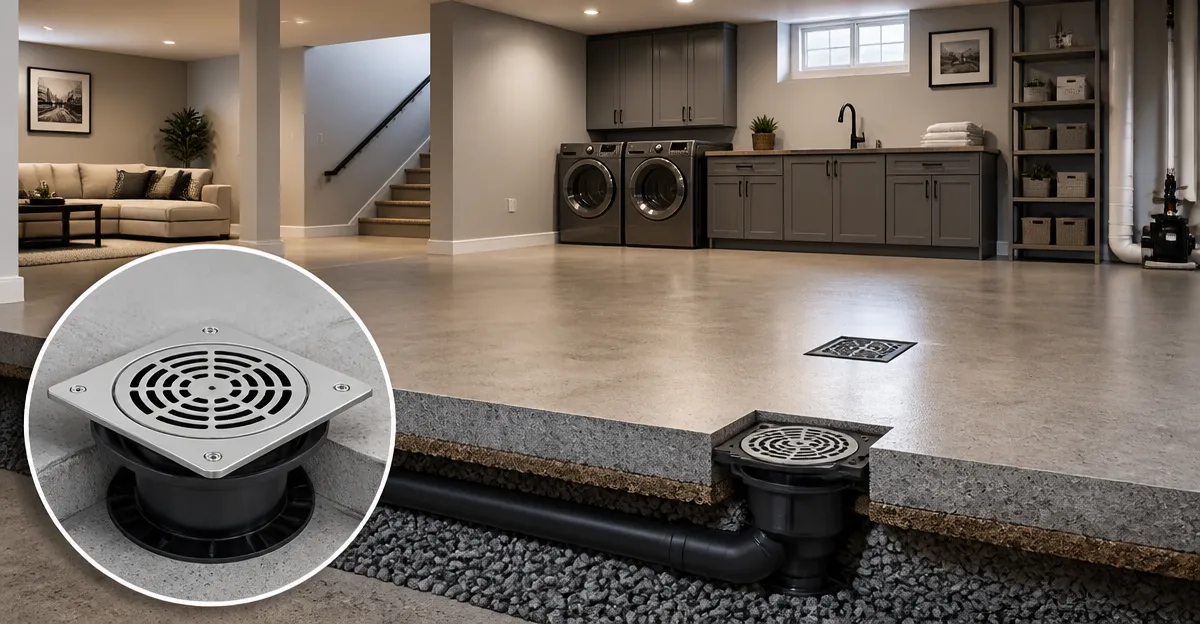
Designing a secondary floor drain for a finished basement requires a blend of engineering insight and practical product selection. Readers will discover how to calculate proper drain capacity, determine optimal placement, and satisfy local plumbing codes. The guide also highlights five vetted drain products that perform well in residential and light‑commercial settings. By the end, one will be equipped to create a drainage system that protects a basement from water intrusion while preserving finished surfaces.
Background/Context
Basements are prone to moisture from groundwater, roof leaks, and plumbing failures, making effective drainage a critical component of any remodel. A secondary floor drain works in concert with the primary sump pump, providing a low‑point outlet for water that accumulates on the finished floor. Understanding the difference between a trap‑type drain and a simple weep hole is essential, as the former prevents sewer gases from entering living spaces. Additionally, the choice of material—PVC, ABS, or metal—affects durability, chemical resistance, and installation complexity.
Understanding Drain Capacity
Drain capacity is measured in gallons per minute (GPM) and is influenced by pipe diameter, slope, and the hydraulic head of the basin. The National Plumbing Code recommends a minimum flow of 2 GPM for a 2‑inch drain serving a typical residential basement area. Larger floor plans or higher water tables may require 3 GPM or more, which often necessitates a 3‑inch drain or multiple 2‑inch units. Selecting a drain with a full‑port ball valve, such as the Zurn Adjustable Floor Drain, helps maintain the calculated flow rate without restriction.
Sizing and Hydraulic Calculations
Begin by estimating the maximum expected water volume during a storm event; a common rule of thumb is 1 inch of rainfall over the roof area per hour. Convert this volume to GPM and compare it to the drain’s rated capacity. For PVC drains, the Hazen‑Williams equation provides a reliable method to predict flow based on pipe roughness and slope. A 2‑inch PVC pipe with a 2‑degree slope typically delivers around 2.5 GPM, which meets most residential needs. When the calculated flow exceeds this value, consider a larger diameter or a dual‑drain configuration to avoid overflow.
Placement and Layout Considerations
Strategic placement of secondary drains minimizes the distance water must travel before reaching the low point. Position drains near high‑traffic zones such as laundry rooms, walk‑in closets, and utility areas where spills are frequent. Ensure the drain is located at least 6 inches away from walls to allow for proper grating installation and future maintenance access. The Sioux Chief 2‑Inch PVC Floor Drain offers a pre‑sloped outlet hub, simplifying alignment with the floor slope and reducing the need for additional fittings.
Code Compliance
Most jurisdictions adopt the International Residential Code (IRC) or local amendments that dictate floor drain specifications. The code typically requires a trap‑type drain with a minimum 2‑inch inlet and a vented discharge to prevent siphonage. In addition, the drain must be listed for secondary use and feature a removable strainer for cleaning. Products such as the Oatey PVC Floor Drain with Grate are commercially graded and meet the IRC’s durability standards for high‑traffic areas.
Product Recommendations
When selecting a drain, prioritize features that align with the project’s hydraulic demands and aesthetic goals. The Zurn Adjustable Floor Drain provides a nickel‑bronze top and a quarter‑turn ball valve, delivering both durability and ease of operation. For projects that demand a compact footprint, the Oatey Straight ABS Floor Drain fits into tight spaces at only 1 3/16 inches high while still accommodating a 2‑inch pipe. The PROFLO 2‑Inch PVC Floor Drain incorporates an integral backwater device, adding protection against reverse flow during sewer backups. Each of these products carries a strong user rating, indicating reliable performance in real‑world installations.
Comparison/Selection Guide
- Zurn Adjustable Floor Drain – Best for heavy‑duty residential applications; 4.4‑star rating, robust brass‑finished top, and optional vandal‑proof screws.
- Sioux Chief 2‑Inch PVC Floor Drain – Ideal for DIY installers seeking a pre‑sloped hub and American‑made construction; 4.3‑star rating.
- Oatey PVC Floor Drain with Grate – Suitable for commercial‑style basements where a stainless‑steel grate is desired; 4.7‑star rating.
- Oatey Straight ABS Floor Drain – Perfect for low‑profile installations under finished flooring; 3.9‑star rating, budget‑friendly.
- PROFLO 2‑Inch PVC Floor Drain – Offers integrated backwater protection for areas prone to sewer surges; 4.7‑star rating.
Choose a drain that matches the calculated GPM, the available installation height, and the desired aesthetic. If the basement will host a home gym or workshop, prioritize a heavy‑duty model with a thick grate. For a simple laundry room, a compact ABS unit may provide sufficient performance at a lower cost.
Best Practices & Tips
- Verify the floor slope before installing the drain; a minimum 1‑2% slope ensures water reaches the inlet without pooling.
- Use solvent‑weld connections for PVC drains to create a leak‑free seal; follow manufacturer cure times before testing.
- Install a removable strainer that can be accessed without removing the floor finish; this simplifies routine cleaning.
- Schedule periodic inspections of the trap seal to confirm it remains filled with water, preventing gas migration.
- Document the exact location of each secondary drain on the basement’s as‑built drawings for future maintenance.
FAQ
- What size drain is required for a 1,200 sq ft finished basement?
- A 2‑inch drain with a 2‑degree slope typically handles the expected flow; however, a 3‑inch drain offers additional capacity for heavy rainfall events.
- Can I install a PVC floor drain over an existing concrete slab?
- Yes, provided the slab is clean, level, and the drain’s base is bonded with a suitable mortar or epoxy to prevent movement.
- Do I need a vent pipe for a secondary floor drain?
- Most codes require a vent to prevent siphonage; a 1‑inch vent pipe connected to the main vent stack satisfies this requirement.
- How often should the strainer be cleaned?
- Inspect the strainer monthly and clean after any significant water event; regular maintenance prevents clogging and maintains flow.
- Is an ABS drain suitable for a wet bar area?
- ABS is resistant to corrosion and can be used in wet bars, but ensure the drain’s rating matches the anticipated GPM and that it is listed for secondary use.
Conclusion
Designing a secondary floor drain for a finished basement involves accurate hydraulic sizing, thoughtful placement, and strict adherence to code. By applying the calculations and best‑practice guidelines presented, one can protect the living space from water damage while maintaining a clean aesthetic. The product recommendations provide reliable options that align with diverse budgetary and performance requirements. Ultimately, a well‑engineered secondary drain enhances the durability and resale value of any finished basement.
Products Featured in This Guide
Zurn Adjustable Floor Drain
Price: $45.69 | Rating: 4.4/5 (114 reviews)
Featured for its durable nickel‑bronze top, quarter‑turn ball valve, and optional vandal‑proof screws, making it ideal for high‑traffic finished basements.
Sioux Chief 2‑Inch PVC Floor Drain
Price: $31.00 | Rating: 4.3/5 (29 reviews)
Featured for its pre‑sloped outlet hub, American manufacturing, and compact design that simplifies installation in residential basements.
Oatey PVC Floor Drain with Grate
Price: $44.19 | Rating: 4.7/5 (39 reviews)
Featured for its commercial‑grade barrel, adjustable height, and stainless‑steel grate, suitable for basements that experience heavy foot traffic.
Oatey Straight ABS Floor Drain
Price: $13.45 | Rating: 3.9/5 (49 reviews)
Featured for its low profile (1 3/16 inches high) and suitability for tight spaces where a shallow drain is required.
PROFLO 2‑Inch PVC Floor Drain
Price: $64.88 | Rating: 4.7/5 (10 reviews)
Featured for its integrated backwater device, deep sump bowl, and full 3‑inch trap seal, offering added protection against sewer backflow.
Frequently Asked Questions
What is a secondary floor drain and why is it needed in a finished basement?
A secondary floor drain provides a low‑point outlet for water that bypasses the primary sump pump, protecting finished surfaces from moisture damage.
How do I calculate the proper capacity for a secondary floor drain?
Determine the maximum expected flow (in gallons per minute) from sources like groundwater or leaks and select a drain rated at or above that rate.
Where should a secondary floor drain be placed for optimal performance?
Install it at the lowest point of the finished floor, typically near the sump pit or along the perimeter where water naturally collects.
What are the differences between trap‑type drains and weep holes?
Trap‑type drains include a water seal that blocks sewer gases, while weep holes are simple openings without a seal, allowing gases to enter.
Which material—PVC, ABS, or metal—is best for a residential secondary floor drain?
PVC is most common for homes due to its durability, chemical resistance, and ease of installation, though ABS or metal may be chosen for specific code or aesthetic requirements.