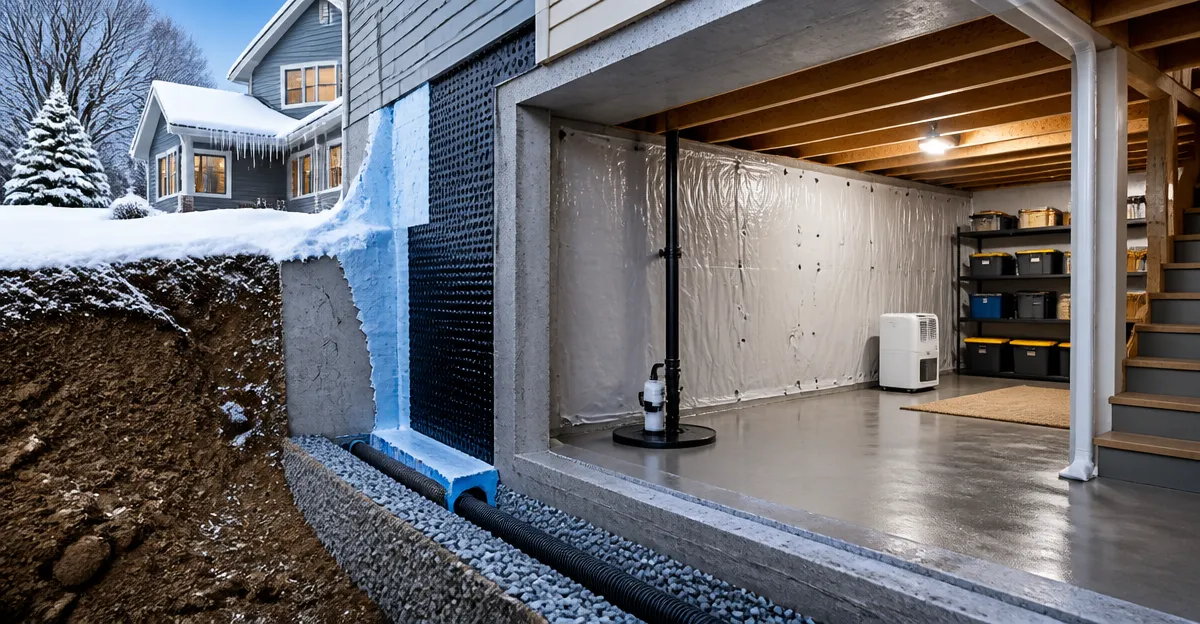
The Homeowner’s Guide to Basement Waterproofing Strategies for Freeze‑Thaw Climates: Prevent Cracks, Ice Dams & Mold
Introduction
Basements located in regions that experience repeated freeze‑thaw cycles face unique challenges. Water infiltrates through cracks, expands when it freezes, and can create ice dams that push moisture back into the interior. Over time, this moisture promotes mold growth and compromises structural integrity. This guide explains the science behind these problems, outlines proven waterproofing strategies, and recommends five Amazon products that complement each method. Readers will leave with a clear plan to protect their foundations, reduce maintenance costs, and maintain a healthy indoor environment.
Background and Context
When ambient temperature drops below freezing, water in porous concrete expands by approximately 9 %. This expansion exerts pressure on surrounding material, widening existing cracks and creating new fissures. During thaw periods, the same cracks allow meltwater and groundwater to seep into the basement. If the water reaches interior surfaces, it can freeze again, forming ice dams that push water upward and increase the risk of mold. Understanding the interaction between soil moisture, hydrostatic pressure, and thermal movement is essential before selecting a waterproofing system.
Key concepts include:
- Hydrostatic pressure: The force exerted by standing water against basement walls.
- Elastomeric membranes: Flexible coatings that stretch with concrete movement while maintaining a watertight seal.
- Capillary action: The ability of porous materials to draw water upward, often leading to hidden moisture.
- Vapor barriers: Materials that block moisture diffusion from the soil into interior air.
By addressing each of these factors, homeowners can develop a layered defense that remains effective despite seasonal temperature swings.
Core Waterproofing Strategies
1. Exterior Foundation Sealing
Applying a continuous waterproof membrane on the exterior of the foundation is the most reliable method for preventing water ingress. The membrane must be flexible enough to accommodate concrete movement and durable enough to resist UV degradation when exposed.
For interior‑accessible projects, a high‑performance liquid rubber coating provides similar protection without excavation. The Liquid Rubber Foundation Sealant creates a permanent, 900 % elongation membrane that adheres to concrete, masonry, wood, and metal. It is rated 4.5 / 5 stars from 3,391 reviews and costs $179.95 for a 5‑gallon pail, covering up to 50 sq ft per gallon on interior surfaces (2‑3 coats) and 20 sq ft per gallon on exterior surfaces (3‑4 coats). The product dries black, contains zero VOCs, and requires no mixing.
Key benefits include:
- Superior flexibility that prevents future cracking.
- High‑build formulation that behaves like waterproof paint.
- Compatibility with reinforcing geo‑textile for joints and transitions.
2. Interior Paint‑Based Waterproofing
When excavation is impractical, a waterproofing paint can provide a secondary barrier on interior walls. The coating should resist moisture penetration, be alkali‑resistant, and maintain a breathable surface to avoid trapped vapor.
The KILZ Basement Waterproofing Paint utilizes nanotechnology to block up to 12 PSI of water pressure. It is rated 4.7 / 5 stars from 1,251 reviews and costs $48.00 per gallon. The low‑odor, zero‑VOC formula dries to the touch in one hour and can be recoated after four hours. Full cure occurs within 7–14 days, yielding a washable, alkali‑resistant finish.
Advantages include:
- Fast drying time that minimizes disruption.
- White finish that reflects light, improving basement livability.
- Suitable for both interior and exterior applications when surfaces are properly pre‑filled.
3. Elastomeric Liquid Rubber Coatings
Elastomeric coatings combine the flexibility of liquid rubber with the ease of brush or spray application. They are especially effective for below‑grade walls, insulated concrete forms, and metal studs.
The AMES Blue Max Liquid Rubber Waterproofer offers 900 % elongation, a tough 800 % elastic membrane, and a non‑toxic, VOC‑compliant formula. Priced at $46.08 per gallon, it holds a 4.5 / 5‑star rating from 599 reviewers. It can be applied by brush, roller, or spray, and requires a 24‑hour interval between coats.
Notable attributes:
- Adhesive qualities that bond surfaces together, strengthening wall assemblies.
- UV sensitivity that mandates a topcoat for exterior exposure.
- Made in the USA and backed by a woman‑owned, veteran‑founded company.
4. Flood Barrier Systems for Entry Points
Even a perfectly sealed foundation can be compromised by water entering through doorways, garage openings, or utility penetrations. Deployable flood barriers provide a rapid, labor‑free method to divert water away from these vulnerable points.
The Quick Dam Flood Barrier is a water‑activated, 5‑ft long barrier that expands to 3.5 in height within ten minutes. It is rated 4.4 / 5 stars from 6,348 reviews and costs $22.19 for a pack of two. Each barrier absorbs up to 4 gallons of water, making it suitable for door thresholds, garage entrances, and temporary construction sites.
Key points:
- No sand or labor required; simply place and wet.
- Dual‑chamber design prevents rolling during activation.
- Compact storage allows homeowners to keep a ready‑to‑use emergency kit.
5. Absorbent Socks for Localized Leaks
Small, persistent leaks from appliances, condensers, or pipe joints often escape detection until damage occurs. Highly absorbent polypropylene socks capture water at the source, reducing the chance of mold formation.
The PIG Absorbent Water Sock absorbs up to 1 gallon per 3 in × 4 ft sock. Priced at $29.29 for a pack of four, it enjoys a 4.5 / 5‑star rating from 5,470 reviewers. The mildew‑resistant filler remains effective after multiple wash‑outs, and the socks can be air‑dried and reused.
Benefits include:
- Flexible placement under freezers, coolers, and around pipe penetrations.
- Reusable up to three cycles, reducing waste.
- Non‑toxic, lightweight design that does not interfere with structural components.
Comparison and Selection Guide
| Feature | Liquid Rubber Foundation Sealant | KILZ Basement Paint | AMES Blue Max | Quick Dam Barrier | PIG Water Sock |
|---|---|---|---|---|---|
| Primary Use | Full‑wall exterior/interior membrane | Interior/exterior paint barrier | Elastomeric coating for below‑grade | Temporary flood barrier at openings | Localized absorbent leak capture |
| Coverage (per gallon) | 50 sq ft interior / 20 sq ft exterior | ≈300 sq ft (one coat) | ≈250 sq ft | 4 gal per barrier (5 ft length) | 1 gal per sock |
| Elongation | 900 % | N/A | 900 % | N/A | N/A |
| VOC | Zero | Zero | Compliant | None | None |
| Price (USD) | $179.95 (5 gal) | $48.00 (1 gal) | $46.08 (1 gal) | $22.19 (2‑pack) | $29.29 (4‑pack) |
| Average Rating | 4.5/5 | 4.7/5 | 4.5/5 | 4.4/5 | 4.5/5 |
| Best For | Comprehensive foundation waterproofing | Quick interior finish with aesthetic benefit | DIY elastomeric projects requiring topcoat | Emergency flood protection at doors | Spot‑leak mitigation and moisture capture |
Homeowners should match the product to the specific failure mode they are addressing. For a full‑scale foundation retrofit, the Liquid Rubber Foundation Sealant or AMES Blue Max are appropriate. For cosmetic interior upgrades that also block moisture, KILZ Paint offers a fast, low‑odor solution. When budget or time constraints limit extensive work, Quick Dam barriers and PIG socks provide targeted protection.
Best Practices & Tips
- Prepare Surfaces Thoroughly: Clean all concrete, remove loose material, and fill visible cracks with hydraulic cement before applying any membrane.
- Apply Multiple Coats: Most liquid rubber products achieve optimal performance after 3‑4 coats, allowing each layer to cure fully (24‑48 hours).
- Integrate Geo‑Textile Reinforcement: For high‑stress joints, embed a rubber‑compatible geo‑textile between coats to distribute tension.
- Seal Penetrations: Use compatible sealants around pipes, electrical conduits, and window wells to prevent water pathways.
- Maintain Proper Drainage: Ensure exterior grading slopes away from the foundation and install or clean French drains regularly.
- Monitor Humidity: Deploy a dehumidifier set to 50 % relative humidity during winter thaw cycles to inhibit mold growth.
- Test After Installation: Perform a flood test by spraying water on the exterior wall for 15 minutes; observe interior for any seepage before the season begins.
Frequently Asked Questions
1. Will liquid rubber coatings crack in freezing temperatures?
No. Products such as the Liquid Rubber Foundation Sealant retain flexibility down to -30 °F, allowing the membrane to expand and contract without losing adhesion.
2. Can I apply waterproof paint directly over a previously painted wall?
Yes, provided the existing surface is clean, dry, and free of loose paint. Light sanding improves adhesion for the KILZ Basement Waterproofing Paint.
3. How often should I replace absorbent water socks?
The PIG socks can be reused 2‑3 times after thorough air‑drying. Replace them when the filler no longer regains its original shape or when a mildew odor develops.
h3>4. Do Quick Dam barriers work in saltwater environments?No. The barriers are designed for freshwater; exposure to saltwater can degrade the cellulose component and reduce performance.
5. Is a topcoat necessary for AMES Blue Max when used outdoors?
Yes. The formulation is UV‑sensitive; a compatible UV‑stable elastomeric topcoat extends service life and prevents chalking.
6. What is the typical lifespan of a liquid rubber membrane?
When applied correctly and maintained, a liquid rubber membrane can last 30‑50 years, outperforming traditional bitumen coatings.
Conclusion
Basement waterproofing in freeze‑thaw climates demands a layered approach that addresses hydrostatic pressure, thermal movement, and localized leaks. By combining exterior membrane systems, interior paint barriers, elastomeric coatings, and targeted products such as flood barriers and absorbent socks, homeowners can dramatically reduce the risk of cracks, ice dams, and mold. The recommended products have been vetted for performance, durability, and user satisfaction, ensuring that each step of the strategy is supported by reliable tools. Implement the best‑practice checklist, monitor moisture levels regularly, and adjust as needed to maintain a dry, healthy basement for decades.
Products Featured in This Guide
Liquid Rubber Foundation Sealant
Price: $179.95 | Rating: 4.5/5 (3,391 reviews)
Featured for its high‑elongation, zero‑VOC membrane that creates a permanent waterproof barrier on both interior and exterior foundation surfaces.
KILZ Basement Waterproofing Paint
Price: $48.00 | Rating: 4.7/5 (1,251 reviews)
Featured for its nanotechnology barrier, rapid drying time, and dual interior/exterior applicability, making it ideal for quick aesthetic upgrades.
AMES Blue Max Liquid Rubber Waterproofer
Price: $46.08 | Rating: 4.5/5 (599 reviews)
Featured for its strong adhesive properties, 900 % elongation, and suitability as a primer for other elastomeric coatings.
Quick Dam Flood Barrier
Price: $22.19 (Pack of 2) | Rating: 4.4/5 (6,348 reviews)
Featured for its rapid water‑activated expansion, providing an emergency solution to protect doorways and garage entries during sudden floods.
PIG Absorbent Water Sock
Price: $29.29 (4‑pack) | Rating: 4.5/5 (5,470 reviews)
Featured for its mildew‑resistant, reusable design that captures localized leaks and condensation, protecting flooring and equipment.