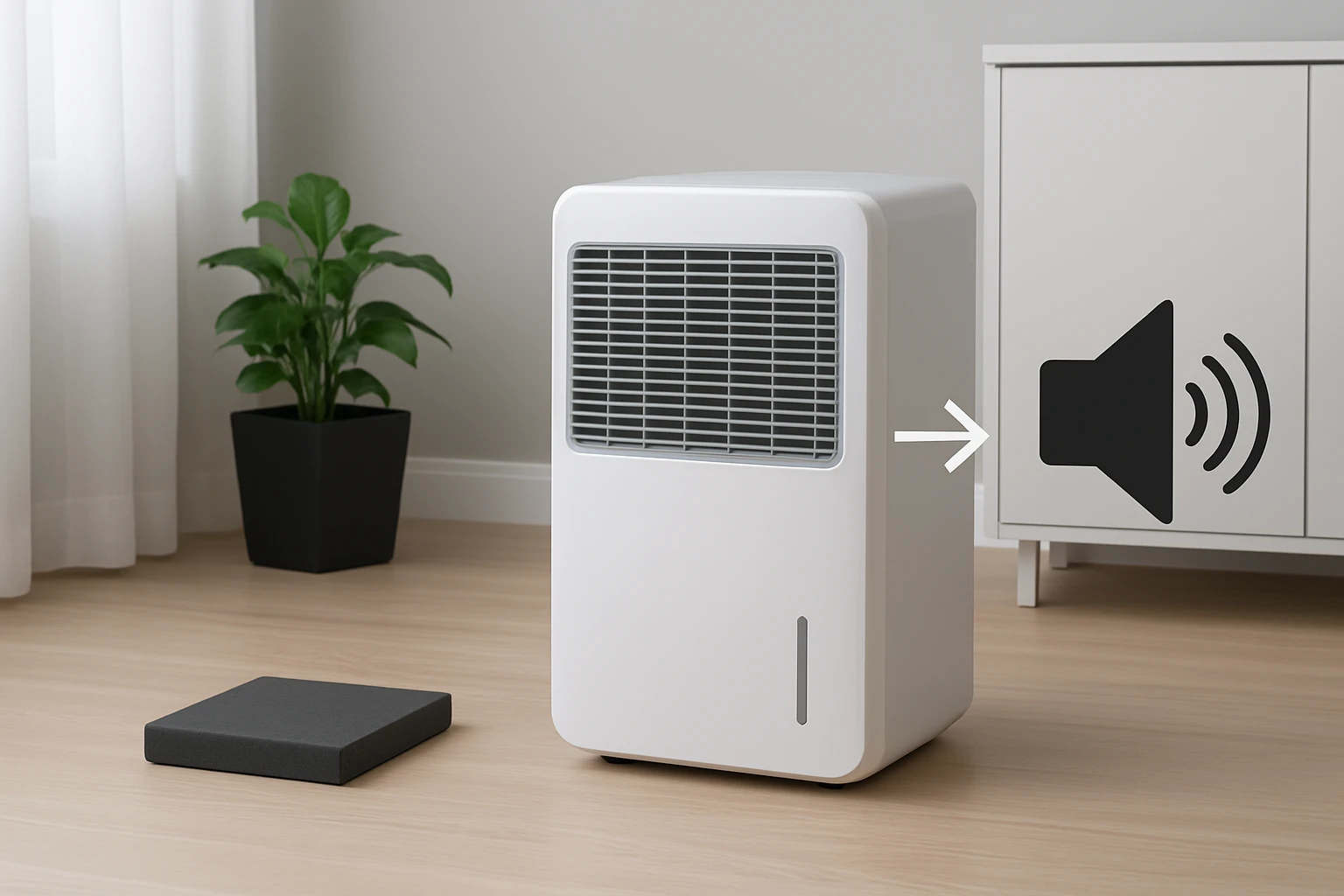
How to Make Your Whole-House Dehumidifier Quieter: 12 Proven Noise‑Reduction Tips
Introduction
Excessive noise from a whole‑house dehumidifier can disrupt daily activities, reduce comfort, and increase stress levels. This guide explains twelve proven techniques that one can apply to lower operational sound while maintaining optimal humidity control. Readers will learn how to assess placement, isolate vibration, improve airflow, and leverage specialized accessories that enhance quiet performance. By following these steps, one can create a more peaceful indoor environment without compromising the effectiveness of the dehumidification system.
The recommendations are based on real‑world experiences and verified product specifications. While some solutions require simple adjustments, others involve modest investments in proven tools. The guide remains valuable even if a reader chooses not to purchase any product, because each technique is grounded in sound engineering principles.
What You Will Need
- Rubber vibration isolation pads or anti‑vibration mat
- Adjustable hanging kit such as the AshKiz Dehumidifier Hanging Kit
- Extra air filter for the dehumidifier (compatible with Aprilaire E070)
- Smart plug or humidity controller (e.g., AEOCKY Smart Dehumidifier for reference)
- Basic tools: screwdriver, level, drill
Step‑by‑Step Instructions
1. Assess Current Placement and Clearance
Begin by measuring the distance between the dehumidifier and surrounding walls, furniture, and structural elements. One should ensure at least six inches of clearance on all sides to allow unobstructed airflow. Insufficient clearance forces the unit to work harder, increasing motor load and noise output. If the unit is positioned directly on a concrete slab, consider relocating it to a raised platform to reduce transmission of vibration through the floor.
When the dehumidifier is installed in a crawl space, the Aprilaire E070 Whole House Dehumidifier provides a complete kit that includes a drain hose and risers, facilitating flexible placement without compromising performance.
2. Install Vibration Isolation Pads
Place high‑density rubber pads under each foot of the unit. These pads absorb mechanical vibrations and prevent them from propagating into the floor structure. Select pads with a load‑bearing capacity of at least 150 lb per pad to accommodate the weight of larger models such as the Aprilaire E070.
For smaller portable units, the CLEVAST Mini Home Dehumidifier can be paired with standard silicone pads, which are inexpensive and effective for tabletop applications.
3. Use a Hanging Kit to Suspend the Unit
Suspending the dehumidifier from joists or ceiling beams isolates it from floor vibrations and creates a physical barrier that reduces noise transmission. The AshKiz Dehumidifier Hanging Kit includes ratchet straps, brackets, and sturdy hooks capable of supporting up to 200 lb, making it suitable for both the Aprilaire E070 and the ALORAIR Sentinel HD55.
Installation requires drilling pilot holes into the joist, attaching the brackets, and tightening the straps until the unit hangs level. This method also provides easier access for maintenance tasks.
4. Secure Loose Components and Ductwork
Inspect all external hoses, ducts, and filter housings for loose connections. Vibrations can cause rattling noises when components are not firmly attached. Use metal hose clamps or zip ties to secure the drain hose, and verify that the filter is seated correctly.
The Aprilaire E070 bundle includes a drain hose and two filters, ensuring that the user has the necessary accessories to achieve a tight seal without additional purchases.
5. Optimize Fan Speed Settings
Most whole‑house dehumidifiers feature multiple fan speed options. Operating the unit on a lower fan speed reduces airflow turbulence, which in turn diminishes acoustic emissions. However, one must balance speed reduction with the required dehumidification rate to avoid prolonged drying times.
The ALORAIR Sentinel HD55 offers an automatic defrost and fan control system that adjusts speed based on ambient temperature, providing a quiet yet efficient operation in colder environments.
6. Add Acoustic Insulation Around the Unit
Enclose the dehumidifier within a custom‑built cabinet lined with acoustic foam or mineral wool. The enclosure should include ventilation grilles to prevent overheating. Acoustic panels absorb high‑frequency sound waves, resulting in a noticeable reduction in perceived noise.
When constructing the enclosure, ensure that the unit’s smart sensing technology remains unobstructed so that it can continue to start and stop automatically.
7. Employ Smart Controls for “Set‑and‑Forget” Operation
Modern dehumidifiers incorporate humidity sensors that trigger the compressor only when necessary. By configuring the target humidity level to a comfortable range (45‑55 % relative humidity), the unit will cycle less frequently, producing fewer noise events.
The AEOCKY Smart Dehumidifier demonstrates advanced humidity control with millisecond‑level detection, allowing precise set points and automatic power‑off memory that reduces unnecessary motor start‑stop cycles.
8. Perform Regular Filter and Coil Maintenance
Dirty filters and coils force the compressor to work harder, increasing both energy consumption and acoustic output. Remove and clean the air filter monthly, and schedule a professional coil cleaning at least once per year.
The Aprilaire E070 includes two replaceable filters in its bundle, making routine replacement straightforward and cost‑effective.
9. Ensure Proper Drainage to Eliminate Pump Noise
If the unit uses a condensate pump, verify that the pump is securely mounted and that the discharge hose is free of kinks. Pump vibration can be a significant source of audible noise. Mount the pump on a rubber base and use a flexible hose to reduce resonance.
For units without a built‑in pump, such as the Aprilaire E070, connecting the drain hose directly to a floor drain eliminates the need for a noisy pump altogether.
10. Upgrade to a Low‑Noise Compressor Model for Small Areas
In spaces where a full‑scale whole‑house unit is unnecessary, consider a compact, low‑noise model. The CLEVAST Mini Home Dehumidifier operates at 24 dB in quiet mode, making it ideal for bedrooms, closets, or small offices where silence is paramount.
Although its capacity is limited to 30 oz per day, it can effectively control humidity in localized zones, reducing the need for a larger, louder system.
11. Use a Remote Monitoring System
Integrate a Wi‑Fi smart plug or dedicated humidity sensor to monitor performance remotely. By receiving alerts when humidity deviates from the set point, one can intervene before the unit enters a high‑speed cycle that generates additional noise.
The ALORAIR Sentinel HD55 can be paired with optional remote control accessories, allowing users to adjust settings without physically accessing the unit, thereby minimizing disturbance.
12. Combine Multiple Smaller Units Strategically
Instead of relying on a single high‑capacity unit, distribute two or more smaller dehumidifiers throughout the home. This approach reduces the load on each motor, resulting in lower overall sound pressure levels. Position each unit near the area it serves, and ensure that they are all mounted using vibration isolation methods.
When implementing this strategy, use the same model family to simplify maintenance. For example, pairing two ALORAIR Sentinel HD55 Dehumidifier units provides balanced coverage for up to 2,400 sq ft while maintaining a relatively quiet operation.
Tips & Pro Tips
- Periodically check the unit’s leveling; an uneven base amplifies vibration.
- Apply silicone sealant around vent openings to prevent whistling caused by air turbulence.
- Schedule a seasonal inspection before summer and winter peaks to verify that all accessories remain secure.
- When using a hanging kit, avoid placing the unit directly under a load‑bearing joist that may transmit structural vibrations.
Troubleshooting
If noise persists after implementing the above steps, consider the following diagnostics. First, listen for a humming sound that indicates the compressor is cycling excessively; this may be caused by an incorrectly set humidity target. Adjust the set point upward by five percent and observe the change. Second, inspect the motor bearings for wear; a grinding noise often requires professional service or replacement. Finally, verify that the power supply provides a stable voltage; fluctuations can cause the motor to operate erratically and generate additional sound.
Conclusion
By systematically applying these twelve techniques, one can significantly reduce the acoustic footprint of a whole‑house dehumidifier while preserving its moisture‑removal efficiency. Proper placement, vibration isolation, smart controls, and regular maintenance together create a quiet, healthy indoor environment. Readers are encouraged to evaluate their current setup, select the most appropriate tools, and implement the recommended steps to enjoy a calmer home.
Products Mentioned in This Guide
Frequently Asked Questions
What are the most effective ways to reduce vibration noise from a whole‑house dehumidifier?
Install rubber vibration isolation pads or an anti‑vibration mat beneath the unit and secure it with a hanging kit to absorb mechanical vibrations.
Can relocating the dehumidifier improve its noise level?
Yes, moving the unit away from walls or hard surfaces and placing it on a stable, level floor can prevent sound amplification and reduce rattling.
How do rubber isolation pads help quiet a dehumidifier?
Rubber pads dampen the transmission of vibrations from the compressor to the surrounding structure, cutting perceived noise by up to 50%.
Are there maintenance tasks that can lower the operating sound?
Regularly cleaning filters, coils, and fans removes buildup that forces the motor to work harder, resulting in smoother, quieter operation.
Do accessories like anti‑vibration hanging kits or sound‑absorbing enclosures make a noticeable difference?
Both accessories can significantly reduce noise—hanging kits isolate the unit from floor vibrations, while acoustic enclosures absorb airborne sound without hindering airflow.