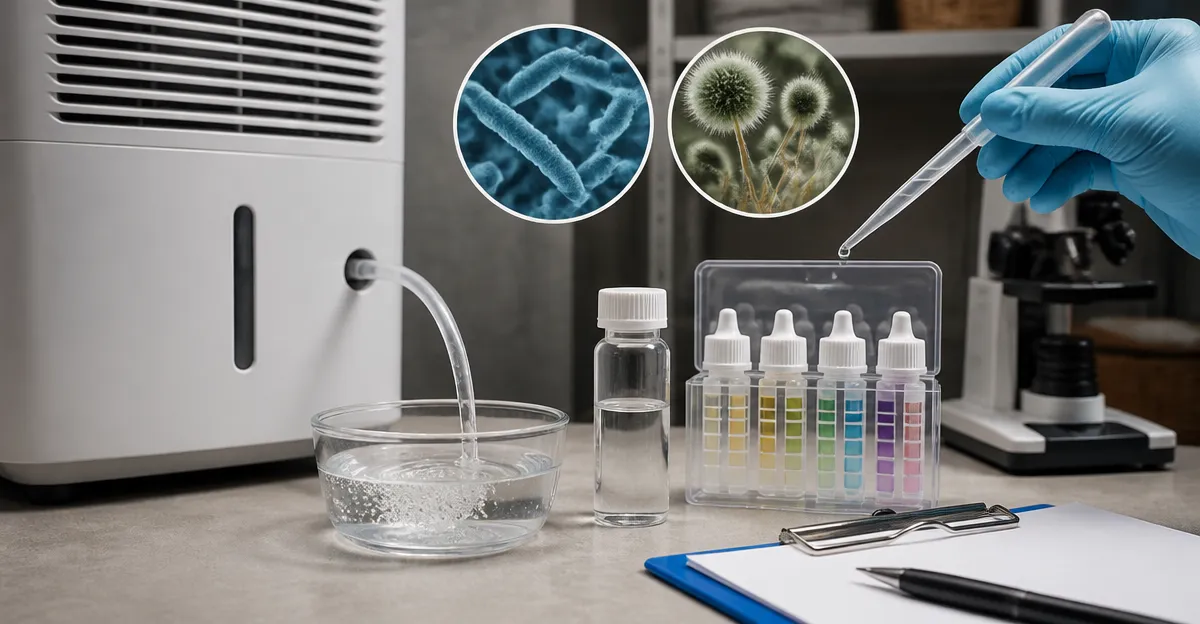
How to Test Dehumidifier Condensate for Bacteria and Mold: A Step-by-Step DIY Guide
Introduction
Dehumidifiers are essential for controlling indoor humidity, yet the water they collect can become a breeding ground for bacteria and mold if not monitored. This guide explains why condensate testing matters, what risks untreated water poses, and how readers can confidently test their condensate using affordable, accurate kits. By the end of the article, one will understand the science behind microbial growth, select the appropriate test kit, perform the test correctly, and interpret the results. The information is presented in a professional tone suitable for homeowners, facility managers, and DIY enthusiasts.
Background and Context
Condensate is essentially distilled water that has absorbed airborne particles, dust, and microorganisms while passing through the dehumidifier's cooling coils. When the temperature drops below the dew point, moisture condenses and is collected in a reservoir. Because the water sits for hours or days, it provides a moist environment conducive to bacterial proliferation and mold spore germination. Common contaminants include Legionella, Escherichia coli, Stachybotrys (black mold), and various fungi that thrive in humid conditions. Regular testing helps prevent health issues such as respiratory irritation, allergic reactions, and, in severe cases, Legionnaires' disease.
Testing condensate does not require a professional laboratory; modern multi‑parameter water test strips deliver reliable results within minutes. These kits are calibrated for parameters such as pH, hardness, chlorine, and, critically, bacterial presence. Selecting a kit with a broad parameter range ensures that users can assess both chemical and biological quality in a single process. The following sections outline the step‑by‑step procedure and recommend products that meet these criteria.
Choosing the Right Test Kit
When evaluating water‑test kits for condensate analysis, three factors dominate: breadth of parameters, accuracy of bacterial detection, and ease of interpretation. A kit that includes both chemical indicators (e.g., hardness, pH) and dedicated bacterial tests offers the most comprehensive picture. Below are five highly rated products that satisfy these requirements.
First, the Bestprod 21-in-1 Water Test Strips provide clear color‑coded results for 21 parameters, including hardness, lead, copper, chlorine, and a separate bacteria test for coliform and E. coli. Priced at $26.99 with a 4.4‑star rating from 3,518 reviews, the kit emphasizes user‑friendly instructions and a data‑sheet for tracking results over time.
Second, the Varify 17-in-1 Water Test Kit offers 100 strips across five sealed pouches and two bacteria tester kits that deliver results in 48 hours. At $26.97 and a 4.3‑star rating from 10,728 reviewers, it balances comprehensive coverage with premium quality construction.
Third, the SJ WAVE 22-in-1 Water Test Kit expands the parameter list to 22, including metals such as nickel and cadmium, and provides 125 strips plus dedicated bacteria tests. It retails for $21.99 and holds a 4.3‑star rating from 7,457 customers, making it a cost‑effective option for extensive monitoring.
The Hychek 21-in-1 Water Test Kit focuses on accuracy with vivid color blocks and a simple three‑step dip‑wait‑read protocol. Priced at $21.99 and rated 4.4 stars by 130 reviewers, it includes 145 strips and four coliform/E. coli tests, ideal for frequent condensate sampling.
Finally, the TESPERT 16-in-1 Water Test Strips deliver rapid 30‑second screening for 16 parameters, including total hardness, free chlorine, and lead. At $16.99 with a 4.4‑star rating from 3,175 users, it is the most budget‑friendly choice while still covering essential contaminants.
Step‑by‑Step Testing Procedure
Follow these eight steps to obtain reliable results from any of the kits listed above. The process is identical across products, though minor variations in timing may apply.
- Gather Materials: Obtain the chosen test kit, a clean disposable cup, a timer or smartphone, and protective gloves.
- Collect Condensate: Turn off the dehumidifier, remove the water reservoir, and pour 30 mL of fresh condensate into the cup. Avoid stirring the water to prevent sediment disruption.
- Prepare Test Strips: Open the pouch containing the relevant strip (e.g., bacteria, pH, hardness). Ensure the strip is dry and handle only by the edges.
- Dip the Strip: Submerge the reactive area of the strip into the sample for the time specified by the manufacturer (usually 1–2 seconds).
- Wait for Development: Place the strip on a flat surface and wait the recommended development period (commonly 30–45 seconds for chemical parameters, 48 hours for bacterial tests).
- Compare Colors: Use the included color chart to match the strip’s hue with the corresponding value. Record the reading on the provided data sheet.
- Interpret Results: Compare the recorded values against EPA or local water‑quality guidelines. For bacterial tests, a positive result indicates the presence of coliform/E. coli and warrants immediate remediation.
- Dispose Safely: Seal used strips in a plastic bag and discard according to local hazardous‑waste regulations. Clean the work area and wash hands thoroughly.
Repeat the procedure for each parameter of interest. Consistency in timing and lighting (preferably daylight or 6500 K LED) improves accuracy, as highlighted in the TESPERT guidelines.
Comparison and Selection Guide
| Product | Parameters Tested | Bacteria Test | Price | Rating |
|---|---|---|---|---|
| Bestprod 21‑in‑1 | 21 (hardness, lead, copper, chlorine, fluoride, etc.) | Included (coliform & E. coli) | $26.99 | 4.4/5 (3,518) |
| Varify 17‑in‑1 | 17 (lead, chlorine, hardness, iron, etc.) | 2 kits, 48‑hr results | $26.97 | 4.3/5 (10,728) |
| SJ WAVE 22‑in‑1 | 22 (nickel, zinc, cadmium, etc.) | Included | $21.99 | 4.3/5 (7,457) |
| Hychek 21‑in‑1 | 21 (nitrate, lead, fluoride, etc.) | 4 separate tests | $21.99 | 4.4/5 (130) |
| TESPERT 16‑in‑1 | 16 (hardness, chlorine, lead, etc.) | Not included (chemical only) | $16.99 | 4.4/5 (3,175) |
For condensate that may contain bacterial contamination, prioritize kits that include dedicated bacteria tests, such as Bestprod, Varify, SJ WAVE, or Hychek. If the primary concern is chemical parameters, TESPERT offers a low‑cost alternative.
Best Practices & Tips
- Test condensate at least once a month during high‑humidity seasons to detect early microbial growth.
- Store test strips in a cool, dry place; exposure to moisture degrades reagents and can produce false negatives.
- Perform tests in consistent lighting; daylight or a 6500 K LED lamp yields the most accurate color comparison.
- When using bacterial kits, follow the incubation instructions precisely; premature reading may miss colony formation.
- Maintain a log of results; trends over time help identify seasonal patterns and the effectiveness of cleaning routines.
- If any parameter exceeds recommended limits, clean the dehumidifier’s reservoir and coils with a diluted bleach solution (1 part bleach to 10 parts water) and retest after drying.
Frequently Asked Questions
1. Can I use regular pool test strips for dehumidifier condensate?
Pool strips are calibrated for chlorine and pH in large volumes of water and often lack bacterial detection. They may give misleading results for low‑volume condensate, so a dedicated water‑test kit is recommended.
2. How long does a bacterial test take to show results?
Most kits, such as those from Varify and Bestprod, require 48 hours of incubation to develop a visible color change indicating coliform or E. coli presence.
3. Is condensate safe to pour down the drain after testing?
Yes, provided the test indicates no harmful bacterial growth. If bacterial contamination is detected, treat the water with a disinfectant before disposal.
4. Do I need to calibrate the test strips?
No. The strips are pre‑treated with reagents that react at specific concentrations. Calibration is only necessary for laboratory‑grade meters.
5. How often should I replace the test strips?
Most manufacturers recommend using strips within two years of manufacture and storing them sealed. Replace any strip that appears discolored or has been exposed to humidity.
6. Can I test multiple dehumidifiers with one kit?
Absolutely. Kits such as the SJ WAVE 22‑in‑1 include 125 strips, sufficient for dozens of tests across several units.
7. What does a high hardness reading indicate?
High hardness suggests elevated calcium or magnesium levels, which can cause scaling on coils and reduce dehumidifier efficiency. Consider installing a water softener if hardness consistently exceeds 150 ppm.
Conclusion
Testing dehumidifier condensate for bacteria and mold is a straightforward, cost‑effective method to safeguard indoor air quality and protect health. By selecting a comprehensive water‑test kit, following a disciplined testing routine, and interpreting results against established guidelines, homeowners can identify contamination early and take corrective action. The products highlighted in this guide provide reliable, user‑friendly solutions that empower anyone to monitor condensate quality without laboratory assistance.
Products Featured in This Guide
Bestprod 21-in-1 Water Test Strips
Price: $26.99
Rating: 4.4/5 (3,518 reviews)
Featured for its comprehensive 21‑parameter coverage, clear color‑coded results, and included bacterial tests, making it ideal for condensate analysis.
Varify 17-in-1 Water Test Kit
Price: $26.97
Rating: 4.3/5 (10,728 reviews)
Chosen for its premium quality construction, 100 strips, and two 48‑hour bacterial tests that provide reliable detection of coliform and E. coli.
SJ WAVE 22-in-1 Water Test Kit
Price: $21.99
Rating: 4.3/5 (7,457 reviews)
Highlights include the widest parameter range (22 tests) and a large supply of 125 strips, suitable for extensive monitoring across multiple devices.
Hychek 21-in-1 Water Test Kit
Price: $21.99
Rating: 4.4/5 (130 reviews)
Features vivid color blocks and a simple three‑step protocol, providing accurate results for both chemical parameters and bacterial presence.
TESPERT 16-in-1 Water Test Strips
Price: $16.99
Rating: 4.4/5 (3,175 reviews)
Offers rapid 30‑second screening for 16 key parameters, making it an economical choice for routine condensate checks.