The Ultimate Guide to Dehumidifier Low-Temperature Performance and Defrost Cycles: Optimize, Troubleshoot, and Maintain
Introduction
Dehumidifiers are essential for maintaining healthy indoor air quality, especially in climates where temperature fluctuations are common. This guide explains how dehumidifiers operate in low‑temperature environments, why defrost cycles are necessary, and how homeowners can optimize performance, troubleshoot common problems, and maintain their units for long‑term reliability. Readers will gain a clear understanding of the underlying technology, learn practical strategies for energy‑efficient operation, and receive curated product recommendations that excel in cold‑weather conditions.
Background and Context
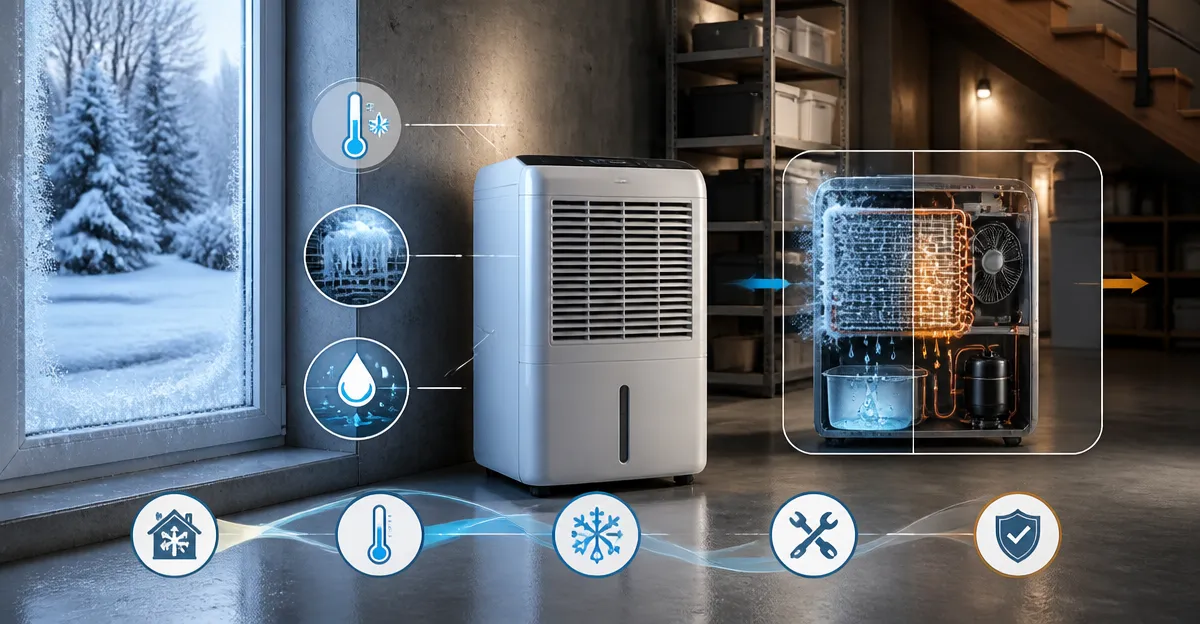
Most residential dehumidifiers rely on a refrigeration cycle that extracts moisture by cooling a coil below the dew point. When ambient temperature drops below approximately 65 °F (18 °C), the coil can freeze, reducing efficiency and potentially damaging the compressor. Modern units incorporate automatic defrost cycles that melt ice and restore airflow. Understanding the relationship between temperature, humidity, and the defrost mechanism is critical for selecting a model that will perform reliably in basements, crawl spaces, and unheated rooms.
Key terms include:
- Refrigeration Cycle: The process of cooling a coil to condense water vapor.
- Dew Point: The temperature at which air becomes saturated and moisture condenses.
- Defrost Cycle: An automated sequence that temporarily reverses the compressor to melt ice on the coil.
- Relative Humidity (RH): The percentage of water vapor present in the air relative to the maximum possible at a given temperature.
Low‑Temperature Performance Strategies
Effective humidity control in cold environments requires a combination of proper unit selection, strategic placement, and operational settings. The following strategies address each of these areas.
1. Choose a Unit with Built‑In Low‑Temp Protection
Units that advertise low‑temperature operation typically feature sensors that trigger defrost cycles before ice buildup becomes problematic. The VEAGASO 34‑Pint Dehumidifier includes an intelligent humidity control system and a Power Failure Memory that restores settings after outages, ensuring consistent performance even when temperatures dip.
2. Utilize Continuous Mode for Basements and Crawl Spaces
Continuous mode runs the compressor without interruption, allowing the unit to maintain a steady temperature on the coil. This mode is especially useful in basements where ambient temperature may remain near the freezing point for extended periods.
3. Optimize Drainage to Prevent Water Re‑Freezing
When water accumulates in the collection tank, it can freeze and obstruct the drain line. Selecting a model with flexible drainage options, such as a built‑in hose for continuous 24/7 drainage, mitigates this risk. The VEAGASO model offers both a 0.53‑gallon manual tank and an optional drain hose for hands‑free operation.
4. Set Appropriate Humidity Targets
Targeting a relative humidity of 45‑55 % in cold spaces balances comfort and energy consumption. Excessively low targets can cause the coil to run longer, increasing the likelihood of frost formation.
Defrost Cycle Mechanics and Optimization
Defrost cycles are triggered by temperature sensors that detect ice formation on the evaporator coil. During a defrost cycle, the compressor temporarily reverses, heating the coil and melting ice. The cycle typically lasts 5‑10 minutes and repeats every 30‑60 minutes in freezing conditions.
To optimize defrost performance, consider the following:
- Ensure adequate airflow around the unit; blocked vents increase frost buildup.
- Maintain a clear space of at least six inches on all sides.
- Regularly clean the air filter to prevent dust from insulating the coil.
The Waykar 2000 Sq Ft Dehumidifier incorporates a 20‑second self‑drying cycle after shutdown, which helps keep the coils dry and reduces the frequency of full defrost cycles.
Comparison and Selection Guide
When evaluating dehumidifiers for low‑temperature environments, compare the following criteria:
| Feature | VEAGASO 34‑Pint | Waykar 2000 Sq Ft |
|---|---|---|
| Coverage Area | Up to 2,500 sq ft | Up to 2,000 sq ft |
| Daily Extraction Capacity | 34 pints (under 95 °F, 80 % RH) | 30 pints (under 95 °F, 90 % RH) |
| Noise Level | ≤40 dB (low‑speed mode) | 35 dB (ultra‑quiet mode) |
| Defrost Technology | Automatic defrost with Power Failure Memory | 20‑second self‑drying cycle after shutdown |
| Drainage Options | 0.53‑gallon tank + optional hose | Continuous drain hose, auto‑shutoff |
| Smart Modes | DEHU, DRY, CONT | Comfort, Dry, Turbo, Continuous |
| Customer Rating | 4.5 / 5.0 (2,966 reviews) | 4.4 / 5.0 (3,729 reviews) |
For homeowners who require a quieter unit for bedrooms or home offices, the Waykar model’s 35 dB operation provides a distinct advantage. Conversely, the VEAGASO unit offers a larger coverage area and a more robust set of smart modes, making it suitable for larger basements or multi‑room applications.
Best Practices & Tips
- Perform Regular Maintenance: Clean the air filter monthly, inspect the drain hose for clogs, and wipe the exterior coils with a soft brush.
- Use a Hygrometer: Independent humidity sensors help verify that the dehumidifier maintains the desired RH level.
- Seal Air Leaks: Reduce infiltration of cold outdoor air by sealing windows, doors, and utility penetrations in basements.
- Position Near a Drain: When possible, place the unit close to a floor drain to take advantage of continuous drainage and eliminate tank emptying.
- Leverage Timers: Schedule operation during off‑peak electricity hours to lower energy costs while still protecting against mold growth.
Frequently Asked Questions
- Why does my dehumidifier freeze in a cold basement? The evaporator coil becomes colder than the ambient air, causing moisture to solidify. Units without low‑temperature protection lack automatic defrost cycles, leading to ice buildup.
- How often should I clean the filter? Cleaning the filter once per month is sufficient for average use; increase frequency in dusty environments.
- Can I run a dehumidifier continuously? Yes, if the unit includes a continuous mode and an adequate drainage solution. Continuous operation is ideal for spaces that never fully dry.
- What humidity level is optimal for preventing mold? Maintaining relative humidity between 45 % and 55 % inhibits mold spore growth while preserving comfort.
- Do I need a separate thermostat for low‑temperature operation? Most modern dehumidifiers incorporate built‑in temperature sensors that manage defrost cycles without external thermostats.
- Is the noise level noticeable during sleep? Units rated at 35 dB to 40 dB operate at a level comparable to a quiet library and are generally not disruptive.
- How does the Energy Star rating affect performance? ENERGY STAR certification indicates at least 40 % lower electricity consumption compared with conventional models, without sacrificing moisture removal capacity.
Conclusion
Understanding low‑temperature performance and defrost cycle mechanics empowers homeowners to select dehumidifiers that remain efficient, quiet, and reliable throughout the year. By applying the strategies outlined in this guide—choosing a unit with appropriate low‑temp protection, optimizing drainage, and adhering to best‑practice maintenance—readers can prevent frost buildup, lower energy costs, and maintain a healthy indoor environment.
Products Featured in This Guide
VEAGASO 34‑Pint Dehumidifier
Price: $139.94
Rating: 4.5 / 5.0 (2,966 reviews)
Why featured: Provides three smart modes, flexible drainage, and a whisper‑quiet operation of ≤40 dB, making it ideal for large basements and multi‑room humidity control.
Waykar 2000 Sq Ft Dehumidifier
Price: Not listed
Rating: 4.4 / 5.0 (3,729 reviews)
Why featured: Certified ENERGY STAR 2025 model with ultra‑quiet 35 dB operation, 15 %–80 % RH adjustable range, and a self‑drying cycle that reduces frost buildup in cold spaces.