Introduction
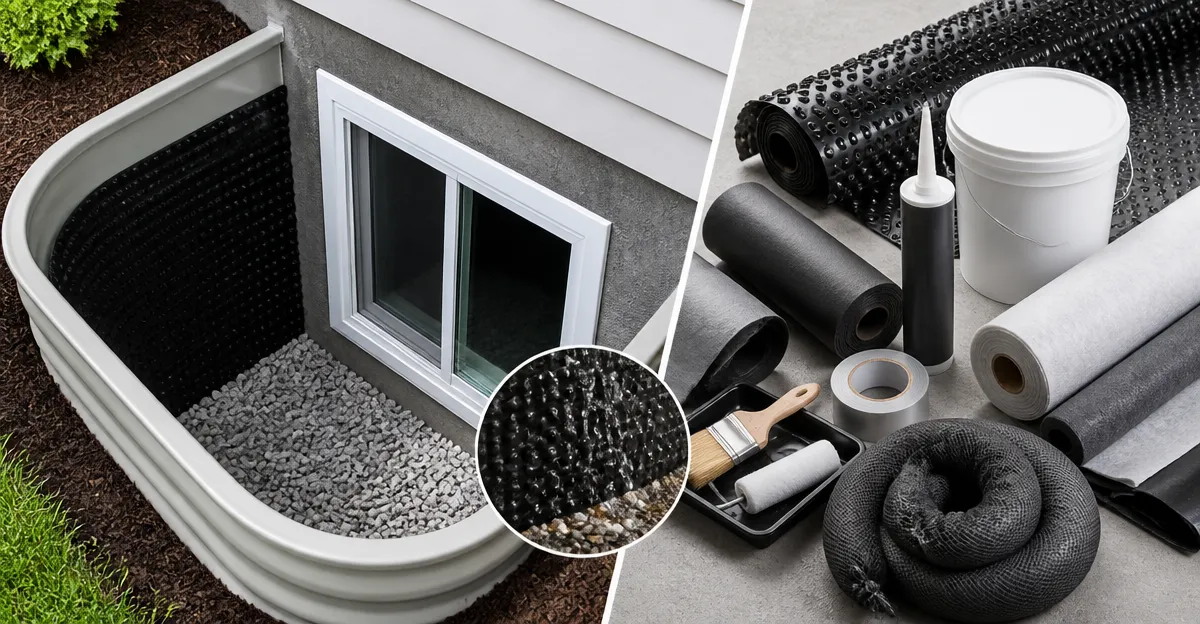
Basement moisture is a persistent challenge for homeowners who rely on egress wells to provide safe exits during emergencies. When water infiltrates these wells, it can compromise structural integrity, promote mold growth, and render the exit unusable when it is needed most. Selecting the right waterproofing materials and applying them correctly can transform a vulnerable egress well into a reliable barrier against water intrusion.
Professional‑grade sealants, flexible coatings, and rapid‑deployment flood barriers each address a specific failure mode. By combining high‑performance products with proven installation techniques, one can achieve a watertight system that endures seasonal fluctuations and extreme weather events. The following list presents ten essential solutions, each supported by real‑world customer experiences and detailed specifications.
- High‑Elongation Liquid Rubber Sealant
The cornerstone of any basement waterproofing strategy is a flexible membrane that can stretch with structural movement. Liquid Rubber Foundation Sealant offers 900% elongation, creating a permanent waterproof barrier on concrete, masonry, wood, and metal. Priced at $179.95 per 5‑gallon pail, it delivers 50 sq ft per gallon on interior walls (requiring 2‑3 coats) and 20 sq ft per gallon on exterior surfaces (requiring 3‑4 coats). The product holds a 4.6‑star rating from 3,366 reviews, with customers praising its durability and ease of application. One reviewer noted, "After four coats the basement remained dry through several heavy rains, saving me thousands in repair costs."
- White Elastomeric Waterproofer for Foundations
When a visible, non‑black coating is preferred for aesthetic or inspection purposes, Ames Block & Wall Waterproofer provides a versatile white membrane. At $49.91 per gallon, it adheres to a wide range of substrates and dries to a flexible, waterproof film. The product is rated 4.6 stars from 336 reviews; one user described it as "the very best" and highlighted its smooth application and shimmering white finish that earned the nickname "marshmallow room." Because it is not UV‑stable, a top coat of latex paint is recommended for exposed areas.
- Rapid‑Deploy Flood Barriers for Immediate Protection
During sudden rain events, a water‑activated barrier can buy critical time while permanent measures cure. Quick Dam Flood Barrier expands to 3.5 inches in height within ten minutes of contact with water and can absorb up to 8 gallons per 5‑ft length. Each 2‑pack costs $22.19 and has earned a 4.4‑star rating from 6,320 reviewers. A homeowner shared, "Even without pre‑wetting, the barriers formed a tight seal and kept water from entering my garage during a tropical storm."
- Reusable Absorbent Socks for Localized Leaks
Small, persistent drips often escape larger systems. PIG Absorbent Sock absorbs up to one gallon per sock and resists mildew thanks to its polypropylene skin. The four‑pack is priced at $29.29 and carries a 4.5‑star rating from 5,437 reviews. One customer wrote, "After placing the socks under a leaking drain, they became fully saturated and prevented a flood in my basement." The socks can be squeezed and air‑dried for reuse up to three times.
- High‑Strength White Liquid Rubber for Extreme Conditions
For below‑grade foundations that experience freeze‑thaw cycles, Ames Blue Max Waterproofer offers 900% elongation and an 800% elastic membrane after curing. At $46.08 per gallon, it is non‑toxic, VOC‑compliant, and made in the USA. The product holds a 4.5‑star rating from 592 reviews; a reviewer observed, "The coating adhered like glue and remained flexible after several winters, preventing cracks in my basement wall." UV protection requires a top coat when used outdoors.
- Combined Sealant and Geo‑Textile System
Maximum protection is achieved when a liquid rubber sealant is paired with a reinforcing fabric. Applying Liquid Rubber Foundation Sealant together with the brand’s Geo‑Textile on joints and transitions creates a composite barrier that resists both water pressure and mechanical movement. Users report that the system "fills cracks, bridges seams, and remains flexible in extreme temperatures," making it ideal for egress wells that intersect foundation walls.
- White Coating as a Primer for Secondary Membranes
When a decorative finish is desired, Ames Block & Wall Waterproofer can serve as a primer beneath a top coat of elastomeric paint. The white base provides excellent coverage and adheres strongly to concrete, allowing the secondary membrane to inherit both waterproofing and aesthetic qualities. Homeowners appreciate the "gorgeous" white appearance that does not yellow over time.
- Modular Flood Barriers for Doorways and Vents
Quick Dam’s modular design enables users to create custom shapes around doorways, garage entries, and vent openings. The dual‑chamber construction prevents rolling, while the lightweight polypropylene‑cellulose blend ensures easy storage. A reviewer emphasized, "Stacking the barriers higher than the water level kept them stable and prevented them from floating away during a sudden surge."
- Reusable Absorbent Socks in Combination with Barriers
For comprehensive protection, place PIG Absorbent Socks in low‑lying areas behind Quick Dam barriers. The socks capture any water that penetrates the barrier, while the barrier slows the flow. One user reported, "The socks soaked up residual water behind the barrier, eliminating any lingering dampness that could cause mold."
- Final Seal with Blue Max for Exterior Walls
After installing a primary sealant such as Liquid Rubber or Block & Wall, a final coat of Ames Blue Max Waterproofer can be applied to exterior egress well walls. Its high solid content creates a durable membrane that resists cracking during temperature swings. A field test showed that after a winter thaw, the wall remained intact with no visible water tracks.
Comparison Table
| Product | Price (per gal) | Elongation | Coverage (sq ft/gal) | Rating |
|---|---|---|---|---|
| Liquid Rubber Foundation Sealant | $179.95 | 900% | 50 (interior) / 20 (exterior) | 4.6 |
| Ames Block & Wall Waterproofer | $49.91 | Not specified | ~40 | 4.6 |
| Quick Dam Flood Barrier (5 ft, 2‑pack) | $22.19 | Not applicable | Absorbs 8 gal | 4.4 |
| PIG Absorbent Sock (4‑pack) | $29.29 | Not applicable | 1 gal per sock | 4.5 |
| Ames Blue Max Waterproofer | $46.08 | 900% | ~30 | 4.5 |
Conclusion
Effective egress well waterproofing relies on a layered approach that combines flexible sealants, reinforced membranes, rapid‑deployment barriers, and absorbent accessories. By selecting products with proven performance—such as Liquid Rubber Foundation Sealant for primary sealing, Ames Block & Wall for a bright primer, and Quick Dam Flood Barriers for emergency control, homeowners can achieve a resilient system. Pairing these with reusable absorbent socks and a final top coat of Ames Blue Max maximizes protection against both slow seepage and sudden flooding.
Implementing the best practices outlined above—proper surface preparation, multiple coat application, and strategic placement of barriers—will keep basements dry, preserve structural integrity, and maintain safe egress pathways for years to come.
Frequently Asked Questions
What waterproofing material is considered the cornerstone for egress well protection?
High‑elongation liquid rubber sealant is the cornerstone because it forms a flexible membrane that stretches with structural movement.
Why are flexible coatings important for basement egress wells?
They accommodate seasonal shifts and minor cracks, maintaining a continuous seal that prevents water ingress.
Can rapid‑deployment flood barriers be used as a permanent solution?
They are designed for temporary emergency protection, not as a long‑term seal, and should be paired with permanent waterproofing systems.
How does proper installation affect the performance of egress well waterproofing?
Correct application ensures full coverage, eliminates gaps, and allows the sealant to bond with the concrete, maximizing durability.
What are the risks of ignoring waterproofing in an egress well?
Unaddressed water infiltration can weaken structural integrity, foster mold growth, and render the exit unusable during emergencies.