Introduction
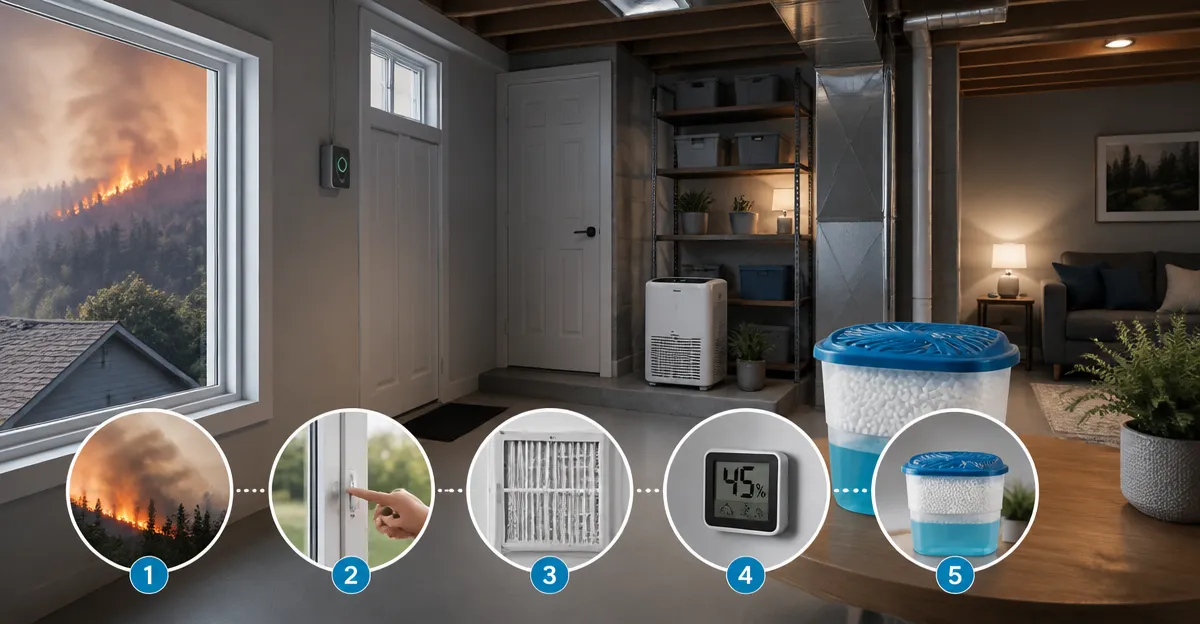
One will discover how to safeguard a basement from the dual threats of wildfire smoke infiltration and elevated outdoor PM2.5 concentrations while simultaneously preventing mold growth. This guide explains the science of humidity, the impact of particulate matter on indoor air, and the practical measures required to maintain a healthy environment. The reader will gain a clear, actionable plan that can be implemented with common household tools and a single specialized product. By following the steps, one can reduce moisture‑related damage, improve air quality, and protect valuable stored items.
What You'll Need
- Measuring tools: hygrometer, smoke detector, and a moisture detection strip.
- Sealing supplies: weather‑stripping, caulk, and expanding foam.
- Ventilation equipment: exhaust fans or portable air purifiers.
- Dehumidification device: electric dehumidifier appropriate for the basement size.
- Absorbent tool: DampRid Hi-Capacity Moisture Absorber Bucket (2 lb., two‑pack).
- Protective gear: gloves, goggles, and a dust mask.
Step‑by‑Step Instructions
1. Assess Baseline Humidity and Air Quality
One should begin by measuring the current relative humidity (RH) and indoor particulate concentration. Place a calibrated hygrometer in the central area of the basement and record the reading at three different times of day for accuracy. Use a portable air quality monitor or the built‑in sensor of a smart thermostat to note PM2.5 levels when outdoor smoke is present. This data establishes a baseline that will guide the intensity of subsequent interventions.
The DampRid moisture detection strips included with the DampRid Hi-Capacity Moisture Absorber Bucket provide a visual cue for excess moisture, allowing one to verify whether the hygrometer reading aligns with localized damp spots. Detecting high moisture early prevents hidden mold colonies from establishing.
2. Seal Cracks and Openings
One must locate all points where outdoor air can infiltrate the basement envelope. Inspect foundation walls, window frames, and utility penetrations for gaps larger than ¼ inch. Apply a high‑quality silicone caulk to small cracks and use expanding foam for larger voids. Weather‑stripping around doors and windows reduces pressure‑driven smoke ingress during wildfire events.
Proper sealing not only limits smoke entry but also stabilizes indoor humidity by preventing humid outdoor air from entering during rainy periods. This step reduces the workload on both the dehumidifier and the DampRid absorbers.
3. Install or Optimize Ventilation
One should ensure that the basement has a controlled ventilation strategy that can be adjusted when smoke is present. If an exhaust fan exists, verify that it exhausts directly to the outdoors and is equipped with a backdraft damper. For homes without mechanical ventilation, position a portable air purifier with a HEPA filter near the main entry point to capture fine particles.
During heavy smoke events, it is advisable to run the fan at low speed to maintain a slight negative pressure, preventing smoke from being drawn in through unsealed cracks. This approach works synergistically with moisture‑control measures, as lower airflow reduces the chance of condensation on cool surfaces.
4. Deploy Primary Dehumidification
One must select an electric dehumidifier sized for the square footage and volume of the basement. A unit capable of removing 50‑70 pints of water per day is appropriate for a typical 1,200‑square‑foot space. Place the dehumidifier centrally, ensuring at least six inches of clearance around the intake and exhaust for optimal airflow.
Set the target RH to between 45 % and 55 %, a range that discourages mold growth while remaining comfortable. The dehumidifier will handle the bulk of moisture removal, but it does not address localized pockets of dampness that can develop behind stored items.
5. Position DampRid Hi‑Capacity Moisture Absorber Buckets
One should place the DampRid Hi-Capacity Moisture Absorber Bucket in areas where the dehumidifier’s airflow is limited, such as corners, under shelving, and near stored fabrics. Each bucket contains two pounds of crystal‑based absorbent material and includes two moisture detection strips that change color when saturation approaches the replacement point.
The product offers 10 % more moisture‑absorbing power than standard models, according to the manufacturer, and requires no electricity, allowing it to function for up to six months in moderate conditions. By trapping excess moisture at the source, the buckets prevent localized mold formation and reduce musty odors, a common side effect of prolonged humidity.
6. Monitor and Adjust
One must review hygrometer readings daily during wildfire season and after any rain event. If RH exceeds 55 %, increase the dehumidifier’s fan speed or add an additional DampRid bucket to the affected zone. Conversely, if the space becomes overly dry (below 40 %), reduce the dehumidifier runtime to avoid desiccating wooden structures.
When the moisture detection strip on a DampRid bucket turns pink, indicating the liquid has reached the replacement indicator line, discard the saturated bucket and replace it with a fresh unit. This simple visual cue ensures continuous protection without the need for complex monitoring equipment.
7. Conduct Regular Maintenance
One should schedule a monthly inspection of all moisture‑control tools. Empty and clean the dehumidifier’s water reservoir, wipe the coils, and verify that the air filter is free of dust. Check the seals applied in step 2 for any degradation and reapply caulk as needed.
Replace DampRid buckets before they become fully saturated to avoid overflow, which could create new water sources on the floor. Maintaining a routine ensures that the system remains effective throughout the entire wildfire season.
Tips & Pro Tips
- Place a hygrometer on a wall at least three feet above the floor to avoid false readings caused by floor‑level moisture.
- Use a digital thermostat with humidity reporting to integrate moisture control with overall home climate management.
- When storing valuables, elevate them on pallets or shelving to allow air circulation beneath the items.
- During extreme smoke events, consider sealing the basement door with a heavy‑duty plastic sheet and a rubber gasket to create a temporary barrier.
- For homes with limited electrical capacity, the non‑electric DampRid bucket provides a reliable backup that continues to absorb moisture without power.
Troubleshooting
Problem: Persistent high humidity despite dehumidifier operation.
Solution: Verify that the dehumidifier’s intake is not obstructed and that the exhaust hose is not venting into the basement. Increase the unit’s capacity or add additional DampRid buckets in stagnant zones.
Problem: Musty odor remains after moisture levels are within target range.
Solution: Locate hidden water sources such as leaking pipes or condensation on cold water lines. Use the moisture detection strips to pinpoint the exact area and apply DampRid directly to the spot.
Conclusion
One now possesses a comprehensive, step‑by‑step framework for preparing a basement to withstand wildfire smoke, high outdoor PM2.5, and moisture‑related mold risk. By assessing conditions, sealing the envelope, optimizing ventilation, employing both mechanical dehumidification and the DampRid Hi‑Capacity Moisture Absorber Bucket, and maintaining vigilant monitoring, one can protect indoor air quality and preserve stored belongings. Implementing these practices will result in a resilient basement environment that remains dry, fresh, and safe throughout the most challenging fire seasons.
Products Mentioned in This Guide
Frequently Asked Questions
How does wildfire smoke affect basement humidity and air quality?
Smoke introduces fine particles and water vapor that raise humidity and increase PM2.5 levels, creating mold risk and health concerns.
What humidity range should be maintained to prevent mold during smoke events?
Keep relative humidity between 30% and 50% to inhibit mold growth while staying comfortable.
Which tools are essential for monitoring basement conditions?
A digital hygrometer, a smoke/PM2.5 detector, and moisture detection strips provide real-time humidity and particulate data.
How can I seal my basement to stop smoke infiltration?
Apply weather‑stripping to doors, caulk cracks, and use expanding foam in gaps to create an airtight barrier against smoke and outdoor air.
What role do a dehumidifier and moisture absorber play in smoke protection?
A properly sized dehumidifier removes excess moisture, and a product like DampRid absorbs residual humidity, both reducing mold risk and improving air quality.