
Complete Guide to Codes for Discharging Dehumidifier Condensate Outdoors: Plumbing, Building & Best Practices
Introduction
This guide explains the regulatory framework, technical considerations, and practical steps required to discharge dehumidifier condensate to the outdoors in a safe and code‑compliant manner. Readers will learn about applicable plumbing and building codes, the selection of appropriate equipment, installation best practices, and maintenance strategies that protect both property and the environment.
The information presented is relevant to homeowners, property managers, and professional installers who need to ensure that condensate removal systems meet local jurisdictional requirements while delivering reliable performance.
Background and Context
Dehumidifiers extract moisture from indoor air and collect it as liquid condensate. In residential and commercial settings this water must be routed away from the building envelope to avoid mold growth, structural damage, and indoor air quality issues. Traditional disposal methods include gravity drains to floor drains, utility sinks, or direct discharge to the exterior through a hose.
Most jurisdictions reference the International Plumbing Code (IPC) and the International Residential Code (IRC) for condensate discharge. These codes require that condensate drains be sized appropriately, protected against backflow, and terminated in a location that does not create a slip hazard or violate storm‑water regulations. In addition, local health departments may impose restrictions on direct discharge to public sewers.
Understanding the interaction between code requirements, equipment capabilities, and site conditions is essential for designing a system that is both effective and legally compliant.
Key Concepts and Strategies
1. Drainage Capacity and Sizing
The first step in any condensate removal plan is to calculate the maximum expected flow rate. A typical residential dehumidifier produces between 1 and 2 gallons per hour (GPH). Larger commercial units can generate 5 GPH or more. The drainage pipe must be sized to handle the peak flow without excessive velocity that could cause erosion or noise.
Most codes prescribe a minimum pipe diameter of 1/2 inch for condensate lines, with 3/4 inch recommended for high‑capacity installations. The pipe length and number of fittings affect the total head loss; therefore, designers should use hydraulic calculations to verify that the pump, if required, can overcome the static and friction losses.
When a pump is needed, the selected unit must provide a head that exceeds the vertical lift plus the friction loss by at least 20 percent to ensure reliable start‑up.
2. Backflow Prevention
Backflow can introduce contaminated condensate into potable water lines or cause water to flow back into the dehumidifier, leading to overflow. Codes require a backflow preventer or air gap for any condensate line that discharges into a sanitary sewer. An air gap can be achieved by terminating the hose at least two inches above the receiving fixture.
For installations that discharge to a storm‑water system, a check valve with a pressure‑rated rating is recommended to prevent reverse flow during heavy rain events.
3. Material Selection
Condensate is typically neutral in pH, but it can contain trace minerals that promote corrosion. Therefore, the use of corrosion‑resistant materials such as PVC, CPVC, or flexible rubber hoses with brass fittings is advisable. The hose must also be rated for the operating temperature range of the dehumidifier, which is commonly –10 °F to 140 °F.
In environments with high humidity or occasional submersion, an IP‑rated pump provides additional protection against water ingress.
4. Safety and Noise Considerations
Condensate pumps generate noise that can affect occupant comfort. Selecting a pump with low decibel output, such as a model that operates at 35 dB, helps maintain a peaceful indoor environment. Additionally, safety switches that shut down the connected appliance in the event of pump failure prevent water damage.
Proper mounting and vibration isolation further reduce audible noise and mechanical stress on the surrounding structure.
5. Code‑Compliant Termination
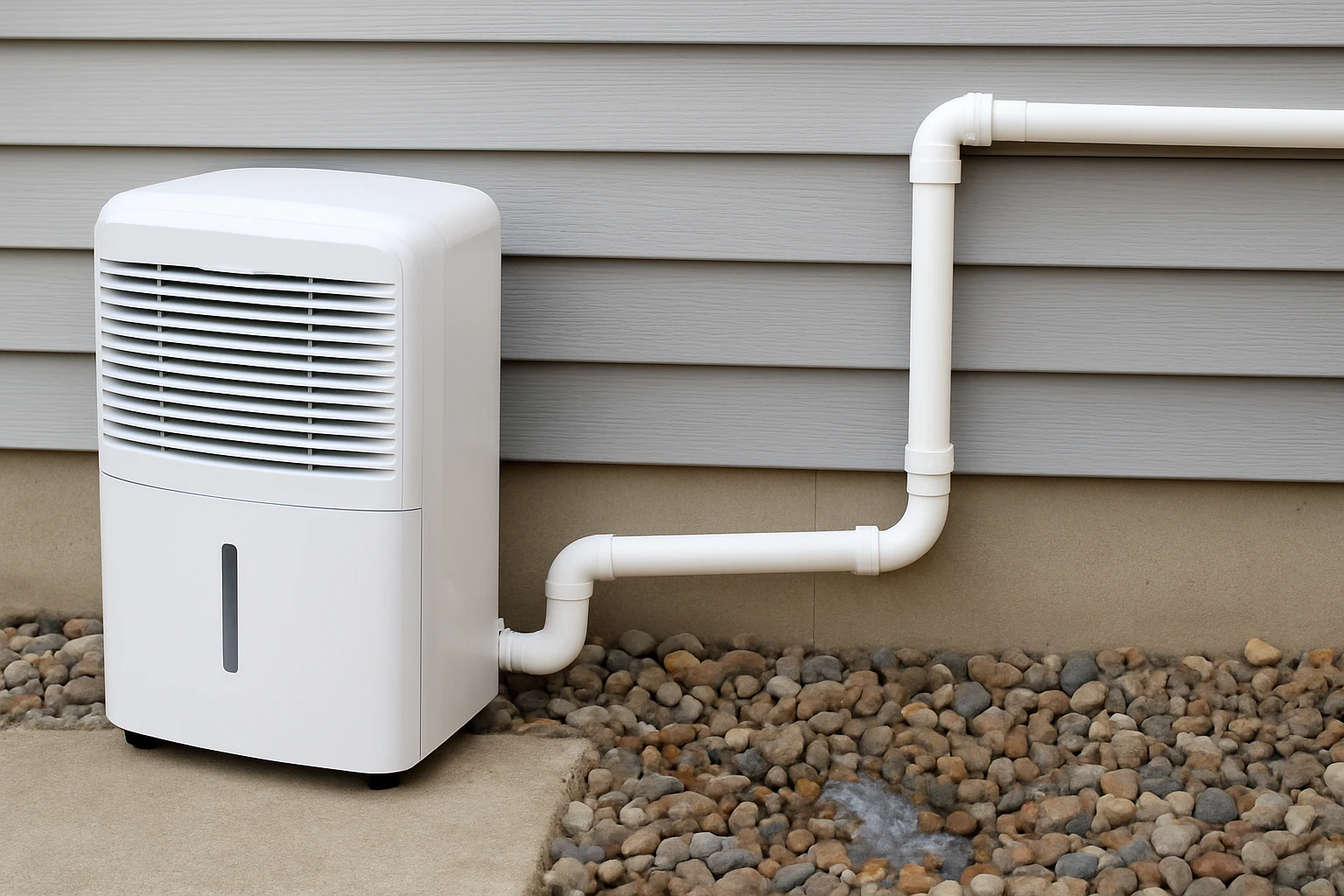
The final discharge point must be located away from building foundations, walkways, and landscaping that could be damaged by continuous water flow. A slope of at least 1/4 inch per foot is required to ensure gravity‑driven drainage away from the structure.
Many municipalities require that condensate be discharged to a storm drain or approved drainage swale rather than directly into a sanitary sewer. Verify local ordinances before finalizing the termination location.
Recommended Products
Choosing equipment that aligns with the technical requirements outlined above simplifies compliance and improves system reliability. The following products have been selected based on their performance specifications, energy efficiency, and user feedback.
Condensate Pump
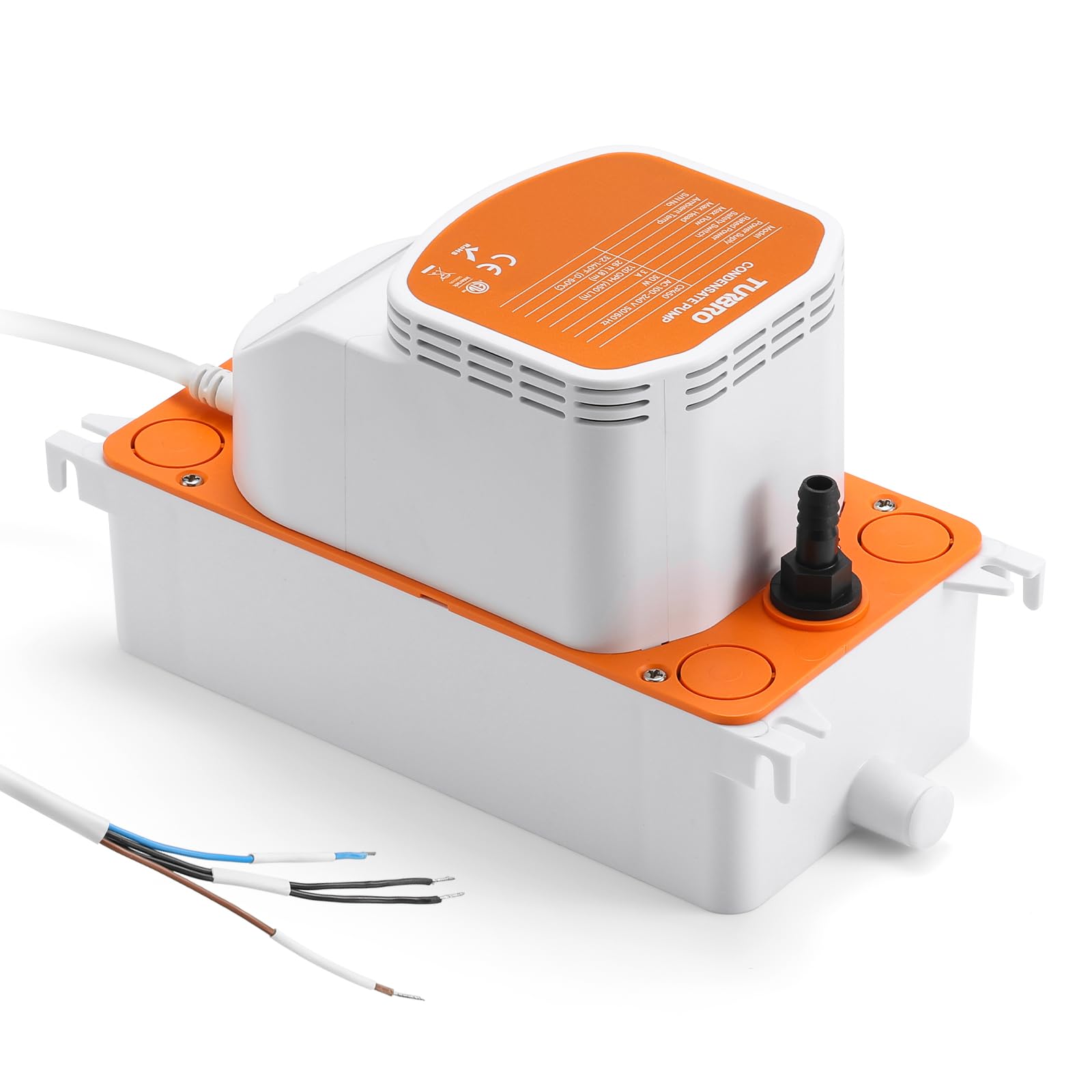
The TURBRO Condensate Pump offers a maximum head of 26 ft, which exceeds the typical residential requirement and provides ample margin for multi‑story installations. Its 120 GPH flow rate is double that of many competing models, reducing the likelihood of overflow during high‑humidity periods.
- Universal voltage operation (100‑240 V) supports installation in North America, Europe, and most international locations.
- Energy‑efficient DC motor consumes only 30 W, delivering quiet operation at 35 dB.
- IP64 water‑resistant construction protects the motor and electronics from accidental submersion.
- Integrated float switch and optional safety switch enable automatic start/stop and appliance shutdown in case of failure.
With a price of $69.99 and a rating of 3.9 stars from 14 reviews, the pump provides a cost‑effective solution for most residential applications.
Drain Hose
The TT FLEX Dehumidifier Drain Hose is a 5‑ft flexible rubber hose with a 3/4 in. FHT (female hose thread) that connects directly to most dehumidifier discharge ports. Its heavy‑duty construction resists bursts up to 200 psi and operates from 0 °F to 190 °F, making it suitable for both indoor and outdoor runs.
- High‑quality rubber‑plastic composite prevents leaks and burst under pressure.
- Steel nuts, ferrules, and brass nipples provide superior corrosion resistance.
- NSF‑61 and UPC/CUPC certifications ensure compliance with drinking‑water safety standards, which is relevant when the hose terminates near a potable water source.
- 10‑year warranty reflects manufacturer confidence in durability.
Priced at $9.99 with a rating of 4.6 stars from 258 reviews, this hose offers excellent value for reliable condensate routing.
Comparison and Selection Guide
| Feature | TURBRO Condensate Pump | TT FLEX Drain Hose |
|---|---|---|
| Maximum Head | 26 ft | N/A (flexible hose) |
| Flow Rate | 120 GPH | Up to 200 psi burst pressure |
| Power Consumption | 30 W (DC motor) | Passive (no power) |
| Noise Level | 35 dB | Silent |
| Installation Complexity | Requires connection to power and safety switch | Simple push‑fit connection |
| Price | $69.99 | $9.99 |
| Customer Rating | 3.9/5 (14 reviews) | 4.6/5 (258 reviews) |
When selecting a pump, prioritize head and flow capacity relative to the vertical lift and pipe length. For most single‑story homes, a pump with a 15‑ft head is sufficient; however, the TURBRO model provides additional margin for future expansion.
The drain hose should be chosen based on durability, temperature tolerance, and compatibility with the pump’s discharge outlet. The TT FLEX hose meets these criteria while offering a flexible installation route.
Best Practices & Tips
- Perform a Flow Test. Before finalizing pipe sizing, run the dehumidifier at maximum capacity and measure the water output over a 15‑minute period. Use the result to confirm that the pump and hose can handle the peak flow.
- Install an Air Gap. Terminate the hose at least two inches above the receiving drain or use a dedicated condensate trap to satisfy backflow prevention requirements.
- Use a Check Valve. When discharging to a storm‑water system, install a check valve rated for the pump’s maximum pressure to prevent reverse flow during rain events.
- Secure All Connections. Apply hose clamps to the pump outlet and the hose inlet to prevent accidental disconnection caused by vibration.
- Maintain a Clean Filter. The TURBRO pump includes an inlet filter; clean it monthly to avoid clogging and maintain optimal performance.
- Schedule Periodic Inspections. Verify that the discharge point remains clear of debris and that the slope has not been altered by landscaping activities.
- Document Compliance. Keep copies of product specifications, installation diagrams, and local code references in a file for future inspections or property sales.
Frequently Asked Questions
1. Is it legal to discharge condensate directly into a sanitary sewer?
Many jurisdictions prohibit direct discharge of condensate into a sanitary sewer because it can increase the load on wastewater treatment facilities. It is advisable to check local building codes or consult the municipal water authority before connecting to a sanitary line.
2. Do I need a pump if my dehumidifier is located on the ground floor?
If the condensate can flow by gravity to an existing floor drain or utility sink with a proper slope, a pump may not be required. However, a pump provides redundancy and can prevent overflow during high‑humidity events.
3. What is the recommended pipe material for outdoor condensate discharge?
Schedule 40 PVC or CPVC is commonly used for outdoor runs because it resists corrosion and UV degradation when installed with appropriate conduit. Flexible rubber hose is acceptable for short interior sections.
4. How often should the pump’s float switch be inspected?
The float switch should be inspected during each seasonal maintenance visit. Look for signs of wear, corrosion, or debris that could impede free movement.
5. Can I use the same hose for both condensate and rainwater?
While the hose is rated for up to 200 psi, rainwater drainage typically requires larger diameter pipe to handle higher flow rates. Using the same hose for rainwater may lead to blockages and is not recommended for code compliance.
6. What warranty coverage do the featured products provide?
The TURBRO Condensate Pump includes a standard manufacturer warranty, while the TT FLEX Drain Hose offers a 10‑year warranty against defects. Both warranties require proof of purchase and adherence to installation guidelines.
Conclusion
Discharging dehumidifier condensate outdoors demands a clear understanding of plumbing and building codes, proper equipment selection, and diligent installation practices. By calculating flow requirements, incorporating backflow prevention, and using reliable components such as the TURBRO Condensate Pump and TT FLEX Drain Hose, homeowners and professionals can create systems that are both effective and compliant.
Adhering to the best‑practice checklist and performing regular maintenance will extend the service life of the system and safeguard the building envelope from moisture‑related damage.
Products Featured in This Guide
TURBRO Condensate Pump
Price: $69.99
Rating: 3.9/5 (14 reviews)
Featured because it provides a high head of 26 ft, 120 GPH flow, low‑noise operation, and IP64 water‑resistance, making it suitable for a wide range of condensate discharge scenarios.
TT FLEX Dehumidifier Drain Hose
Price: $9.99
Rating: 4.6/5 (258 reviews)
Featured because it offers burst‑proof construction, 200 psi pressure rating, NSF‑61 certification, and a flexible 5‑ft length that simplifies routing of condensate to the outdoor termination point.