Introduction
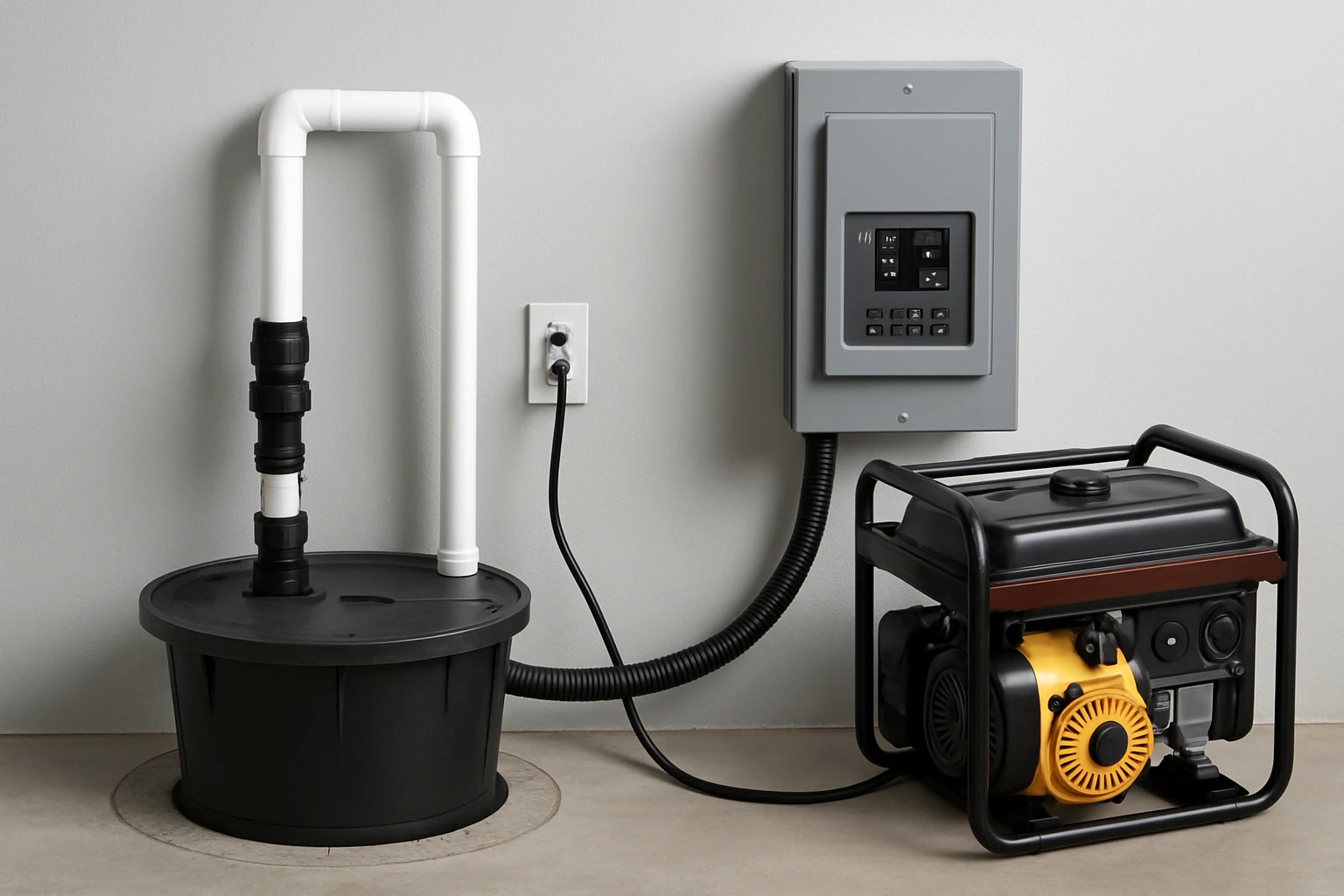
This guide explains how to integrate a sump pump with a generator transfer switch to provide continuous protection against flooding during power outages. Readers will learn the essential concepts, the selection criteria for pumps and switches, and the detailed wiring process. The article also presents product recommendations that meet the performance and safety requirements of typical residential installations. By following the steps, one can achieve a reliable backup power system that safeguards a home’s foundation.
Background and Context
A sump pump removes water that accumulates in a basement pit, preventing structural damage and mold growth. When the utility grid fails, the pump loses power unless a backup source such as a generator is available. A generator transfer switch isolates the generator from the utility lines and directs power to selected circuits, eliminating the risk of back‑feeding. Understanding the interaction between these components is essential for a safe and code‑compliant installation.
In most residential settings, the transfer switch is a manual double‑throw device that allows the user to select either utility power or generator power for a dedicated circuit. The pump circuit must be sized appropriately to handle the pump’s motor amperage, which for a typical 1/6 HP pump is modest. The National Electrical Code (NEC) requires that all connections be made in a weather‑resistant enclosure when installed outdoors.
Understanding Key Concepts
The first concept to master is the rating of the pump motor. The Acquaer Submersible Water Pump delivers 1/6 HP, equivalent to approximately 0.12 kW, and can move up to 1,760 gallons per hour. This performance translates to a current draw of roughly 5 amps at 120 V, well within the capacity of a standard 15 amp circuit.
The second concept is the capacity of the transfer switch. The MUJURUR 100A Generator Transfer Switch can handle up to 24,000 W and 100 amps, far exceeding the needs of a single pump. For smaller setups, the MUJURUR 30A Generator Transfer Switch Kit provides a 7,500 W, 30 amp capacity, which is also sufficient for the Acquaer pump while offering additional circuit flexibility.
Finally, grounding and bonding are critical for safety. The transfer switch must include a dedicated grounding screw and be installed in a metal box that is bonded to the home’s grounding system. Failure to observe these requirements can result in electric shock or fire hazards.
Selecting a Suitable Sump Pump
The Acquaer Submersible Water Pump is designed for basement, hot‑tub, and pool‑cover draining applications. Its 10 ft power cord with pure copper wiring ensures reliable energy delivery, and the thermoplastic housing resists corrosion. The pump’s rating of 29.5 ft of vertical lift allows it to move water from deep pits to floor‑level discharge points.
When evaluating alternatives, consider the flow rate, head height, and power consumption. A pump that exceeds the required flow may waste electricity, while an undersized pump may fail to keep the pit dry during heavy rain. The Acquaer model’s 1,760 gph flow rate is appropriate for most residential basements.
Installation of the pump itself is straightforward. The unit is placed at the bottom of the sump pit, ensuring the inlet is fully submerged. The discharge hose should be directed to a safe drainage location, such as a floor drain or exterior slope, to avoid water re‑entry.
Choosing a Generator Transfer Switch
The MUJURUR 100A Generator Transfer Switch offers robust construction with a galvanized steel case that meets NEMA 3R outdoor standards. Its aluminum internal connections provide long‑term stability without the susceptibility of electronic components to moisture or dust. The switch includes a lock hole to prevent accidental operation and a grounding position for enhanced safety.
For homeowners who require fewer circuits, the MUJURUR 30A Generator Transfer Switch Kit presents a cost‑effective solution. It includes six 15‑amp single‑pole circuits and two 20‑amp double‑pole circuits, which can be reconfigured to four 20‑amp single‑pole circuits. The kit also supplies PVC conduit and a 10‑foot power cord, simplifying installation.
Both switches carry high customer satisfaction ratings—4.6/5.0 for the 100A model based on 349 reviews and 4.4/5.0 for the 30A kit based on 5 reviews. Positive sentiment highlights ease of installation, durability, and reliable performance during emergency power events.
Wiring the Pump to the Transfer Switch
Begin by turning off the main breaker and disconnecting the generator from any power source. Mount the transfer switch in a location that complies with local code, preferably within a weather‑proof enclosure if installed outdoors. Use a conduit to protect the wiring between the switch and the pump’s dedicated circuit.
Run a 12‑gauge, three‑wire cable (hot, neutral, ground) from the transfer switch’s “generator” terminal to a new 15‑amp breaker in the main panel. Connect the breaker’s output to a dedicated receptacle that matches the pump’s plug type. The Acquaer pump uses a standard 120 V plug, so a standard NEMA 5‑15R outlet is appropriate.
Secure the ground wire to the grounding screw inside the transfer switch and to the grounding bar in the panel. Verify that the neutral and ground are isolated within the switch, as required by NEC Article 250. Verify all connections, then close the panel and restore utility power. Finally, test the system by starting the generator, moving the transfer switch lever to the “generator” position, and confirming pump operation.
Testing and Maintenance
After installation, perform a full functional test at least once per season. Activate the generator, engage the transfer switch, and observe the pump for proper flow and noise levels. Record the amperage reading on the breaker; it should not exceed 80 % of the breaker rating, confirming safe operation.
Routine maintenance includes inspecting the pump’s inlet screen for debris, cleaning the discharge hose, and checking the power cord for wear. The transfer switch should be examined for corrosion, loose connections, and proper operation of the lock mechanism. Lubricate any moving levers according to the manufacturer’s instructions.
Document each test and maintenance activity in a logbook. This practice facilitates troubleshooting and provides evidence of compliance with warranty requirements, especially for the MUJURUR 100A switch, which offers a 10‑year warranty, and the 30A kit, which includes a 5‑year warranty.
Comparison and Selection Guide
| Feature | Acquaer Submersible Water Pump | MUJURUR 100A Transfer Switch | MUJURUR 30A Transfer Switch Kit |
|---|---|---|---|
| Power Rating | 1/6 HP (≈0.12 kW) | 100 A, 24 kW | 30 A, 7.5 kW |
| Flow Rate | 1,760 gph (29.3 gpm) | — | — |
| Vertical Lift | 29.5 ft | — | — |
| Cord Length | 10 ft | 10 ft (included) | 10 ft (included) |
| Enclosure Rating | Thermoplastic, IP‑rated | NEMA 3R (outdoor) | NEMA 3R (outdoor) |
| Price (USD) | $59.99 | $66.99 | $299.99 |
| Customer Rating | 4.7/5 (581 reviews) | 4.6/5 (349 reviews) | 4.4/5 (5 reviews) |
| Warranty | Not specified | 10 years | 5 years |
For most homeowners, the Acquaer pump paired with the MUJURUR 30A kit provides sufficient capacity while offering circuit flexibility for additional emergency loads. Users who anticipate higher power demands or who wish to integrate multiple circuits may prefer the 100A switch, albeit at a higher cost.
Best Practices and Tips
- Always install the transfer switch in accordance with local electrical codes and obtain any required permits.
- Use a dedicated circuit for the sump pump to avoid overloads when other emergency loads are active.
- Label all wires and circuit breakers clearly to simplify future maintenance.
- Consider adding a battery‑backed UPS between the pump and the transfer switch for short‑duration outages.
- Store the generator outdoors under a weather‑proof canopy to protect it from rain while maintaining adequate ventilation.
Frequently Asked Questions
- Can I install the transfer switch myself?
- Installation is technically feasible for individuals with basic electrical knowledge, but the NEC requires that a licensed electrician perform or inspect the work to ensure safety and code compliance.
- What size breaker should I use for the pump?
- A 15‑amp breaker is appropriate for the Acquaer pump, as its motor draws approximately 5 amps under normal load.
- Do I need a separate grounding rod for the generator?
- The generator should be grounded according to the manufacturer’s instructions, typically by connecting its ground terminal to the home’s existing grounding electrode system.
- Will the transfer switch protect against back‑feeding?
- Yes, a properly installed manual transfer switch isolates the generator from the utility lines, preventing back‑feeding and protecting utility workers.
- How often should I test the system?
- Testing should be performed at least once a year, preferably before the rainy season, to verify that the pump operates correctly on generator power.
Conclusion
Integrating a sump pump with a generator transfer switch creates a resilient safeguard against basement flooding during power outages. By selecting a reliable pump such as the Acquaer Submersible Water Pump and pairing it with an appropriate transfer switch—either the MUJURUR 100A for extensive loads or the MUJURUR 30A kit for modest needs—homeowners can achieve dependable backup power. Following the wiring instructions, adhering to safety codes, and performing regular maintenance will ensure long‑term performance and peace of mind.
Products Featured in This Guide
Acquaer Submersible Water Pump
Price: $59.99
Rating: 4.7/5 (581 reviews)
Featured because it provides the necessary flow rate and lift capacity for typical residential sump applications while remaining energy efficient.
MUJURUR 100A Generator Transfer Switch
Price: $66.99
Rating: 4.6/5 (349 reviews)
Featured because it offers high amperage capacity, robust NEMA 3R construction, and a ten‑year warranty, making it suitable for larger backup systems.
MUJURUR 30A Generator Transfer Switch Kit
Price: $299.99
Rating: 4.4/5 (5 reviews)
Featured because it includes a complete kit with pre‑wired circuits, PVC conduit, and a 5‑year warranty, offering a ready‑to‑install solution for modest power needs.