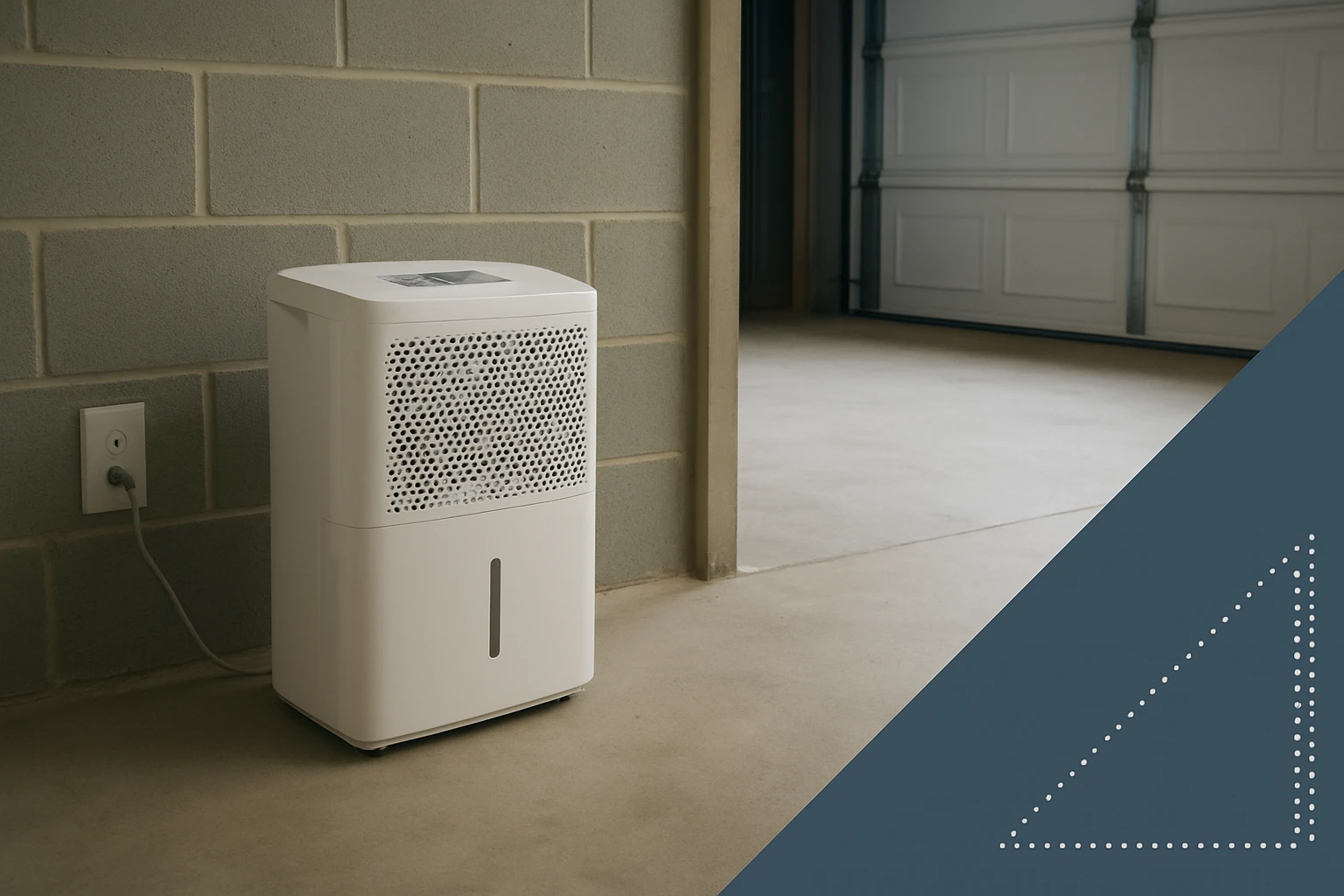
Introduction
This guide explains how to determine the appropriate dehumidifier capacity for a basement that includes an attached garage. Readers will learn how to measure square footage, assess current humidity, calculate required pint removal, and select a reliable unit. The information is valuable because an undersized dehumidifier will waste energy while an oversized unit may cause over‑drying and unnecessary expense. By following the systematic steps, one can achieve a comfortable, mold‑free environment and protect stored belongings.
What You'll Need
- Measuring tape or laser distance measurer
- Digital hygrometer (optional but recommended)
- Calculator or spreadsheet for quick arithmetic
- Power outlet with appropriate amperage
- Drainage hose or bucket for continuous drainage (optional)
- Ludatido 80 Pint Basement Dehumidifier – recommended for most basements up to 5,000 sq ft
Step 1: Assess the Total Square Footage
The first step is to calculate the combined floor area of the basement and the attached garage. Measure the length and width of each space, then multiply to obtain the area in square feet. For irregularly shaped rooms, divide the space into rectangles, calculate each area, and sum the results.
Example calculation:
- Basement: 40 ft × 30 ft = 1,200 sq ft
- Garage: 20 ft × 22 ft = 440 sq ft
- Total area = 1,200 + 440 = 1,640 sq ft
Record the total square footage because the dehumidifier capacity is expressed in pints per day per 1,000 sq ft.
Step 2: Measure Current Relative Humidity
Place a digital hygrometer at a representative location, ideally at the center of the space and at least three feet above the floor. Record the relative humidity (RH) at different times of day for 24 hours to capture fluctuations caused by temperature changes and garage activity.
Typical baseline values for a damp basement range from 55 % to 70 % RH. If the reading consistently exceeds 60 %, moisture control becomes essential to prevent mold growth and structural damage.
Step 3: Determine Desired Humidity Level
For comfort and health, the recommended indoor RH is between 45 % and 55 %. Choose a target within this range based on climate and personal preference. In colder climates, a lower target (45 %) reduces condensation on cold surfaces, whereas in milder regions a target of 55 % may be more comfortable.
Document the desired RH because the difference between current and target humidity directly influences the pint‑per‑day requirement.
Step 4: Calculate Required Pint Removal
The industry standard formula for pint calculation is:
Required Pints per Day = (Area in 1,000 sq ft) × (Current RH – Target RH) × 0.5
The factor 0.5 represents an average moisture load for residential spaces. Apply the formula to the example area of 1,640 sq ft, with a current RH of 68 % and a target of 50 %:
- Area factor = 1,640 / 1,000 = 1.64
- RH difference = 68 % – 50 % = 18 %
- Required pints = 1.64 × 18 × 0.5 ≈ 14.8 pints per day
Round up to the nearest standard capacity. In this case, a unit capable of removing at least 15 pints per day would be sufficient. However, basements often experience spikes in moisture due to rain, snow melt, or garage exhaust, so selecting a model with a higher capacity provides a safety margin.
Step 5: Choose an Appropriate Dehumidifier
With the required pint rating established, compare available models. The Ludatido 80 Pint Basement Dehumidifier offers an 80‑pint daily removal capacity, far exceeding the calculated 15 pints. This excess capacity ensures rapid moisture reduction during heavy rain events and allows continuous operation without frequent emptying.
Key reasons to select this model:
- Large Coverage Area: Rated for up to 5,000 sq ft, it comfortably covers the 1,640 sq ft example.
- Continuous Drainage: Includes a drain hose and 6.5 L (1.72 gal) tank, enabling hands‑free operation.
- Quiet Operation: Operates under 48 dB, suitable for occupied spaces.
- Energy Efficient: Designed to reduce electricity consumption while delivering high performance.
- Four Operating Modes: Allows customization for drying, dehumidifying, air purification, and silent mode.
The unit is priced at $159.99 and holds a rating of 4.2 out of 5 stars based on 921 reviews, indicating reliable performance for most homeowners.
Step 6: Position and Install the Dehumidifier
Place the unit in a central location where air can circulate freely. Avoid placing it directly against walls or furniture; maintain at least six inches of clearance on all sides. The built‑in portable handle and 360° wheels make relocation simple, allowing one to move the unit into the garage during winter or to a bedroom during summer.
Connect the continuous drainage hose to a floor drain, utility sink, or a suitable bucket placed outside the living area. Ensure the hose slopes downward to prevent backflow. If a permanent drain is unavailable, schedule regular tank emptying; the 6.5 L capacity typically lasts three to four days under moderate humidity.
Plug the unit into a dedicated 120 V outlet with sufficient amperage (the dehumidifier draws approximately 4 amps). Avoid using extension cords unless they are rated for the load.
Step 7: Set Controls and Monitor Performance
Use the digital control panel to set the desired humidity level (e.g., 50 %). Activate the 24‑hour timer if the space will be unoccupied for extended periods. The auto‑shutoff feature turns the unit off once the target RH is reached, conserving energy.
Monitor the hygrometer readings for at least 48 hours after initial operation. If the humidity remains above the target, increase the set point or verify that doors and windows are sealed. Conversely, if the space becomes overly dry, raise the target RH or enable the silent mode to reduce dehumidification intensity.
Tips & Pro Tips
- Seal Cracks and Gaps: Apply caulk or weather‑stripping to foundation cracks, windows, and door frames before operating the dehumidifier.
- Vent Garage Exhaust: Install a vent or exhaust fan in the attached garage to prevent humid air from re‑entering the basement.
- Use a Secondary Hygrometer: Place a second sensor in the garage to confirm that humidity levels are consistent across both areas.
- Run During Off‑Peak Hours: If electricity rates vary, schedule the unit to operate during lower‑cost periods using the timer function.
- Maintain the Unit: Clean the air filter monthly and inspect the defrost sensor during winter to avoid ice buildup.
Troubleshooting
| Problem | Possible Cause | Solution |
|---|---|---|
| Unit does not turn on | Power source not connected or tripped breaker | Verify outlet voltage and reset breaker if necessary. |
| Water tank fills quickly | Excess moisture load or leak in basement | Check for plumbing leaks, improve ventilation, and consider using continuous drainage. |
| Ice forms on the coils | Temperature below 45°F without defrost sensor functioning | Ensure the defrost sensor is clean; if problem persists, contact customer support. |
| Noise level increases | Dust accumulation on fan blades | Power off unit, remove front panel, and clean fan and coil with a soft brush. |
Conclusion
By measuring square footage, assessing current humidity, calculating required pint removal, and selecting an appropriately sized unit, one can effectively control moisture in a basement with an attached garage. The Ludatido 80 Pint Basement Dehumidifier provides ample capacity, quiet operation, and convenient features that simplify installation and ongoing maintenance. Implementing the tips and troubleshooting steps ensures long‑term performance and a healthier indoor environment.
Products Mentioned in This Guide
Frequently Asked Questions
How do I calculate the dehumidifier capacity needed for a basement with an attached garage?
Measure the combined square footage, determine the current humidity level, and use a pint‑per‑day chart (or calculator) to estimate how many pints of moisture must be removed each day.
What square footage can a 80‑pint dehumidifier effectively cover?
An 80‑pint unit typically handles up to 5,000 sq ft, making it suitable for most basements and attached garages within that range.
Why is it important to avoid an undersized dehumidifier?
An undersized unit runs continuously, wastes energy, and may never reach the desired humidity, leading to mold growth and damage to stored items.
Can I use a digital hygrometer to improve sizing accuracy?
Yes, a hygrometer provides precise humidity readings, allowing you to fine‑tune the pint‑removal calculation for optimal dehumidifier sizing.
Do I need a drainage hose for continuous operation?
A drainage hose or bucket enables continuous water removal, preventing the need to empty the reservoir and ensuring the dehumidifier runs efficiently.