Introduction
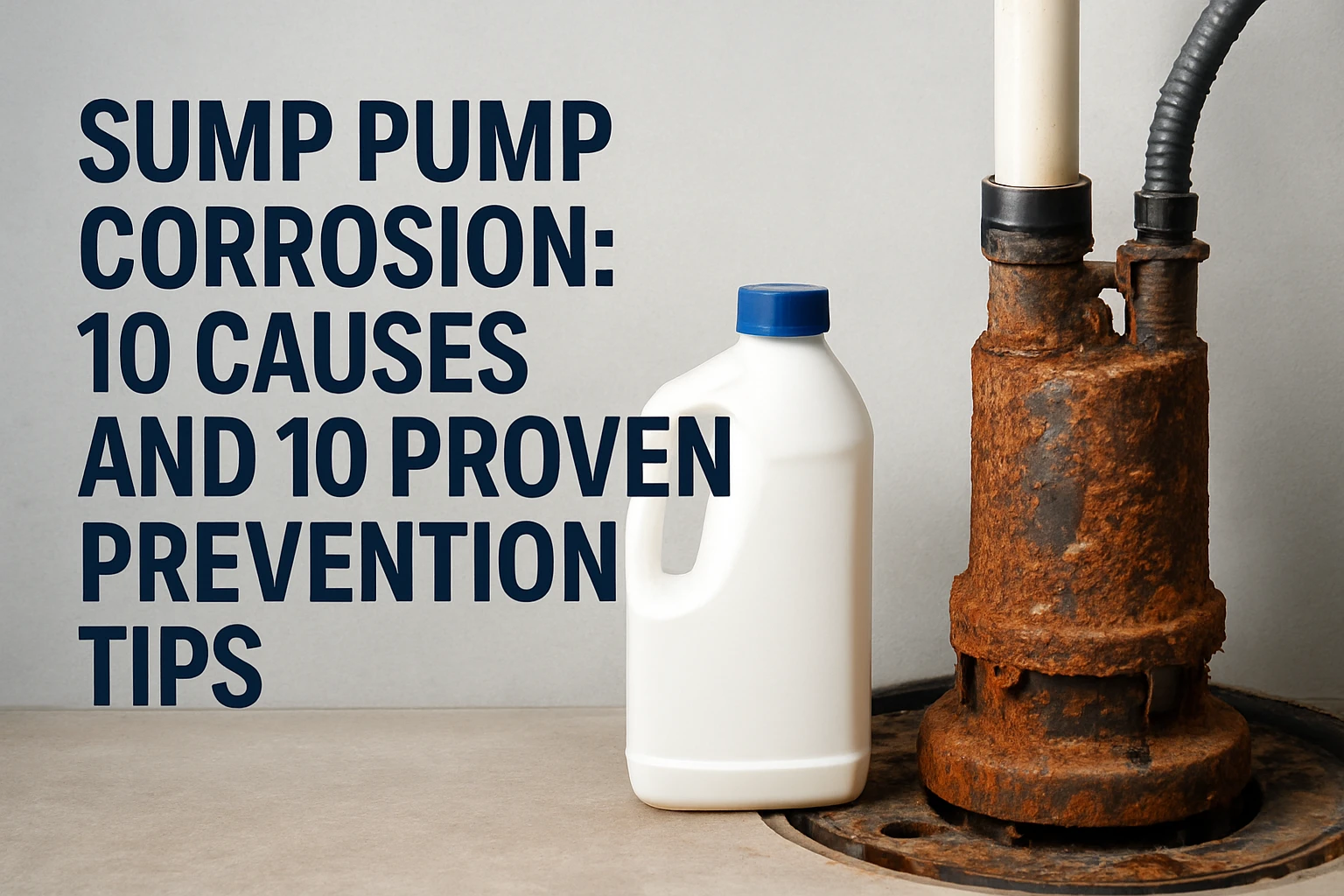
Sump pumps operate in environments that are inherently hostile to metal components. Moisture, chemicals, and fluctuating temperatures create conditions that accelerate corrosion, reducing pump efficiency and shortening service life. Understanding the underlying causes of corrosion and applying proven preventive measures can protect a valuable investment and ensure reliable operation during critical flooding events.
Professional homeowners and property managers often overlook simple maintenance steps that could prevent costly pump failures. This article presents ten common causes of sump pump corrosion and pairs each cause with a practical prevention tip, supported by three highly rated Amazon products that have demonstrated effectiveness in real‑world applications.
10 Causes and Prevention Tips
- Cause 1: Continuous Exposure to Moisture in the Sump Pit
When a pump remains submerged for extended periods, water can infiltrate internal components, fostering rust and mineral buildup. A barrier that filters debris while allowing water flow reduces the amount of particulate matter that reaches the pump housing. The Hecaty Large Pump Filter Bag offers a 1.7 mm fine mesh made from industrial‑grade nylon, providing both tear resistance and clog prevention. Priced at $6.99, it holds a 4.5‑star rating from 1,587 reviewers who note its durability and ease of installation. By placing this filter bag around the pump inlet, users create a first line of defense against moisture‑borne contaminants.
- Cause 2: Chemical Aggression from Soil and Water Treatments
Many basements employ disinfectants, de‑icing salts, or fertilizer runoff that introduce chloride ions, which accelerate galvanic corrosion. Applying a protective coating to metal surfaces creates a barrier that isolates the metal from aggressive ions. CorrosionX Aviation Spray utilizes Polar Bonding and Fluid Thin Film Coating technology to form a self‑healing film that repels moisture and salts. At $27.95, it carries a 4.8‑star rating from 415 customers who praise its long‑lasting protection on metal and electronic components. Spraying the pump housing before installation can dramatically extend service life in chemically aggressive environments.
- Cause 3: Inadequate Drainage Leading to Standing Water
Poor pit design may cause water to pool around the pump motor, creating stagnant zones where corrosion concentrates. Ensuring proper slope and using a corrosion‑inhibiting lubricant on moving parts mitigates this risk. The CRC Corrosion Inhibitor is formulated for marine applications, protecting steering linkages, electrical connections, and motor shafts from salt spray and humidity. Priced at $34.02 for a four‑pack, it holds a 4.6‑star rating from 850 reviewers who commend its versatility. Applying a thin layer to motor bearings and shaft seals prevents moisture accumulation and reduces friction.
- Cause 4: Lack of Protective Coatings on Electrical Connections
Electrical terminals are especially vulnerable because corrosion can increase resistance, leading to overheating and failure. A non‑conductive, silicone‑free spray protects contacts without impairing conductivity. CorrosionX Aviation Spray is safe for avionics, battery terminals, and circuit boards, making it suitable for sump pump wiring. Users report that the spray does not interfere with voltage readings, while still providing a durable barrier against moisture.
- Cause 5: Exposure to Salt‑Laden Air in Coastal Regions
Coastal humidity carries microscopic salt particles that settle on pump surfaces, accelerating electrochemical reactions. Regular application of a marine‑grade inhibitor creates a sacrificial layer that neutralizes chloride ions. The CRC Corrosion Inhibitor offers long‑term protection for metal exposed to salt spray, as highlighted by customers who use it on boat engines and dock hardware. Applying the inhibitor quarterly ensures the pump remains shielded from the corrosive coastal environment.
- Cause 6: Mechanical Wear that Exposes Fresh Metal
Moving parts such as impeller shafts generate micro‑abrasions, revealing unprotected metal that corrodes rapidly. Lubricating these interfaces with a corrosion‑resistant fluid reduces wear and creates a protective film. CorrosionX Aviation Spray also functions as a lubricant for hinges and rotating components, a benefit noted by users who applied it to outboard motor pistons. Combining lubrication with a barrier coating addresses both mechanical and chemical degradation.
- Cause 7: Infrequent Maintenance and Inspection
Neglecting routine checks allows minor corrosion to progress unnoticed, eventually compromising pump integrity. Incorporating a quick‑release filter bag simplifies visual inspection of the pump inlet. The Hecaty Large Pump Filter Bag features an adjustable drawstring that secures the bag while permitting rapid removal for cleaning. Reviewers appreciate that the bag can be emptied and re‑installed without tools, encouraging regular maintenance schedules.
- Cause 8: Temperature Fluctuations Causing Condensation
Rapid temperature changes in the pit can cause condensation on metal surfaces, providing a constant source of moisture. Applying a self‑healing film that remains flexible at low temperatures prevents water droplets from adhering. CorrosionX Aviation Spray maintains its protective properties across a wide temperature range, a feature praised by technicians who work in unheated basements. Periodic re‑application after seasonal shifts ensures continuous protection.
- Cause 9: Direct Contact with Soil Acidity
Acidic soils release hydrogen ions that attack metal, especially when the pump sits close to the pit wall. Creating a physical barrier between the pump and surrounding earth limits exposure. The Hecaty Large Pump Filter Bag can be positioned as a protective sleeve, while a thin coat of CRC Corrosion Inhibitor on the exterior adds chemical resistance.
- Cause 10: Improper Installation Leading to Water Traps
Incorrect alignment of the pump and discharge pipe can create pockets where water stagnates, fostering localized corrosion. Using a filter bag that conforms to the pump shape prevents debris accumulation in these pockets. The Hecaty Large Pump Filter Bag is sized at 17.7" x 17.7", accommodating most standard pump models, and its drawstring ensures a snug fit that eliminates gaps. Coupling proper installation with a protective coating from CorrosionX Aviation Spray yields a comprehensive defense against water‑induced damage.
Comparison of Key Products
| Product | Primary Use | Price | Rating | Key Benefit |
|---|---|---|---|---|
| Hecaty Large Pump Filter Bag | Pre‑filter and protective sleeve | $6.99 | 4.5/5 (1,587 reviews) | Fine 1.7 mm mesh resists tears and clogs |
| CorrosionX Aviation Spray | Self‑healing anti‑corrosion coating | $27.95 | 4.8/5 (415 reviews) | Polar Bonding technology displaces moisture |
| CRC Corrosion Inhibitor | Marine‑grade inhibitor for metal and connections | $34.02 (4‑pack) | 4.6/5 (850 reviews) | Protects against salt spray and humidity |
Conclusion
Effective management of sump pump corrosion requires a combination of proper design, routine maintenance, and the application of proven protective products. By addressing the ten identified causes with targeted prevention tips, homeowners can significantly extend the operational lifespan of their pumps. Incorporating the Hecaty Large Pump Filter Bag, CorrosionX Aviation Spray, and CRC Corrosion Inhibitor into a regular maintenance routine, users gain a reliable defense against moisture, chemicals, and mechanical wear. The result is a resilient pump system that delivers peace of mind during the most demanding weather events.
Frequently Asked Questions
What are the main causes of sump pump corrosion?
Corrosion is typically caused by continuous moisture exposure, chemical reactions with soil acids, mineral buildup, stray electrical currents, and lack of protective coatings.
How does a pre‑filter help prevent sump pump corrosion?
A pre‑filter removes debris and reduces particulate buildup, limiting moisture and mineral contact with the pump housing.
Can a sacrificial anode protect a sump pump from corrosion?
Yes, installing a zinc or magnesium anode diverts corrosive currents away from the pump, extending its lifespan.
Why is regular pump cleaning important for corrosion prevention?
Cleaning removes rust, mineral deposits, and bio‑film that accelerate corrosion, keeping moving parts free of damage.
What type of coating is recommended to shield a sump pump from rust?
A waterproof, corrosion‑resistant epoxy or polyurethane coating creates a barrier that repels moisture and chemicals.