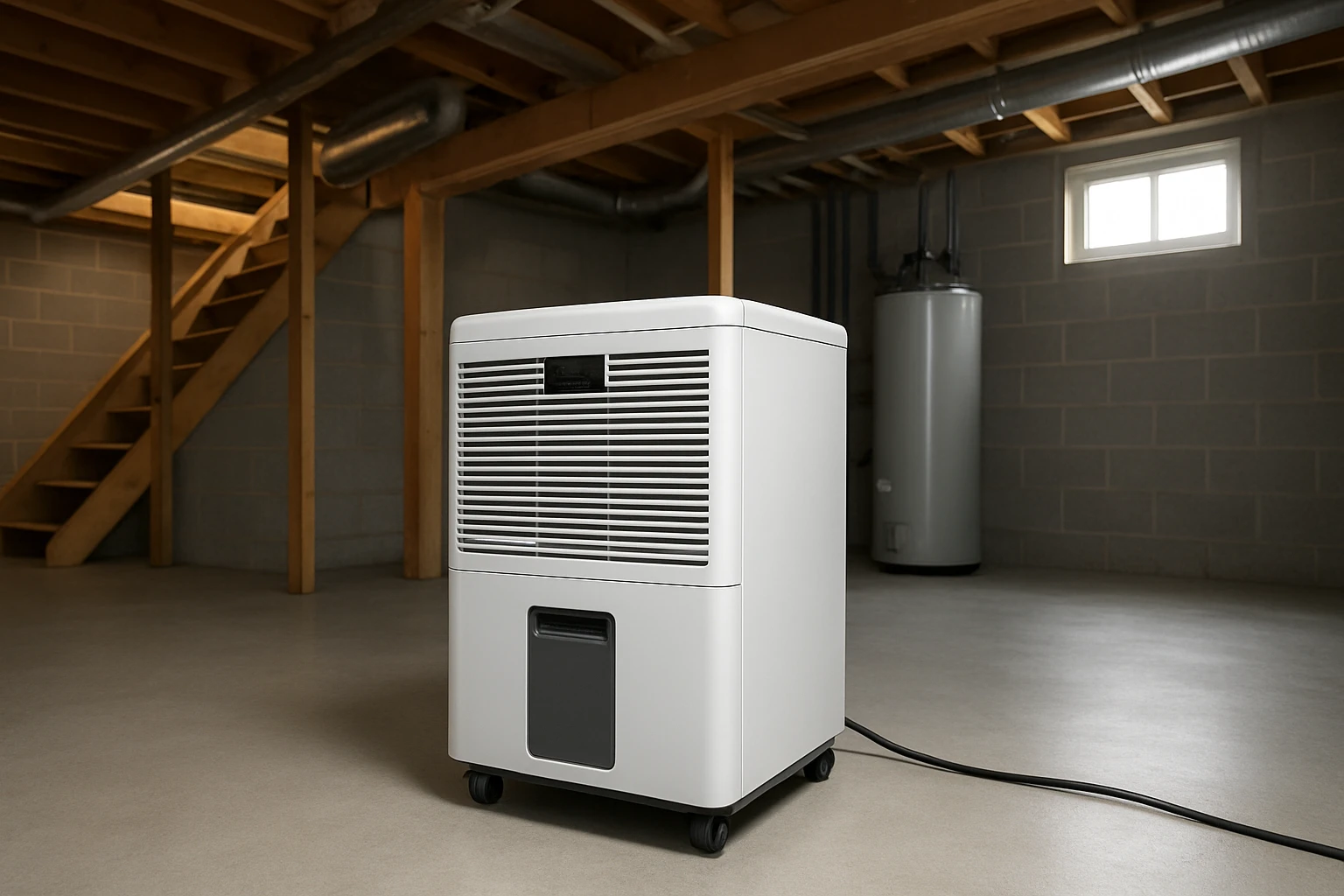

Ultimate Guide to Choosing a Commercial Dehumidifier for Your Residential Basement: Sizing, Installation & Best Picks
Introduction
Basement moisture problems can lead to mold growth, structural damage, and uncomfortable living conditions. This guide explains how to evaluate moisture levels, calculate the appropriate dehumidifier capacity, and install the unit safely. Readers will learn key concepts such as pints per day (PPD), energy efficiency ratios, and the importance of continuous drainage. The guide also highlights a top‑rated commercial dehumidifier that meets the demands of most residential basements.
Background and Context
Moisture in basements originates from groundwater seepage, condensation, and indoor activities such as laundry drying. Relative humidity (RH) above 60 % creates an environment where mold spores can germinate within 48 hours. Dehumidifiers remove water vapor from the air, reducing RH to a healthy range of 30‑50 %.
The performance of a dehumidifier is measured in pints per day (PPD), which indicates how many pints of water the unit can extract under specific conditions. Two standard test conditions exist: saturation (100 % RH) and the AHAM (Association of Home Appliance Manufacturers) rating, which assumes 80 % RH at 80 °F. Understanding these metrics helps homeowners compare models objectively.
Commercial‑grade units differ from residential models in capacity, durability, and features such as built‑in condensate pumps. While they carry a higher price tag, they provide reliable operation for larger spaces and continuous use, making them ideal for basements that experience frequent moisture spikes.
Understanding Dehumidifier Capacity
Capacity selection begins with measuring the basement’s square footage, ceiling height, and current humidity level. A common rule of thumb multiplies the cubic footage by a factor of 0.5 to 1.0 PPD per 1,000 ft³, depending on moisture severity. For example, a 1,200 ft³ basement with moderate dampness may require a unit capable of 30‑40 PPD, whereas a flood‑prone space may need 70 PPD or more.
Energy efficiency is expressed as the coefficient of performance (COP) or liters of water removed per kilowatt‑hour (L/kWh). A higher COP means lower electricity consumption for the same moisture removal. The MOUNTO 310 Pints Commercial Dehumidifier offers a COP of 2.9 L/kWh, indicating superior efficiency compared with many residential models.
When selecting a unit, consider the power draw. The featured dehumidifier consumes only 10.5 A, which translates to approximately 1,260 W at 120 V, allowing it to operate on standard household circuits without requiring a dedicated line.
Sizing for Residential Basements
Step 1: Calculate the volume of the basement (length × width × height). Step 2: Determine the target humidity reduction (usually from current RH to 45 %). Step 3: Apply the moisture load formula: Moisture Load = Volume × (Initial RH − Target RH) × 0.0012. The result yields the daily water removal requirement in pints.
Step 4: Choose a dehumidifier whose PPD rating exceeds the calculated load by at least 20 % to accommodate fluctuations. For a 1,500 ft³ basement with an initial RH of 70 % and a target of 45 %, the moisture load approximates 45 PPD. A unit rated at 55 PPD or higher would be appropriate.
The MOUNTO 310 Pints Commercial Dehumidifier exceeds this requirement, providing up to 310 PPD at saturation and 165 PPD under AHAM conditions, making it suitable for even the most demanding basements.
Installation Considerations
Proper placement maximizes airflow and minimizes condensation on surrounding surfaces. Position the unit on a level surface near the center of the space, leaving at least 12 inches of clearance on all sides. Avoid direct contact with walls or furniture that could obstruct the intake and exhaust grilles.
Continuous drainage is essential for long‑term operation. The featured dehumidifier includes a built‑in condensate pump with a 15‑foot lift capability, allowing the water to be pumped upward to a floor drain, utility sink, or external hose. This eliminates the need for manual emptying and reduces the risk of overflow during power outages.
Electrical safety must be observed. Use a grounded three‑prong outlet, and consider installing a surge protector to guard against voltage spikes common in renovation sites. The unit’s automatic restart and memory function ensure that it resumes operation with previous settings after an outage, preserving dehumidification continuity.
Energy Efficiency and Operating Costs
Operating cost is a function of power consumption, local electricity rates, and runtime. The MOUNTO 310 Pints Commercial Dehumidifier consumes 10.5 A, which at a typical rate of $0.13 per kWh results in approximately $0.16 per hour of operation. Running the unit 12 hours per day would cost roughly $1.92, a modest expense given the moisture control benefits.
Look for models with programmable timers and humidity setpoints. Advanced digital controls allow users to set a desired RH level; the unit then cycles on and off automatically, preventing unnecessary energy use. Real‑time temperature and humidity displays provide immediate feedback on environmental conditions.
When comparing products, prioritize those with a high COP and programmable features, as these reduce both electricity usage and wear on mechanical components.
Maintenance and Longevity
Regular maintenance extends the life of a dehumidifier and ensures consistent performance. Clean the air filters monthly to prevent dust buildup, which can restrict airflow and increase energy consumption. The condensate pump should be inspected for clogs and tested for proper operation at least once per season.
Inspect the unit’s coils for frost or mineral deposits, especially in areas with hard water. A gentle brush or vacuum can remove surface debris; however, avoid using abrasive cleaners that could damage the coating.
Because the featured model is designed for commercial use, its heavy‑duty construction tolerates frequent cycling and continuous operation, making it a reliable choice for homeowners who expect long‑term usage.
Comparison and Selection Guide
| Feature | MOUNTO 310 Pints Commercial Dehumidifier | Typical Residential Unit (200 PPD) |
|---|---|---|
| Capacity (PPD) – Saturation | 310 PPD | 200 PPD |
| Capacity (PPD) – AHAM | 165 PPD | 115 PPD |
| COP (L/kWh) | 2.9 | 2.2 |
| Power Consumption | 10.5 A (≈1.26 kW) | 12 A (≈1.44 kW) |
| Built‑in Pump Lift | 15 ft | None (manual bucket) |
| Digital Controls | Yes – humidistat, temperature, RH display | Basic knob control |
| Automatic Restart | Yes, with memory function | No |
| Rating (5‑star scale) | 4.3 (32 reviews) | Varies |
| Price | $1,499.99 | ~$800 |
When selecting a dehumidifier, prioritize capacity that exceeds the calculated moisture load, a built‑in pump for continuous drainage, and digital controls for precise humidity management. The commercial model, although higher in price, offers superior capacity, efficiency, and convenience, making it the best overall pick for most residential basements.
Best Practices & Tips
- Measure basement humidity with a calibrated hygrometer before purchasing.
- Seal cracks and improve exterior drainage to reduce the moisture load on the dehumidifier.
- Run the unit continuously during damp seasons; use the timer to shut off during dry periods.
- Set the target RH to 45 % for optimal mold prevention without over‑drying wooden structures.
- Schedule quarterly maintenance checks to clean filters, inspect the pump, and verify proper operation.
Frequently Asked Questions
- How do I know if my basement needs a commercial‑grade dehumidifier? If the space exceeds 1,000 ft³, experiences frequent water intrusion, or requires removal of more than 50 PPD, a commercial‑grade unit such as the MOUNTO 310 Pints Commercial Dehumidifier is advisable.
- Can I use the dehumidifier in a finished basement with carpet? Yes; the unit’s high capacity and built‑in pump handle moisture from carpet, subfloor, and walls without damaging finishes.
- What is the benefit of the automatic restart feature? After a power outage, the unit resumes operation with the previously saved humidity setpoint, preventing a lapse in moisture control that could allow mold growth.
- Is the 15‑foot pump lift sufficient for most homes? For most residential basements, a 15‑foot lift can reach a floor drain or external hose exit point. For higher elevations, a secondary pump may be required.
- How much will it cost to operate the dehumidifier annually? Assuming 12 hours of daily operation at $0.13/kWh, the annual electricity cost is roughly $730, though actual costs vary with local rates and usage patterns.
- Do I need a professional to install the unit? Installation is straightforward for DIY‑competent homeowners. However, if electrical modifications or extensive drainage routing are required, a licensed electrician or plumber should be consulted.
Conclusion
Choosing the right dehumidifier for a residential basement involves assessing moisture load, selecting appropriate capacity, and ensuring reliable drainage. Commercial‑grade models provide the durability and features necessary for continuous operation, especially in environments prone to water intrusion. The MOUNTO 310 Pints Commercial Dehumidifier stands out due to its high capacity, energy efficiency, built‑in pump, and smart digital controls, making it an excellent investment for long‑term moisture management.
By following the sizing formulas, installation guidelines, and maintenance practices outlined in this guide, homeowners can protect their basements from mold, structural damage, and unhealthy air quality.
Products Featured in This Guide
MOUNTO 310 Pints Commercial Dehumidifier
Price: $1,499.99
Rating: 4.3 out of 5 (32 reviews)
Featured because it delivers up to 310 PPD at saturation, includes a 15‑foot lift condensate pump, and offers advanced digital controls with automatic restart, making it ideal for residential basements that require robust moisture control.