How to Size the Right Condensate Pump for a Whole‑House Dehumidifier: GPD, Head & Line‑Length Guide
Introduction
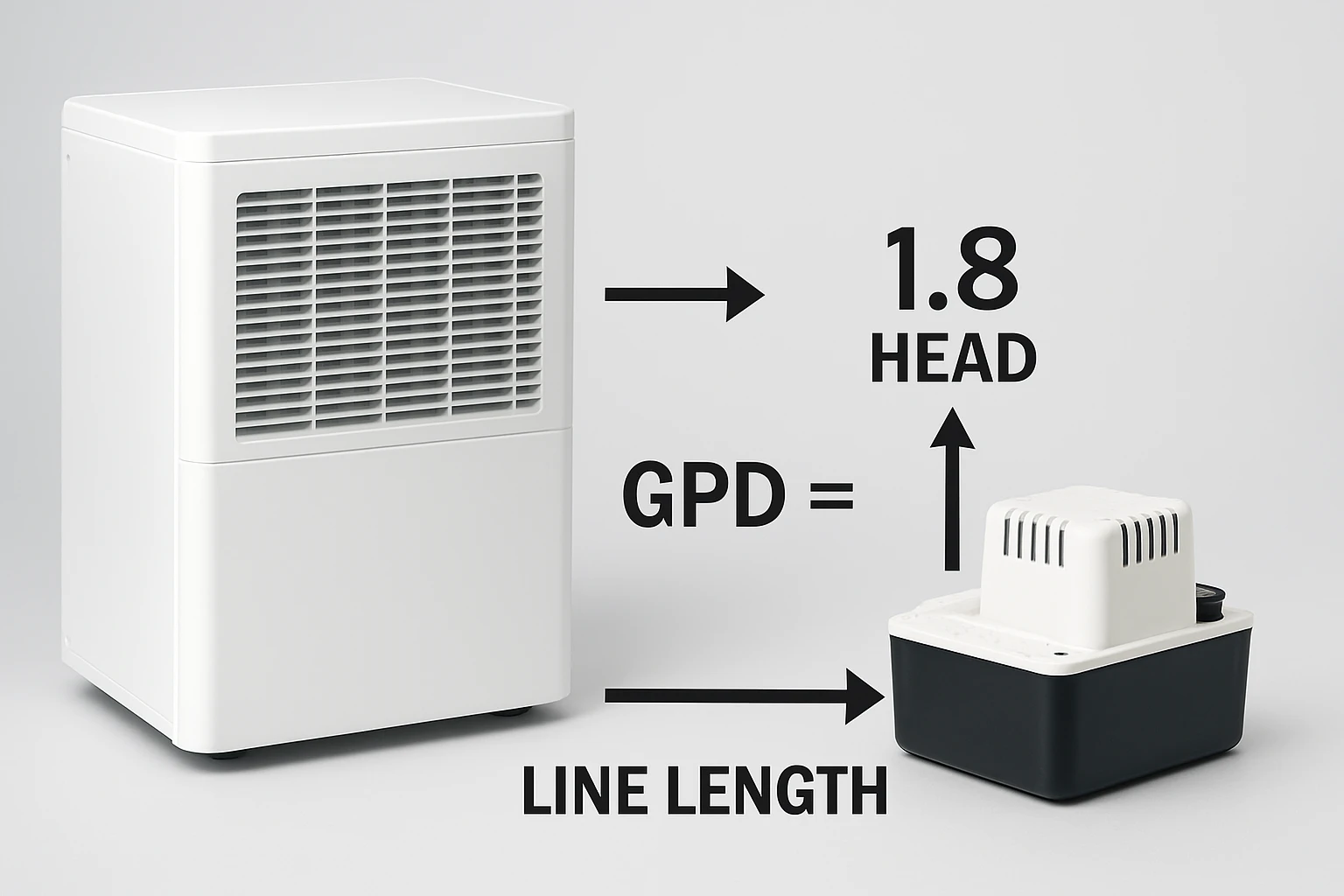
This guide explains how to determine the appropriate condensate pump for a whole‑house dehumidifier. One will learn to calculate gallons per day (GPD), evaluate vertical lift (head), and consider line‑length constraints. Understanding these parameters prevents overflow, reduces energy consumption, and extends equipment life. The information is valuable for homeowners, HVAC technicians, and property managers who seek reliable moisture management.
What You’ll Need
- Whole‑house dehumidifier with manufacturer‑specified condensate output (GPD)
- Measuring tape or laser distance meter for vertical and horizontal runs
- Level and mounting hardware for pump installation
- Clear reservoir or pump with transparent tank for visual monitoring
- Electrical outlet compatible with 115 V or 230 V equipment
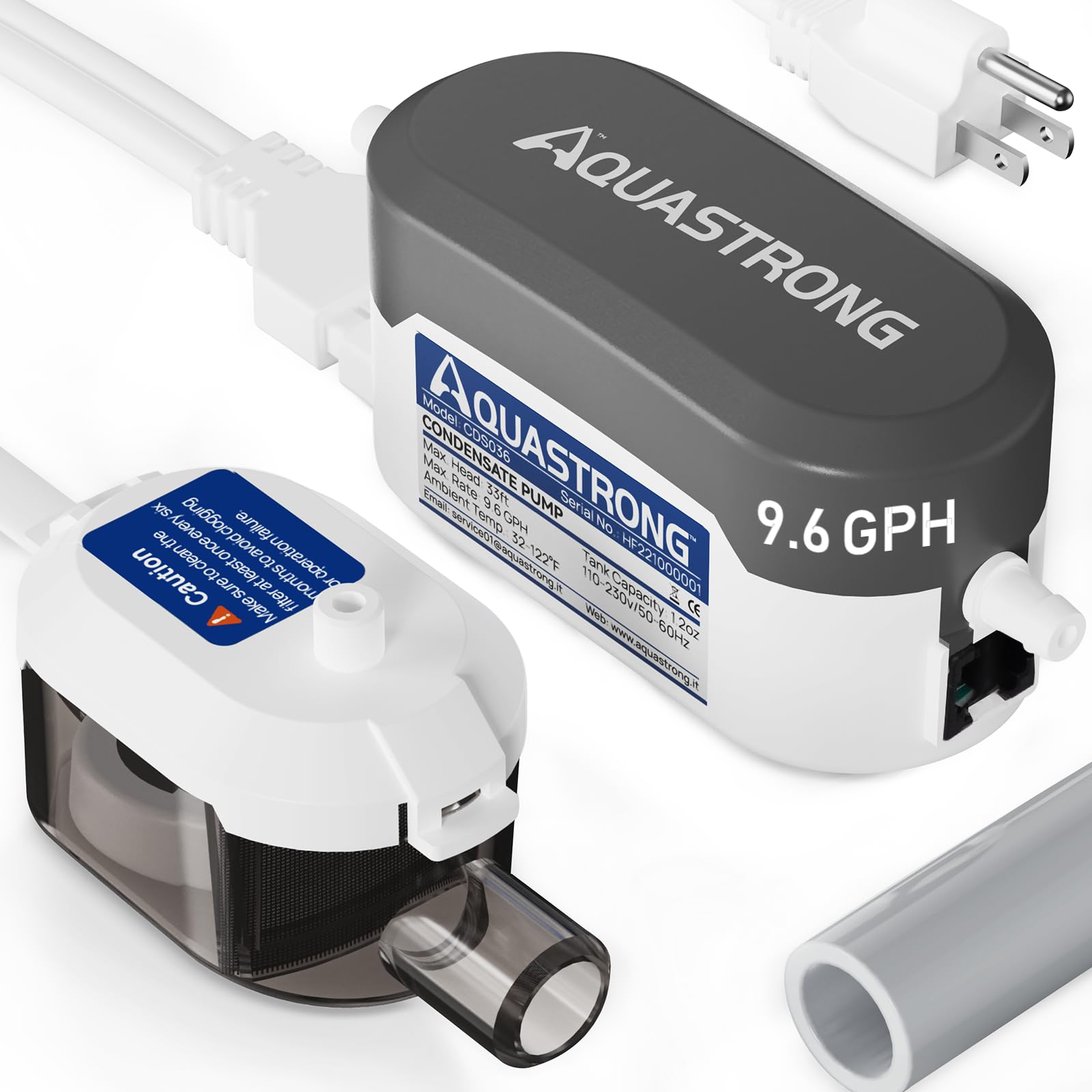
- Optional: MSKOTOAS Quiet HVAC Condensate Pump, Aquastrong HVAC Condensate Pump, and DiversiTech ClearVue Mini Pump
Step 1 – Determine the Required Flow Rate (GPD)
The first task is to calculate the daily condensate volume that the dehumidifier will produce. One should consult the unit’s specification sheet, which typically lists a range such as 10‑15 gallons per day (GPD). If the exact figure is unavailable, a safe estimate can be obtained by multiplying the rated daily output by 1.2 to account for high‑humidity conditions. For example, a dehumidifier rated at 12 GPD would be treated as 14.4 GPD in a humid climate.
After establishing the GPD, convert it to gallons per hour (GPH) because most pump specifications use GPH. Divide the GPD by 24; using the example above yields 0.6 GPH. However, most condensate pumps are capable of far higher flow rates, providing a safety margin. Selecting a pump whose maximum flow exceeds the calculated GPH by at least 30 % ensures reliable operation during peak moisture events.
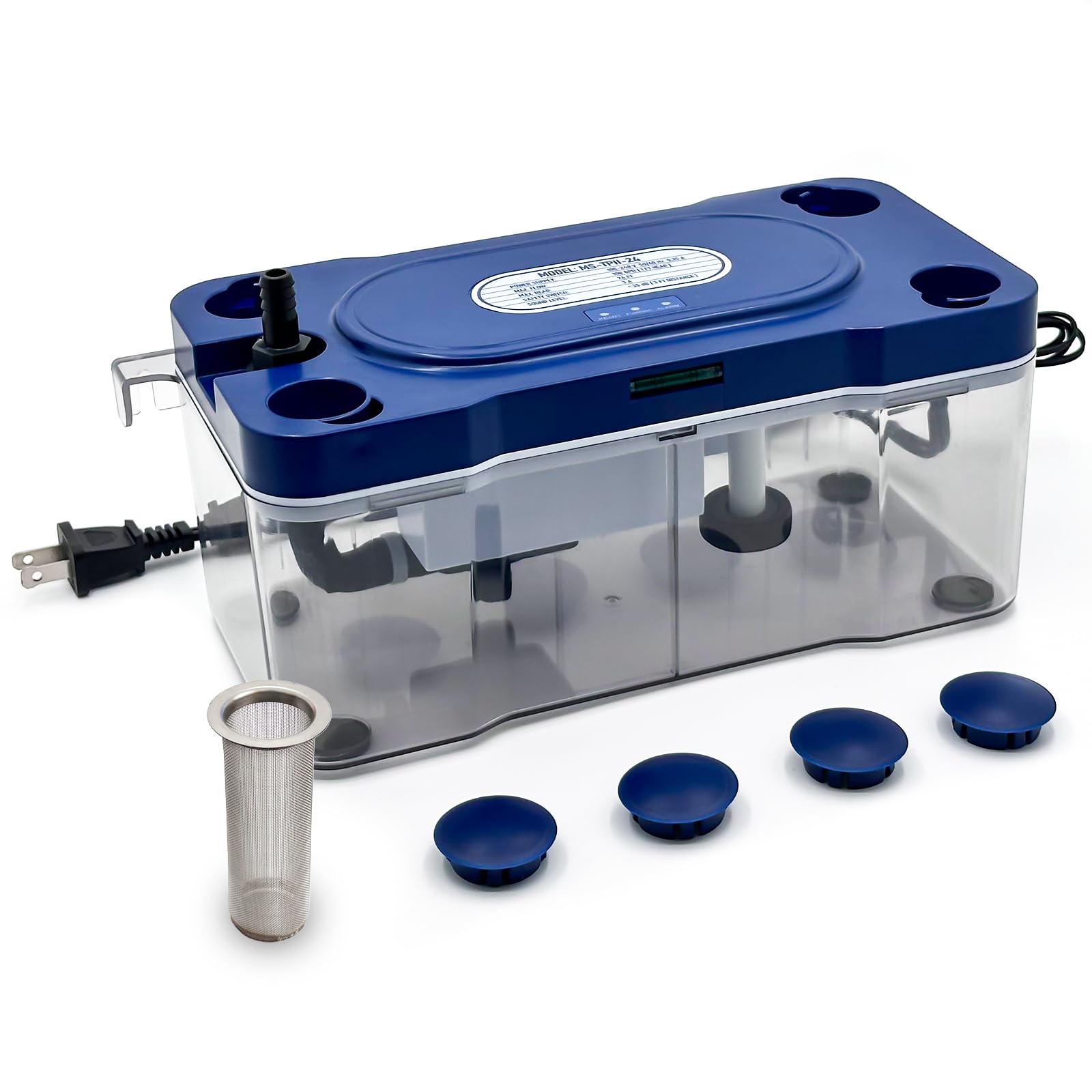
Product Recommendation: The MSKOTOAS Quiet HVAC Condensate Pump offers a maximum flow of 100 GPH, far above typical residential needs. Its high performance makes it suitable for large‑capacity dehumidifiers or installations where future expansion is anticipated. Price: $59.99; Rating: 4.6 / 5 (33 reviews).
Step 2 – Calculate the Required Head (Vertical Lift)
The head is the vertical distance the pump must move water from the condensate collection pan to the discharge point. Measure from the bottom of the pump’s inlet to the highest point of the discharge line, adding an extra 1‑2 feet to accommodate pipe fittings and potential sag. For a typical basement installation, the head may range from 6 feet to 15 feet.
When the required head exceeds the pump’s advertised maximum, the pump will operate at reduced flow or may stall. Therefore, verify that the chosen pump’s maximum head rating meets or exceeds the measured distance. Both the MSKOTOAS and Aquastrong models provide a 24‑foot and 33‑foot maximum head respectively, covering most residential scenarios.
Product Recommendation: The Aquastrong HVAC Condensate Pump delivers a maximum head of 33 feet and operates at an ultra‑silent 20 dB. Its thermally protected motor and automatic safety switch make it ideal for installations where noise and reliability are paramount. Price: $52.99; Rating: 4.4 / 5 (712 reviews).
Step 3 – Assess Line Length and Friction Loss
Horizontal pipe length contributes to friction loss, which reduces effective flow. A rule of thumb is to add 0.1 feet of head for every foot of ½‑inch PVC pipe. For a 25‑foot run, this adds roughly 2.5 feet of head. Use larger‑diameter tubing (¾‑inch) when possible to minimize friction, especially if the pump operates near its maximum capacity.
When space is limited, a compact pump with flexible tubing may be preferable. The DiversiTech ClearVue Mini Pump measures only 6.5 × 3.6 × 7.4 inches, allowing installation in tight mechanical closets. Although its maximum flow is lower than the other two models, it is sufficient for dehumidifiers producing up to 8 GPH.
Product Recommendation: The DiversiTech ClearVue Mini Pump provides a clear tank for visual monitoring and a floatless sensor that eliminates common clogging issues. Its compact size and adjustable speed make it ideal for short‑run, low‑flow applications. Price: $132.70; Rating: 3.4 / 5 (73 reviews).
Step 4 – Verify Electrical Compatibility
All three pumps operate on standard residential voltages of 115 V or 230 V. Confirm that a suitable outlet is within reach of the pump’s power cord (5.1 feet for MSKOTOAS, 3.3 feet for Aquastrong). Use a grounded outlet and avoid extension cords unless they are rated for the pump’s current draw. The built‑in safety switches on each pump will shut down the dehumidifier if an overflow condition is detected, protecting both the equipment and the building.
When installing in a location with limited clearance, the short cord of the Aquastrong model may require a nearby outlet or a discreetly mounted power strip with surge protection. The MSKOTOAS pump’s longer cord offers greater flexibility for placement.
Step 5 – Install and Test the Pump
Mount the pump on a stable, level surface using the supplied mounting brackets or anti‑vibration velcro strips (as provided with the Aquastrong model). Connect the inlet to the dehumidifier’s condensate pan using a ½‑inch or ¾‑inch tube, ensuring a tight fit to prevent leaks. Attach the outlet tube to the designated drain, routing it with gentle slopes to maintain gravity‑assisted flow.
Power the pump and observe the indicator lights: power, operation, and overflow warning. Fill the reservoir manually to verify that the pump activates at the appropriate water level and shuts off when the tank is empty. For models with transparent reservoirs (MSKOTOAS), visual inspection of water level is straightforward.
Finally, run the dehumidifier for several hours under normal humidity conditions and monitor the pump’s performance. Adjust tube diameters or add a short vertical lift if the pump cycles excessively, indicating insufficient head.
Tips & Pro Tips
- Schedule reservoir cleaning every six months to prevent debris buildup; the Aquastrong pump’s removable filter simplifies this task.
- Use a check valve on the discharge line to prevent backflow when the pump is off.
- When installing in a noise‑sensitive area, prioritize the MSKOTOAS or Aquastrong pumps, which operate below 35 dB and 20 dB respectively.
- Consider a backup pump for critical environments such as data centers or medical facilities; installing two pumps in parallel provides redundancy.
- Label the power cord and safety switch connections to simplify future maintenance.
Troubleshooting
| Problem | Possible Cause | Solution |
|---|---|---|
| Pump does not start | Power not connected or safety switch tripped | Verify outlet voltage, reset safety switch, and ensure water level reaches activation threshold. |
| Intermittent operation | Insufficient head or excessive friction loss | Reduce horizontal run length, increase tube diameter, or select a pump with higher maximum head. |
| Overflow alarm | Blocked outlet or full reservoir | Clear any blockage, clean the filter, and ensure the reservoir is emptied regularly. |
Conclusion
By calculating the required GPD, assessing head and line‑length, and selecting a pump that matches these parameters, one can ensure reliable condensate removal for a whole‑house dehumidifier. The guide has highlighted three reputable products, each offering distinct advantages in flow capacity, noise level, and installation flexibility. Applying the presented steps will minimize water damage risk, reduce energy consumption, and extend the service life of both the dehumidifier and the HVAC system.
Products Mentioned in This Guide
Frequently Asked Questions
How do I calculate the gallons‑per‑day (GPD) requirement for my whole‑house dehumidifier?
Take the manufacturer’s daily condensate output (in GPD) and add a 10‑15% safety margin to account for humidity spikes.
What does “head” mean when sizing a condensate pump?
Head is the vertical lift the pump must overcome, measured in feet; choose a pump whose maximum head exceeds your total vertical rise.
How does line‑length affect pump selection?
Long horizontal runs increase friction loss; add the estimated loss (usually 0.5‑1 ft of head per 10 ft of pipe) to your total head calculation.
Can I use a 115 V pump with a 230 V whole‑house dehumidifier?
Yes, as long as the pump’s voltage rating matches an available outlet and the pump’s power rating meets the dehumidifier’s condensate flow.
How often should I inspect and clean the condensate pump?
Inspect the pump and clear any debris at least once every three months, or more frequently in high‑humidity environments.